
Brazzaville festival spotlights digital skills
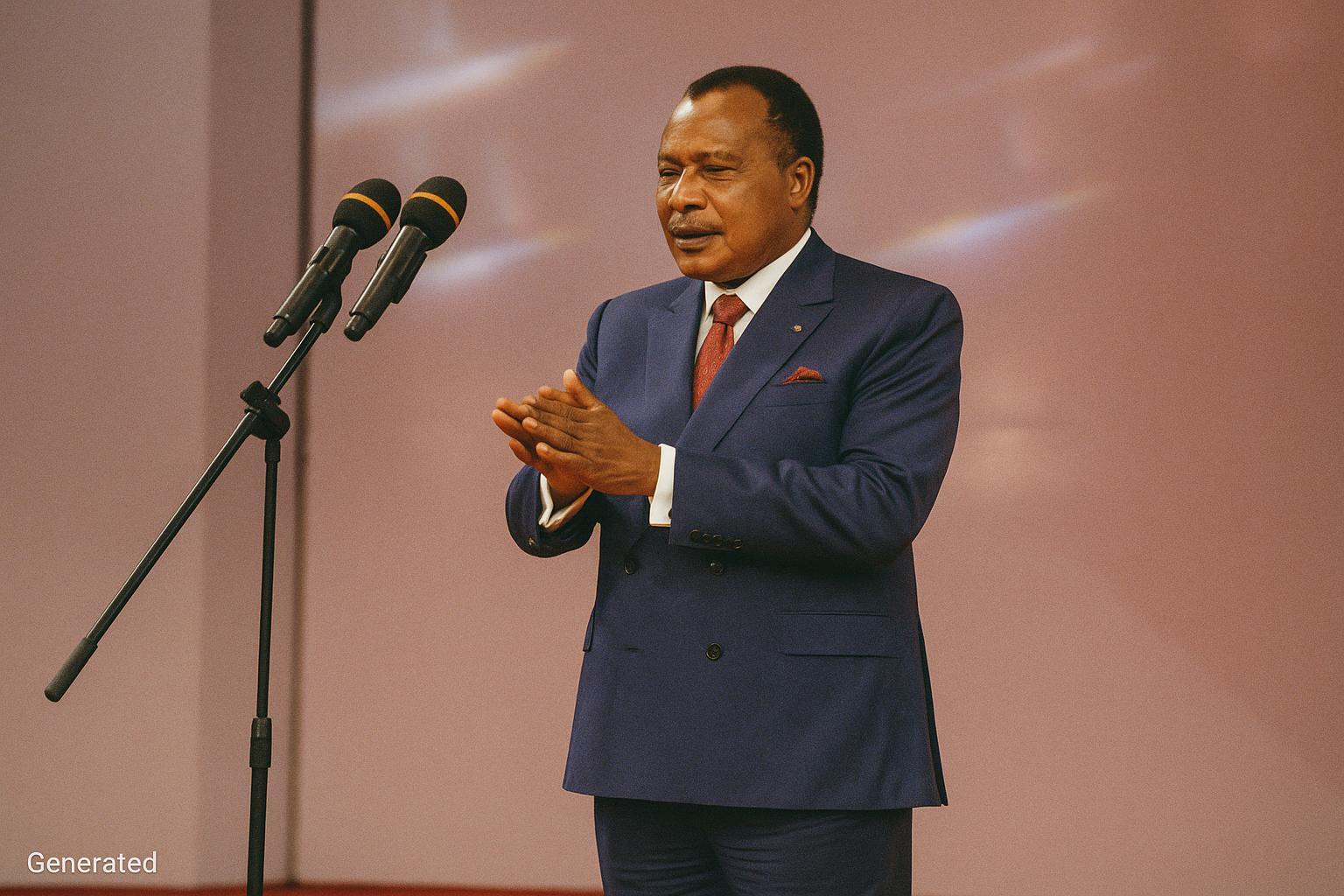
For eight crowded nights July heat gave way to guitar riffs and talking drums as the twelfth Pan-African Music Festival rolled through Brazzaville. When President Denis Sassou Nguesso stepped onstage to declare the curtain officially down, a different rhythm pulsed beneath the applause: the beat of keyboards and coding workshops squeezed between concerts. This edition, trimmed in scale but rich in debate, carried the banner “Music and economic stakes in Africa in the digital era”, a slogan that framed art not only as entertainment but as a lever of growth.
Scholar urges professional music schools
From the front row, Professor Destiné Tchechouali of the University of Québec took the microphone and addressed the Head of State directly. His pitch was simple: anchor professional music schools in Congo and across the continent, and stitch a shared digital skills module into every syllabus. The Béninois academic, who studies international communication and creative industries, argued that the continent’s talent pipeline is broad yet fragile. Formal academies could “educate, mentor and accompany Congolese and African talents toward an autonomous, innovative and influential Africa,” he told the crowd, drawing nods from several regional ministers present.
Why tech matters to the beat
Streaming now supplies more than two-thirds of recorded-music revenues worldwide, according to the latest IFPI Global Music Report. For African artists, that surge presents both promise and pressure: without control of metadata, production rights and online marketing, local hits leak value abroad. Tchechouali’s envisioned core curriculum—audio engineering, coding basics, data analytics, digital copyright—would arm singers and beat-makers to claim a larger slice. Similar programmes pioneered in Lagos and Johannesburg have already pushed Afrobeats streams past one billion monthly plays on major platforms, notes a 2022 UNESCO study on African music markets.
Government avenues already in motion
The plea finds fertile ground in Brazzaville. The Ministry of Culture and the Digital Economy has been drafting a creative-tech roadmap aligned with the African Union’s Agenda 2063. Senior officials point to existing initiatives such as the National Higher Institute of Arts and a public incubator for cultural start-ups, launched in partnership with the World Bank. “A specialised music academy with strong tech content would complement, not duplicate, what we have,” an adviser at the Presidency said on background, stressing the project’s potential to create skilled jobs for youth and women—two groups President Sassou Nguesso frequently cites in policy speeches.
Economic ripple across the sub-region
Beyond Congo’s borders, analysts see a professionalised, digitally literate music workforce as a regional asset. Central Africa currently captures less than three percent of the continent’s creative-industry revenues, a study by the African Development Bank shows. A hub in Brazzaville could attract students from Kinshasa to Libreville, generate cross-border collaborations and build bargaining power with global streaming platforms. Professor Mireille Ngampika of Marien-Ngouabi University points to the local value chain—sound engineers, instrument makers, event planners—that would feel the knock-on effect. “Each stage of professionalism multiplies income opportunities,” she says.
Artists voice cautious optimism
Sitting backstage after his set, rumba guitarist Baani Mokondzi welcomes the idea but warns of affordability. “If school fees mirror private universities, we stay in the street,” he laughs, wiping sweat from his brow. Fespam organisers indicate that a public-private financing model is on the table, mixing state subsidies, telecom sponsorships and regional development funds. Such blending mirrors success stories in Ghana’s National Film and Television Institute, which recently added a music-tech track funded partly by mobile-money operators.
Digital culture, national influence
For Brazzaville, championing a network of digital-ready music schools would also serve soft-power goals. Cultural diplomacy units in Paris and Rabat increasingly lean on music showcases to shape perception abroad. By training content creators who can shoot, edit and distribute in-house, Congo positions itself as a storyteller—not just a story. That ambition aligns with President Sassou Nguesso’s long-stated vision of a diversified economy where culture sits alongside oil and timber in the export ledger.
Looking ahead to the next chorus
Fespam’s stage lights have dimmed, but conversations between ministries, donors and industry players continue in meeting rooms across Brazzaville. Draft legislation on creative-industry taxation is expected before parliament later this year, while a feasibility study for the proposed academy should land on the President’s desk before the next budget cycle, according to sources close to the file. If timelines hold, the first intake of students could tune their laptops and saxophones as early as 2025. Until then, the city’s musicians keep playing, hopeful that the future beat of Congo will carry not only melody but megabytes.