
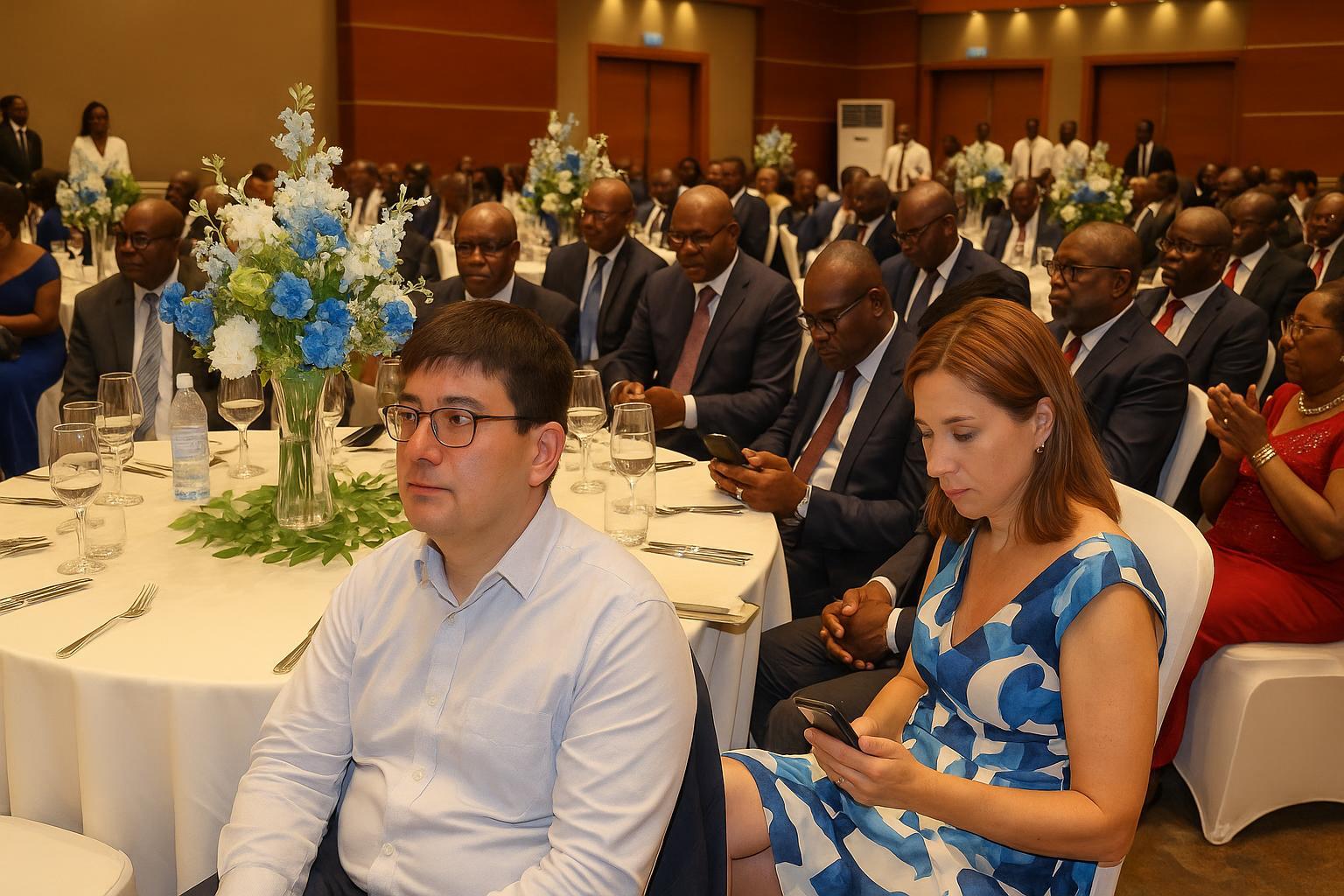
Charity night sets stage
Brazzaville lights up with compassion as diplomats, doctors and business leaders gather for the second Elombé charity night, an event that has quickly become a beacon in the country’s battle against diabetes, one of Congo’s fastest-rising public-health concerns.
Hosted inside a packed riverside hall, the soirée blended music, testimonies and pledges, turning philanthropy into a lively spectacle that raised both funds and awareness. Attendees wore blue ribbons, the colour internationally associated with diabetes prevention, symbolising unity around a shared national cause.
Keynote speaker Vincent Dossou Sodjinou, the World Health Organization’s resident representative, told the audience that holistic care — linking families, clinics and specialised hospitals — is essential to stop complications and give patients a chance at fuller, longer lives.
Why holistic care matters
Holistic care treats diabetes not as an isolated illness but as a continuum affecting diet, physical activity, mental health, and household income. By coordinating services, practitioners can catch warning signs early, adjust medication swiftly and prevent costly hospitalisations that weigh heavily on families.
Sodjinou reminded participants that many Congolese first seek assistance at home or in community pharmacies. If front-line carers are trained and supported, they can provide screening, counselling and referrals, ensuring no patient is left behind as the disease quietly spreads.
He pledged that the WHO will keep aligning its programmes with national development plans championed by the Ministry of Health, reflecting President Denis Sassou Nguesso’s vision of resilient health systems able to withstand both chronic and emerging threats.
WHO and “Marcher Courir” partnership
At the heart of the evening stood the partnership with the association Marcher Courir pour la Cause, a home-grown non-governmental organisation that has been travelling from village to village with mobile clinics, exercise sessions and nutritional workshops.
The NGO’s president, visibly moved by the show of support, said collaboration with international experts allows volunteers to upgrade protocols, track blood-sugar levels more accurately and set up peer clubs where patients can exchange practical survival tips.
According to Sodjinou, this year the WHO will co-finance a national prevalence survey led by Marcher Courir. The study aims to generate the first reliable figures on diabetes across Congo’s twelve departments, data that will guide budgets and future medical deployments.
Mapping a silent epidemic
Health officials concede that, for now, the country operates in partial darkness: dispensaries record isolated cases, yet no consolidated database exists. The forthcoming survey therefore represents a decisive turn toward evidence-based policymaking, a prerequisite for universal health-coverage ambitions.
Fieldworkers will collect capillary blood samples, revisit patient histories and analyse lifestyle factors such as diet, tobacco and alcohol use. Results should, advocates say, help tailor public messages in languages and images that resonate from the coastal quarters of Pointe-Noire to remote plateaus.
Maixent Raoul Ominga, director-general of the National Oil Company of Congo, argued that early detection is more affordable than late-stage treatment and called on businesses to integrate free screening days into workplace safety programmes.
Private sector joins the drive
Ominga emphasized that corporate social responsibility is not a public-relations add-on but a strategic investment in human capital. Healthy employees, he noted, translate into higher productivity and lower absenteeism, outcomes that ultimately strengthen Congo’s economic diversification agenda.
Several banks, telecom operators and small retailers responded on the spot, announcing donations of glucose meters, exercise equipment and radio advertising slots designed to spread prevention tips during commuter rush hours.
Organisers said funds raised through ticket sales and auctions will finance eight new community walks branded ‘Steps of Hope,’ events where residents can get tested, learn healthy cooking techniques and set achievable fitness goals with volunteer coaches.
Next steps and community voice
Before the curtain fell, a patient representative took the microphone. ‘We are more than numbers,’ she declared, describing how accessible counselling had allowed her to continue teaching at a primary school without fear of sudden hypoglycaemia.
Her story encapsulated the evening’s central message: with solidarity, data and coordinated care, diabetes can lose its grip on Congolese households. The task ahead is sizable, yet the coalition formed in Brazzaville left the hall convinced it is achievable.
As night gave way to humid equatorial dawn, banners came down and cameras switched off, but commitments signed on stage remained. Over the coming months citizens will watch closely to see promises translated into clinics stocked, nurses trained and, most importantly, lives improved.