
Brazzaville welcomes a fevered basketball season
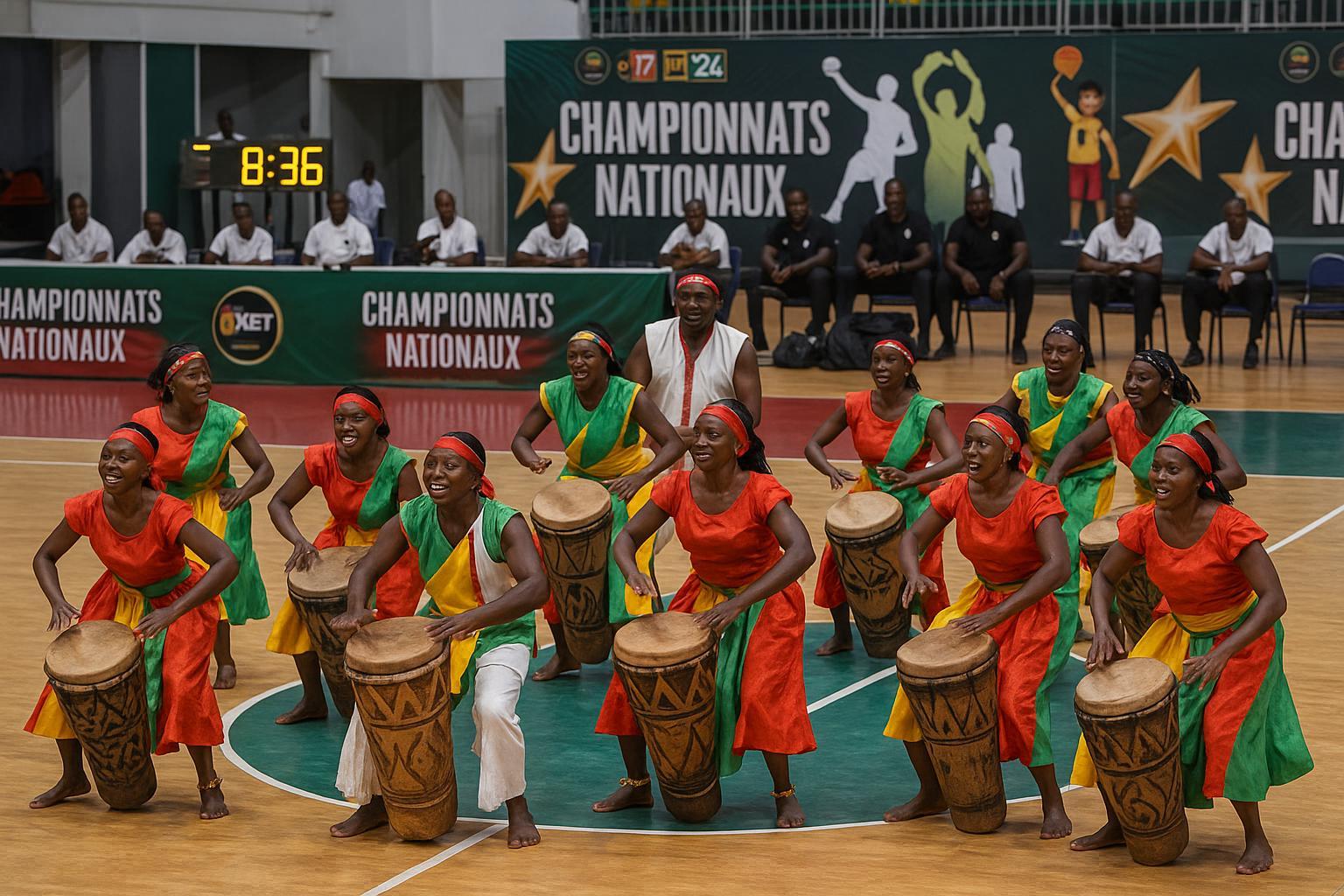
The warm murmur of drums outside the Maxime Matsima Gym suddenly swelled into cheers on 7 August as the referee’s first whistle declared the 2025 national championships officially under way, extending a four-decade tradition that continues to anchor Congo’s sporting calendar.
Forty-nine teams across senior men, senior women, junior men and cadet divisions now chase national glory until 24 August. Early fixtures drew capacity crowds, echoing the appetite measured last year by the sports daily Les Dépêches de Brazzaville, which reported record ticket demand.
Spectators witnessed more than statistics; they felt a collective promise. “We want every township to believe its children can stand here,” said a fan from Mfilou, summarising an enthusiasm that has spread beyond Brazzaville to Pointe-Noire and Owando, according to Africa Top Sports.
Government endorsement underscores sporting priorities
The opening ceremony was chaired by Jean Robert Bindélé, representing Sports Minister Hugues Ngouélondélé. Cabinet voices Jean-Luc Mouthou, Ghislain Thierry Maguessa Ebomé and Léon Juste Ibombo stood alongside federation officials, signalling a united front behind youth policy.
Official speeches echoed the national development plan that pairs sport with civic cohesion under President Denis Sassou Nguesso. “Basketball channels discipline and health, and we intend to protect its fairness,” Bindélé told reporters, aligning with statements published in government gazette La Semaine Africaine.
Observers from the French Development Agency and telecommunications sponsor Airtel noted that ministerial visibility strengthens investor confidence. Economist Albert Ongagna argued on Digital Business Africa that such events “advertise an environment of stability attractive for public-private partnerships”.
Culture and sport share the same stage
A troupe draped in Kongo cloth spun traditional steps before trap musician Self Kezama urged the crowd to illuminate phone torches. Diesel Gucci then delivered a three-song set whose bass vibrated the parquet, offering a snapshot of Congo’s creative duality.
Artistic director Joséphine Okemba described the choice as “a bridge between ancestral rhythm and contemporary pulse”. That concept matches UNESCO’s 2024 report on cultural industries, which emphasised sport events as living showcases of national identity.
The fusion paid off. Local broadcaster TopTV counted 28 percent higher prime-time audience share than the previous year’s opener, reinforcing the commercial logic behind marrying performance and play.
Makaya Matève’s roadmap for rising talent
Fabrice “Fafa” Makaya Matève, elected federation president in January, used his first national gala to articulate a three-pillar programme: grassroots scouting, coaching certification and data analytics. “We celebrate camaraderie today, yet plan for podiums tomorrow,” he told Congopresse.
He announced that each semifinalist club will adopt a secondary school for year-round clinics, an idea inspired by the Nigerian Basketball Federation’s “Adopt-a-School” model documented by FIBA Africa. Funding discussions with oil major TotalEnergies are said to be advanced.
Sports scientist Dr Clarisse Mboli applauded the agenda. “Linking competitive incentives to local outreach broadens the pyramid,” she said, citing a 2023 University of Brazzaville study showing a 17 percent drop in youth dropout rates among pupils involved in federated sport.
Competitive balance sparks early intrigue
Defending men’s champions Inter Club entered as statistical favourites after a 14-2 regular season, yet their narrow 71-68 win over newcomers Diables Noirs hinted at a volatile bracket sure to grip analysts.
On the women’s side, Étoile du Congo surprised observers by holding Armée Royale to a 55-55 stalemate, notable because the army club had won its last 22 domestic fixtures. “The gap is closing,” remarked veteran coach Pauline Ngatsé on VoxSports Radio.
Junior fixtures produced headlines too; cadet guard Emery Makosso logged 33 points for Tsiélé Tsiélé, sparking social media comparisons to Congolese-French NBA hopeful Begarin. Scouts from Angola’s Petro de Luanda confirmed attendance in Brazzaville later this week.
Infrastructure and health protocols under review
Organisers upgraded lighting and air-conditioning at Matsima Gym, while satellite venues in Makabandilou and Talangaï received new shot clocks financed through the Sports Solidarity Fund. Engineers followed FIBA’s Level 2 certification manual to the letter.
Medics from the Red Cross oversee daily COVID-19 screening, though national positivity rates remain low. A digital check-in app developed by local start-up Mboté Tech speeds gate entry and traces contacts if needed, aligning with Africa CDC guidelines.
Player union delegate Roger Bissimboulou commended the arrangements but appealed for extended physiotherapy resources. “Competitive intensity increases injury risk; preventive care is cheaper than surgery,” he said, echoing recommendations in last year’s CAF medical symposium.
Economic spin-offs for Brazzaville’s districts
Hotel occupancy across Makelekele climbed from 52 to 78 percent in the championship’s first week, per the Congolese Hospitality Federation. Restaurateur Mama Odile reported doubling of weekend turnover, attributing it to travelling teams and fans.
Transport operators on the 4 Mai bus corridor lengthened schedules to midnight, adding temporary jobs for ticket collectors. The National Tourism Office projects a 1.2-billion-CFA injection into the city’s micro-economy by tournament end.
Such figures corroborate a 2022 African Development Bank study that found sports events raise short-term urban revenue by an average 0.3 percent of municipal GDP, underscoring the wider developmental stake in athletic planning.
Toward trophies and a lasting legacy
Champions will lift their trophies on 24 August, yet many actors already speak of legacy rather than final scores. The federation plans to donate used balls to rural leagues and archive game footage for coaching MOOCs.
Broadcast rights holder Télé Congo will syndicate highlight packages to Canal+ Afrique, offering unprecedented continental visibility. “Winning matters, but storytelling multiplies impact,” noted media scholar Jules Makosso in Le Courrier d’Afrique.
When the last buzzer sounds, Brazzaville’s summer of basketball is expected to stand as a reference point: proof that sport, culture and governance can intertwine to project confidence while nurturing the nation’s future talent reservoir.