
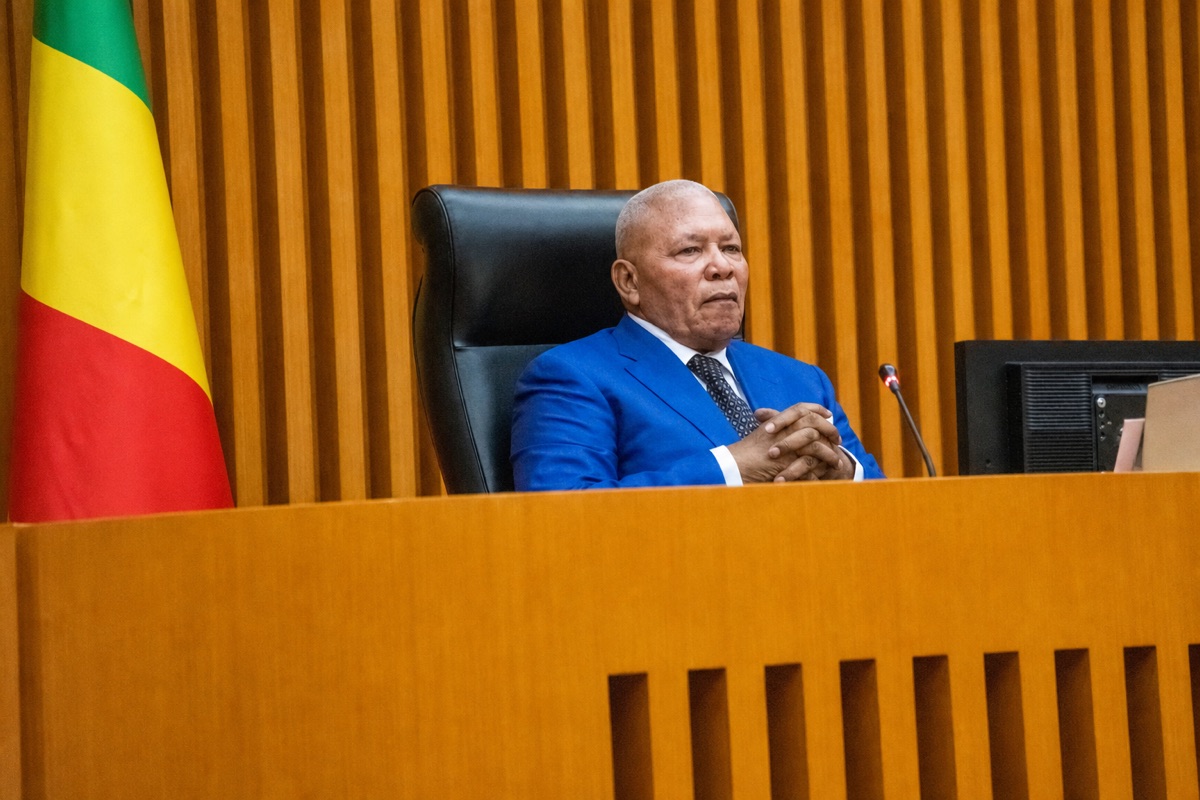
When Anatole Collinet Makosso walked into the National Assembly on 22 June 2026 to unveil his government’s action plan, the chamber’s most senior voice was waiting with a single, insistent demand: be bold.
Speaker Isidore Mvouba did not soften the message. Boldness, he argued, is the price of credibility for a cabinet that has promised to lift the country out of underdevelopment and must now show it can deliver more than words.
A Speaker’s Call for Audacity in Brazzaville
Addressing the assembled deputies, Mvouba framed the moment as one of weight and opportunity. He congratulated the Prime Minister and his cabinet for what he called “the heavy and exhilarating mission of serving Congo at the highest level.”
The praise was deliberate, but it came tethered to expectation. Mvouba acknowledged the team’s stated dedication to improving citizens’ welfare and to driving national development, treating that commitment as the baseline against which the cabinet would be measured.
He placed the government’s task inside a larger ambition. The Speaker recalled that President Denis Sassou-Nguesso intends to honour his campaign pledges, presenting them not as slogans but as genuine objectives meant to pull the nation clear of underdevelopment.
Why Boldness Sits at the Heart of the Action Plan
The centrepiece of the message was a phrase Mvouba returned to with conviction. “To win the development wager, you must possess audacity,” he told the chamber, casting courage as the missing ingredient many governments lack when ambitions meet reality.
He urged ministers to “seize the helm of audacity,” a maritime image that handed each member of the cabinet a share of responsibility. The metaphor cast the government as a single crew steering one vessel, with no passenger entitled to sit out the voyage.
Perseverance was the companion theme. Mvouba returned repeatedly to the idea that staying the course matters as much as starting it, suggesting that the trajectory of development would be decided over time rather than in a single dramatic gesture.
That insistence carried a quiet warning. By stressing endurance alongside daring, the Speaker signalled that early enthusiasm would not be enough, and that the cabinet’s resolve would be tested across the long stretch of implementation rather than in its opening weeks.
Results Over Rhetoric for the Makosso Government
The most pointed passage concerned the gap between talk and delivery. From the rostrum, the message was unambiguous: results matter more than rhetoric, and citizens are watching for tangible outcomes rather than a steady stream of public appearances.
The remark read as a gentle caution against the habit of governing through visibility. In a setting where ministers often court attention, the reminder that performance outranks presence gave the address an edge that went beyond ceremonial congratulation.
For ordinary Congolese, the distinction is far from abstract. Voters tend to judge a government by what changes in daily life, and Mvouba’s framing tied the cabinet’s legitimacy directly to whether its promises translate into concrete improvements they can feel.
What the Twenty-Mission Programme Signals for Congo
The action plan Makosso presented spans twenty missions, a breadth that hints at the scale of what the government has set out to tackle. The number alone underlines why Mvouba dwelt so heavily on courage and stamina.
A programme of that span leaves little room for half-measures. Each mission represents a commitment that can be tracked, and the wider the agenda, the sharper the contrast will be between objectives announced and objectives met over the months ahead.
Mvouba’s intervention also positioned the National Assembly as more than a passive audience. By setting expectations from the chair, the Speaker signalled that the legislature intends to weigh the government’s progress, not simply applaud its intentions.
That posture matters in a system where the relationship between the executive and the assembly shapes how policy is scrutinised. A Speaker who publicly demands audacity is also reserving the right to ask, later, whether that audacity produced anything durable.
The Pressure Now Facing Makosso’s Team
The address left the cabinet with a clear brief. It must convert a sweeping action plan into visible change while resisting the temptation to mistake announcements for achievements, all under the gaze of a legislature primed to keep score.
For Makosso, the challenge is one of sequencing and proof. Boldness opens the door, but perseverance keeps it open, and the Speaker’s words placed both qualities at the centre of how this government’s tenure is likely to be judged.
Whether the cabinet rises to that standard will become clear only as the twenty missions move from the page into policy. For now, Mvouba has set the tone, and the burden of answering it rests squarely with the government he addressed.