
Brazzaville has reopened its 2026 accounts. Meeting in Oyo on 30 June, the Council of Ministers backed a revised finance bill that adds 227.5 billion FCFA to the year’s spending plan, riding a sharp rebound in crude prices.
A Council Meeting in the President’s Backyard
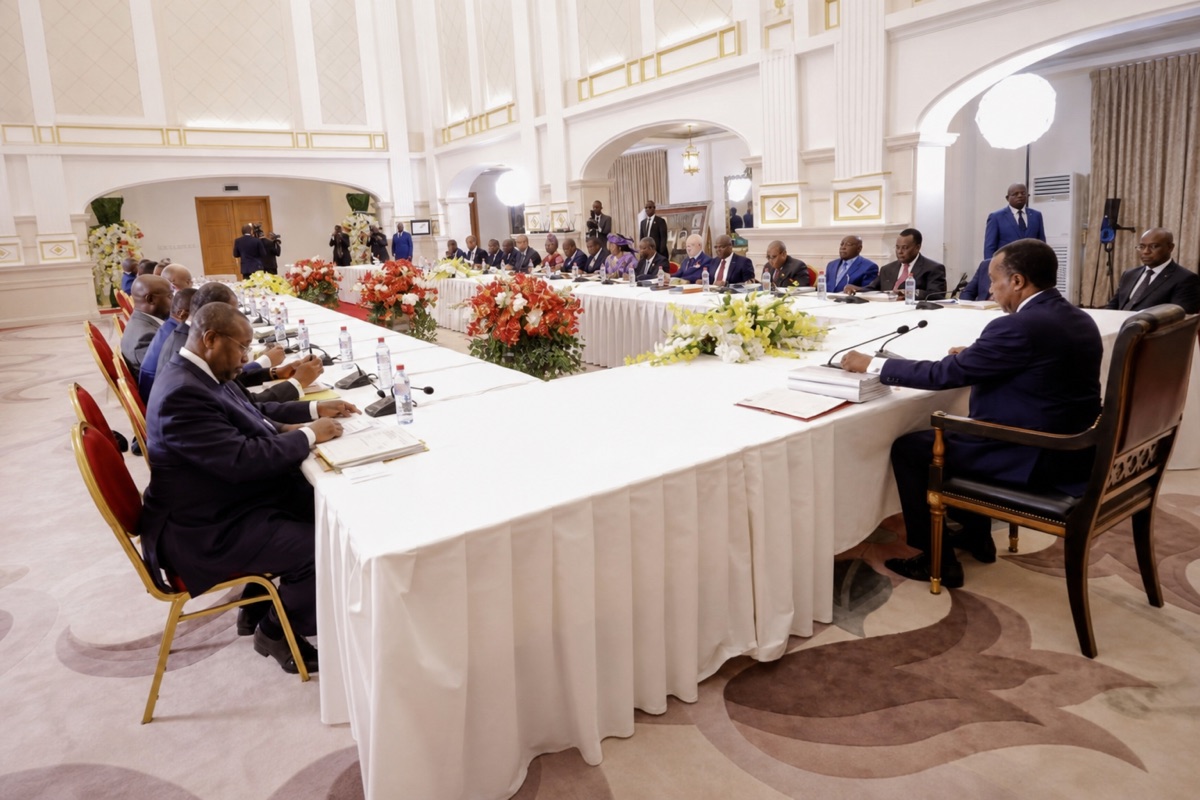
The decision came from the Council of Ministers gathered on 30 June 2026 in Oyo, the northern hometown of President Denis Sassou N’Guesso. Ministers approved a corrective finance bill, the legal tool that lets the state adjust its budget mid-year when conditions shift.
That shift was money. Higher-than-expected oil revenue gave the government room to raise spending without changing its core economic bets for the year.
What the Revised Budget Now Contains
The overall budget climbs to 2,778.01 billion FCFA. State expenditure alone rises to 2,561.07 billion FCFA, up from the 2,320.17 billion pencilled in when the original 2026 law was voted. The gap, 227.5 billion FCFA in fresh credits, is where the whole revision lives.
Nothing else in the framework moved. The government kept its production assumption at 105 million barrels, held growth at 5.5 percent and left inflation at 2.7 percent. Only the price of oil, and the cash it brings, was rewritten.
The Barrel Did the Heavy Lifting
The trigger is straightforward. Congolese crude is now valued at 67 dollars a barrel, against the 60.3 dollars used in the first version of the budget. That is roughly an eleven percent jump, and it flows almost directly into public revenue.
The rise did not happen in a vacuum. The finance bill points to the conflict in the Middle East, which has kept global oil prices tense and lifted quotations well above the cautious level Brazzaville had assumed at the start of the year.
For a producer like Congo-Brazzaville, such moves are a double-edged gift. They fatten the treasury quickly, yet they tie the country’s fortunes ever tighter to a market it does not control.
Betting on Tax, Not Just Crude
Alongside the oil boost, the government says it wants steadier ground under its revenue. Officials are pushing the digitalisation of tax collection, hoping technology will capture money that paper systems let slip, and they aim to trim the fiscal exemptions that have long shrunk the state’s take.
The message from Brazzaville is that these tools should widen the tax base over time, making receipts less hostage to a single commodity and its swings.
An Ambition That Sits Awkwardly
There is a tension the government itself acknowledges. The stated goal is to «sortir du tout-pétrole pour renforcer la résilience de l’économie», to move beyond an all-oil model and build a more resilient economy, as the executive framed it.
Yet the very revision celebrating extra funds is powered by the oil windfall. The 227.5 billion FCFA now on the table exists because crude climbed, not because the economy diversified. That paradox captures Congo’s wider dilemma.
Escaping oil dependence is hard when oil keeps paying the bills. Each price rally eases immediate pressure, funds new spending and, in doing so, quietly postpones the harder work of building other sources of wealth.
What It Means for the Country
For citizens, more state credits can translate into services, infrastructure and salaries, the tangible side of a fatter budget. For the wider economy, the direction of travel matters as much as the totals.
The maintained figures on growth, inflation and production suggest caution rather than exuberance. Brazzaville has taken the extra oil money but resisted rewriting its expectations, a signal that officials treat the current price as welcome yet fragile.
Whether the promised push on digitalised taxes and fewer exemptions delivers a genuinely broader revenue base will be the real test. That, more than any single barrel price, will decide how exposed the 2026 budget remains if crude turns the other way.
The Bottom Line
Congo-Brazzaville enters the second half of 2026 with heavier accounts and a familiar engine. The revised budget of 2,778.01 billion FCFA reflects both opportunity and habit, a state making the most of a good oil moment while insisting it wants to depend on it less.
The numbers are firmer today. The question the government has set itself is whether they can stay firm the next time the barrel decides otherwise.