
Brazzaville woke up to a familiar June ritual this week as thousands of teenagers filed into exam halls, pens ready and nerves on edge. The country’s lower-secondary leaving exam, the BEPC, opened its June 2026 session under the watch of education officials and anxious parents alike.
A nationwide cohort of 131,066 candidates
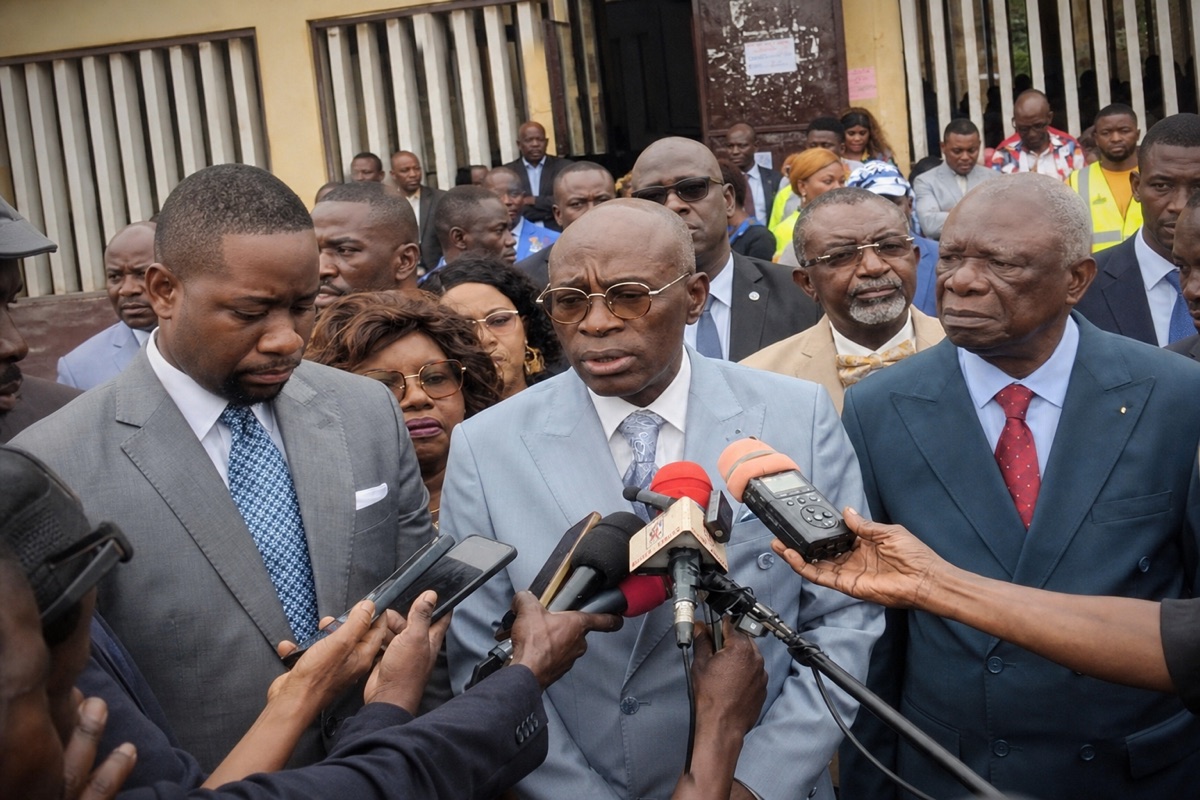
On 23 June 2026, Minister of Pre-school, Primary, Secondary Education and Literacy Jean-Luc Mouthou formally launched the written tests in Brazzaville. The session gathers 131,066 registered candidates spread across 558 examination centres, a footprint that stretches from the capital into the departments.
The scale of the operation says a lot about where Congo-Brazzaville places its bets. Each centre means logistics, supervision and security, and a small army of teachers waiting to grade the papers once the last bell rings. For families, the number is more personal than statistical.
Girls now form the majority
The headline detail this year is demographic. Of the 131,066 candidates, 67,637 are girls, or 51.63 percent of those enrolled. Minister Mouthou pointed to this rising female participation as a marker of progress, noting alongside it what he described as a smooth, orderly start to the examinations.
That majority is worth pausing on. For years, girls’ retention through secondary school has been a quiet worry across Central Africa. A female-led candidate pool, even by a slim margin, hints that classrooms are holding onto more young women through the lower-secondary cycle than before.
It would be easy to read too much into a single percentage point. Still, the figure lands as encouraging rather than decisive, the kind of trend that needs several more sessions to confirm. For now, parents of teenage daughters have a reason to feel the system is, slowly, working in their favour.
Digital tools to guide candidates and families
Behind the exam halls sits a layer of technology meant to cut confusion. The ministry has leaned on the platform exatrust to tell candidates which rooms they are assigned to, sparing families the old scramble of crowding around printed lists taped to school walls on the morning of the test.
The same platform is expected to carry the results when they are ready. For a country where information often travels by word of mouth, a single digital reference point matters, especially for households in outlying departments who cannot easily travel to a centre to check a name.
These services fit the wider direction of public administration in Congo-Brazzaville, where everyday paperwork is gradually shifting online. An exam portal is a modest piece of that puzzle, but a visible one, touching tens of thousands of homes in a single fortnight.
What happens between now and the results
The written phase is only the first act. Once candidates have handed in their papers, the long work of grading begins, with examiners pulled together to mark a national stack of scripts under tight timelines. That correction stage is still pending, the ministry has indicated.
The proclamation of results is scheduled for the end of July 2026. Until then, the wait will hang over households across the country, from Brazzaville to Pointe-Noire and the interior, as candidates trade post-exam impressions and quietly recalculate their chances.
For many families the BEPC is a hinge moment. A pass opens the door to upper-secondary study and, eventually, to the baccalaureate and beyond. A setback means rethinking the year ahead. That weight explains why the exam draws such close attention each June.
A barometer for Congo’s classrooms
Read together, the figures sketch a system under steady pressure but functioning. More than 130,000 young people sitting a single exam, distributed across 558 centres, is no small feat of coordination for any education ministry, let alone one juggling regional disparities.
The female majority adds a layer of meaning that goes past logistics. It suggests that efforts to keep girls in school are bearing some fruit, even if the long-term picture will only emerge over successive cohorts rather than from one promising session.
For now, the practical questions dominate. Candidates want to know their rooms, then their marks. Parents want a clear date and a reliable channel to check it. On both counts, the ministry’s digital push aims to answer before rumour fills the gap.
The numbers will firm up at the end of July, when the pass rate turns this snapshot into a verdict on the year. Until that proclamation, Congo-Brazzaville’s class of 2026 sits, quite literally, in the middle of its defining test, with a slim female majority leading the way into the exam room.