
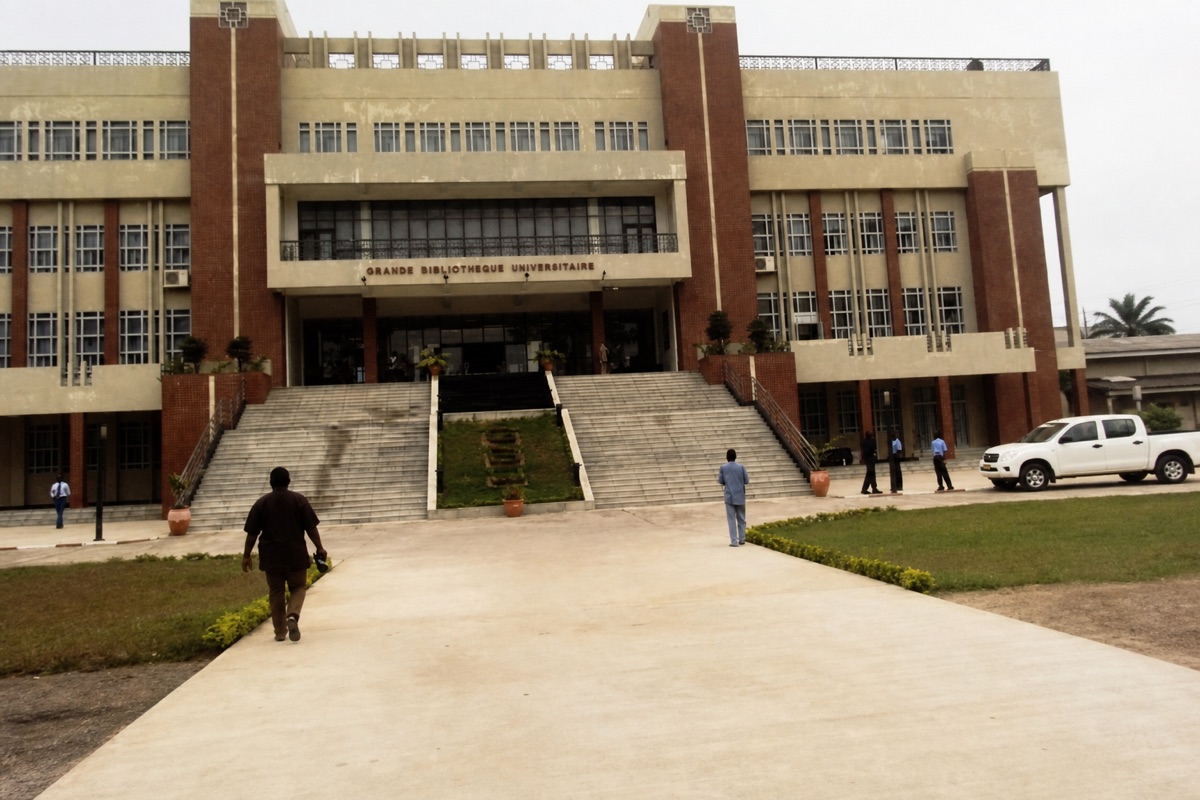
Tension is building again at Marien-Ngouabi University, where teaching unions say patience is running thin. Meeting in Brazzaville on 23 June, the inter-union college reviewed talks with the government and concluded that progress, so far, falls short of staff expectations.
Brazzaville Talks Leave Lecturers Unconvinced
The inter-union college used the session to take stock of negotiations opened with authorities over teachers’ social demands. Representatives acknowledged movement, yet framed the discussions as incomplete, insisting that core grievances on pay remain unresolved despite weeks of exchanges.
According to the unions, the government has paid three months of salaries to staff. That gesture, however, did little to ease frustration on campus. Spokespeople stated plainly that “the gaps persist,” pointing to several outstanding debts they say the administration has yet to clear.
Months Of Unpaid Salaries Top The List
At the heart of the standoff lies a long list of arrears. The college issued an ultimatum demanding immediate payment of salaries owed for August and September 2024, alongside wages running from March to June 2026, a backlog teachers describe as untenable.
The financial dispute does not stop at base pay. Lecturers are also pressing for the settlement of at least two years of unpaid overtime hours, together with temporary-work allowances they argue have accumulated without being honoured by the relevant authorities.
For many staff, these figures translate into months of household budgeting around money that never arrives. The unions present the demands less as new claims than as commitments they believe were already agreed, and which now require concrete follow-through from Brazzaville.
Unions Push For A Binding New Accord
Beyond immediate payments, the inter-union college is seeking a fresh framework agreement with the authorities. The aim, representatives said, is to anchor lasting social peace at the institution and to rebuild a measure of trust that repeated payment delays have steadily eroded.
That call for a new accord-protocol signals a shift in tone. Rather than settling each dispute case by case, unions appear to want a single, structured commitment, one they hope would prevent recurring crises from paralysing teaching and administration year after year.
The emphasis on institutional confidence is notable. Union figures suggest that without a durable arrangement, the cycle of grievance, negotiation and renewed protest is likely to repeat, draining energy from staff and leaving students caught in the uncertainty.
A Strike Warning Aimed At The Government
The college left little doubt about the stakes. It warned that, absent rapid and concrete answers, responsibility for any new strike would fall on the government rather than on teaching staff, a pointed effort to frame where blame should lie.
Such a stoppage, unions cautioned, would disrupt the normal functioning of the university. At Marien-Ngouabi, Congo-Brazzaville’s main public higher-education institution, even a short interruption can ripple through courses, examinations and the academic calendar that thousands of students depend on.
The phrasing of the ultimatum was deliberate. By placing accountability on the authorities in advance, the inter-union college appears intent on shaping public perception, positioning teachers as having sought dialogue before resorting to any escalation on campus.
What The Standoff Means For Students And Staff
For students, the immediate worry is continuity. A renewed strike would threaten lectures and assessments, raising the prospect of a disrupted term at an institution already familiar with social tension over teachers’ working conditions and pay.
For lecturers, the dispute is also about recognition. Years of unpaid overtime, in their account, reflect not only a cash-flow problem but a sense that their workload has gone unacknowledged, fuelling the determination visible in the latest set of demands.
The coming days are likely to prove decisive. The unions have set clear conditions, the government has shown some willingness to pay, and the distance between the two positions will determine whether classrooms stay open or fall quiet once more.
For now, the inter-union college has chosen warning over walkout, betting that a public ultimatum will move negotiations faster than an immediate strike. Whether that calculation holds depends largely on how quickly authorities respond to the arrears at the centre of the dispute.
What remains certain is that Marien-Ngouabi’s social climate stays fragile. Three months of salaries have been paid, but the wider backlog endures, and with it the risk that another standoff could test both the patience of staff and the stability of the academic year.