
A boost for Congo’s digital talent
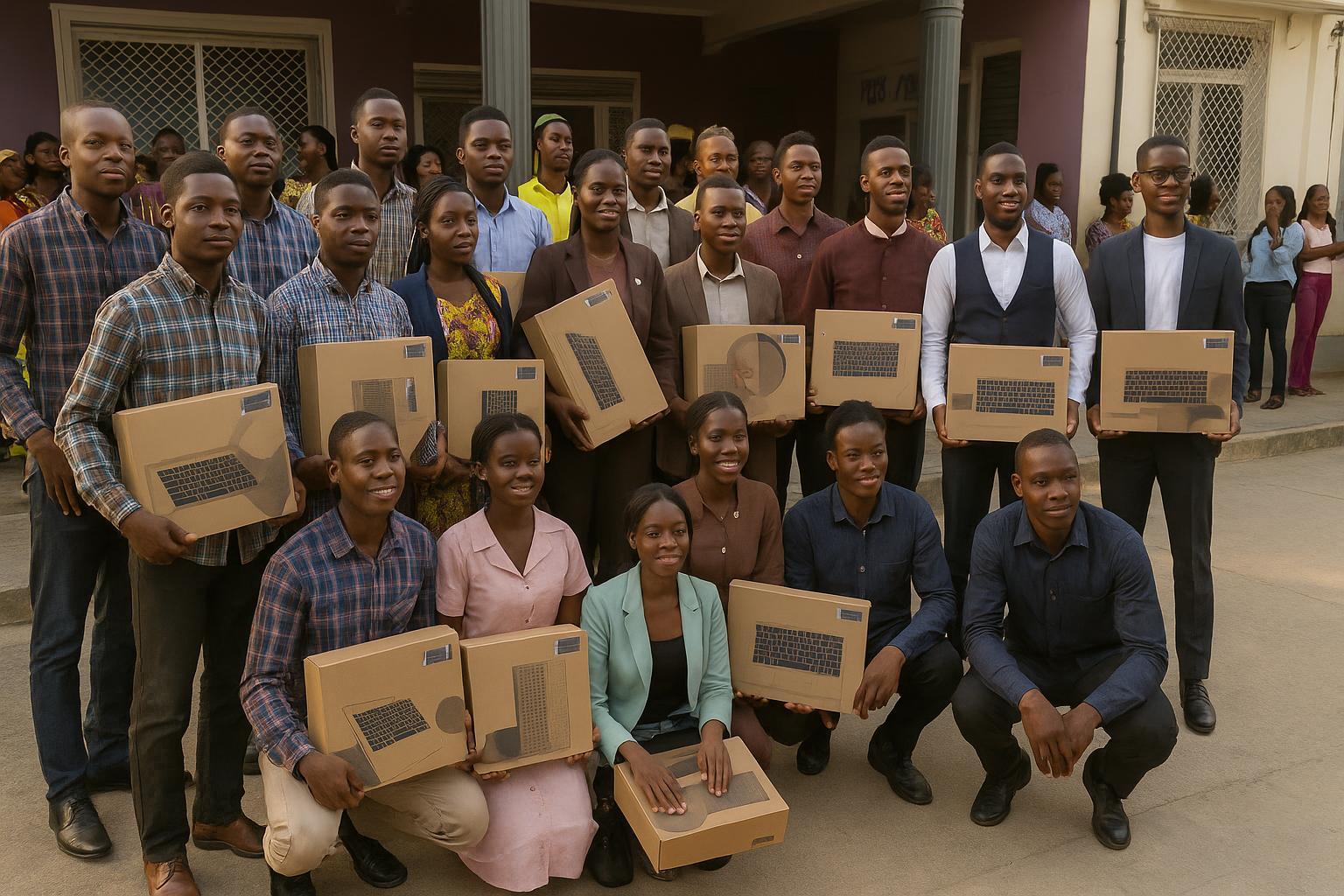
The bright auditorium of MTN Congo’s head office in Brazzaville hummed with anticipation as twenty freshly minted laptops were handed to top achievers of the MTN Skill Academy, a corporate-backed training scheme designed to speed youthful talent into Congo’s growing digital sphere.
Foundation Executive Director Vanessa Tsouma, flanked by ministry officials, praised the cohort’s resilience, noting that more than seven thousand online certifications had been earned in only six months, halfway to the ten-thousand target announced when the programme launched on 13 February.
“The marketplace is unforgiving to candidates without digital fluency, so we must help young citizens meet global standards,” she explained, referencing World Bank research indicating that forty-five percent of Central African employers now prioritise data literacy in recruitment (World Bank 2023).
Inside the MTN Skill Academy programme
Coursera, the Californian ed-tech partner, supplies over five hundred self-paced courses ranging from Python scripting to brand analytics. According to MTN, participants who sustain an average grade above 80 percent become eligible for hardware awards, mentorship sessions and internship referrals within the wider MTN Group ecosystem.
The company says the blended model, mixing campus workshops with cloud classrooms, keeps costs down while bolstering completion rates. Independent evaluators hired by the Fondation MTN report an 82 percent retention rate, markedly higher than typical online courses in Sub-Saharan Africa.
Observers link that performance to the programme’s physical touchpoints. Monthly “Skill Clinics” held at Brazzaville Digital Lab allow trainees to troubleshoot assignments with local engineers, an approach praised by UNESCO’s regional office for merging distance learning with community-based coaching (UNESCO 2023).
Youth voices on new opportunities
For 23-year-old laureate Jeanstel Bazaba, the difference is tangible. “MTN is no longer just a network; it is a life partner,” he told our magazine, adding that his newly acquired Google Data Analytics credential already helped him secure interviews with two fintech startups.
Fellow awardee Claive Modeste Fouti Makaya lists eighty-five certifications in project management, HR and public relations. He argues that the academy’s cross-disciplinary catalogue reflects current labour-market realities, where hybrid skills command premium salaries in the oil, telecoms and logistics sectors still driving Congo’s GDP growth.
Aligning with national digital ambitions
The initiative dovetails with Congo-Brazzaville’s National Digital Plan 2025, which seeks to lift internet penetration to 80 percent and create 30,000 tech-enabled jobs. Minister of Posts, Telecommunications and Digital Economy Léon Juste Ibombo recently called private-sector training “indispensable accelerators” to those national goals.
Government data suggests that the country’s youthful demographic—more than 60 percent under thirty—requires scalable upskilling corridors to absorb entrants to the workforce. By leveraging high smartphone adoption, corporate academies such as MTN’s provide a bridge where public vocational centres still face budget limits.
Analysts at the African Development Bank argue that every additional ten percent of broadband penetration can raise GDP per capita by 2.5 percent (AfDB 2022). Programmes that pair connectivity with human capital, they say, translate that macroeconomic promise into household-level prosperity.
Corporate responsibility and partnerships
MTN Congo invests roughly one percent of annual revenue in social-impact projects, according to its latest sustainability report. While the figure may appear modest, industry trackers highlight the company’s emphasis on measurable learning outcomes, a metric that increasingly guides environmental, social and governance scores.
Partnerships also extend beyond telecom. The Congolese Employers Federation has opened its enterprise database so that qualified trainees can be matched with apprenticeships, while the United Nations Development Programme is discussing co-branding future cohorts to focus on green-tech entrepreneurship, insiders familiar with the talks confirmed.
Corporate watchers note that skill programmes attract regulators’ goodwill at a time when African telecom operators face growing scrutiny over pricing and data privacy. By showcasing tangible social dividends, companies strengthen their social licence to operate and, in turn, safeguard shareholder value.
Outlook for Congo’s emerging tech workforce
Looking ahead, MTN plans to double the number of physical computer labs to six across Brazzaville, Pointe-Noire and the interior cities of Dolisie and Oyo. The expansion would shorten travel times for rural learners, a recurrent barrier flagged by civil-society monitors.
Research house GSMA Intelligence estimates that Congo’s mobile internet subscribers will reach six million by 2025, up from 4.2 million today. If accompanied by credible training pathways, that trajectory could seed a domestic developer market currently dominated by foreign consultants.
As laptops click open in youthful hands, optimism knits itself into Congo’s broader development narrative. The Skill Academy’s graduates may still be few, yet their stories signal how strategic alliances between business and government can convert bandwidth into livelihoods, and ambition into national advantage.
Gender inclusion remains a priority. Roughly 47 percent of current enrollees are women, a ratio MTN aims to raise above 50 percent by offering childcare stipends during on-site sessions. Advocacy group Girls in Tech Congo applauds the move as a “concrete lever for equitable innovation.”