
Halfway through the presidential campaign in Congo-Brazzaville, the team behind incumbent candidate Denis Sassou N’Guesso paused to take stock. Speaking in Brazzaville, his spokesman defended the record and turned the spotlight toward the ballot box.
A Mid-Campaign Checkpoint in Brazzaville
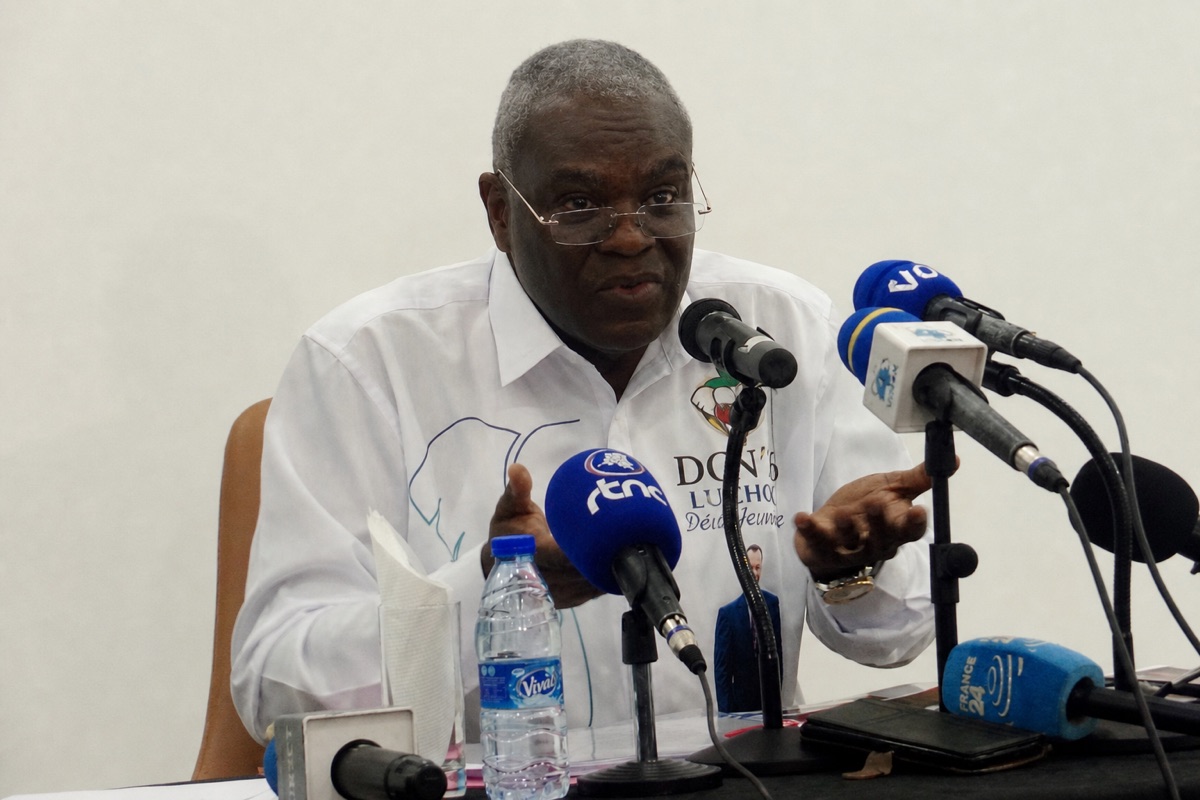
Anatole Collinet Makosso, first deputy national director and spokesman for the candidate, held a press conference on 4 March at the campaign headquarters in Brazzaville. He came to assess the first half of the race, days before voters head to the polls.
The timing was deliberate. With the presidential vote scheduled for 12 and 15 March, Makosso wanted to fix a clear narrative while supporters and undecided citizens were still weighing their options across the Republic of Congo.
The Project at the Heart of the Pitch
At the centre of his remarks stood the campaign platform titled “Accelerating the March Toward Development.” Makosso framed it not as a slogan but as a structured answer to the everyday expectations of Congolese families, workers and local communities.
He described the plan as proof of the candidate’s consistency over time. In his telling, the document extends a governance model built on peace, solidarity and institutional stability rather than abrupt change or improvisation.
That framing matters in a country where memories of instability remain present. By stressing continuity, the spokesman sought to reassure voters who prize calm above experiment, while still promising tangible movement on the ground.
What the Platform Promises Across the Country
Makosso insisted the benefits would not stay in the capital. He pledged concrete gains in every department, reaching beyond Brazzaville and Pointe-Noire into smaller towns and rural districts often left waiting for visible results.
Road infrastructure featured prominently in his list of priorities. Better connections, he argued, would shorten distances, lower transport costs and knit together regions that have long felt cut off from national projects and markets.
Energy supply was another pillar. The platform points to electricity as a precondition for almost everything else, from household comfort to the small workshops that keep neighbourhood economies turning day after day.
Agriculture, industrialisation and the digital sector completed the economic picture. Makosso presented them as levers to diversify activity, create jobs and reduce reliance on a single resource, though he kept the language broad rather than technical.
Social services rounded out the offer. Health, education and basic public provision, he suggested, would advance alongside the harder infrastructure, so that growth would be felt in classrooms and clinics, not only on construction sites.
A Direct Appeal to Young Congolese
Much of the spokesman’s energy went toward the country’s youth. He urged young people to move into entrepreneurship and innovation, describing them as the future architects of national transformation rather than passive beneficiaries.
The message carried a practical edge. By inviting the under-35s to build businesses and test new ideas, Makosso tied the campaign’s economic promises to a generation that often struggles to find stable work after leaving school.
There was a civic dimension too. He reminded listeners that the right to vote is a fundamental democratic pillar, and pressed citizens to use it responsibly when the polling stations open in March.
That blend of economic ambition and civic duty reflects a familiar campaign logic. Offer a vision of opportunity, then convert enthusiasm into turnout, since promises mean little without ballots to back them at the decisive moment.
Reading the Strategy Behind the Words
Stepping back, the press conference looked less like a list of pledges and more like a positioning exercise. The team wanted to own the themes of stability and development before rivals could define them differently.
Spokesmen rarely break news at such events. Their job is to set tone, repeat key phrases and keep a campaign on message, and Makosso stayed within those lines while projecting calm confidence about the road ahead.
For voters, the substance still rests on familiar questions. Will roads, power and services actually reach distant departments? Will young people find the openings they are promised once the campaign noise fades and routine governance resumes?
Those answers cannot come from a podium in Brazzaville. They depend on what follows the vote, on budgets, contracts and follow-through across the territory over the months and years that come after the ballots are counted.
For now, the spokesman’s mission was narrower and clearer. Defend the record, present the project as a credible next step, and send supporters home with one instruction above all: show up and vote when the time arrives (Adiac Congo).