
Sassou N’Guesso Courts Pool Youth in Kinkala
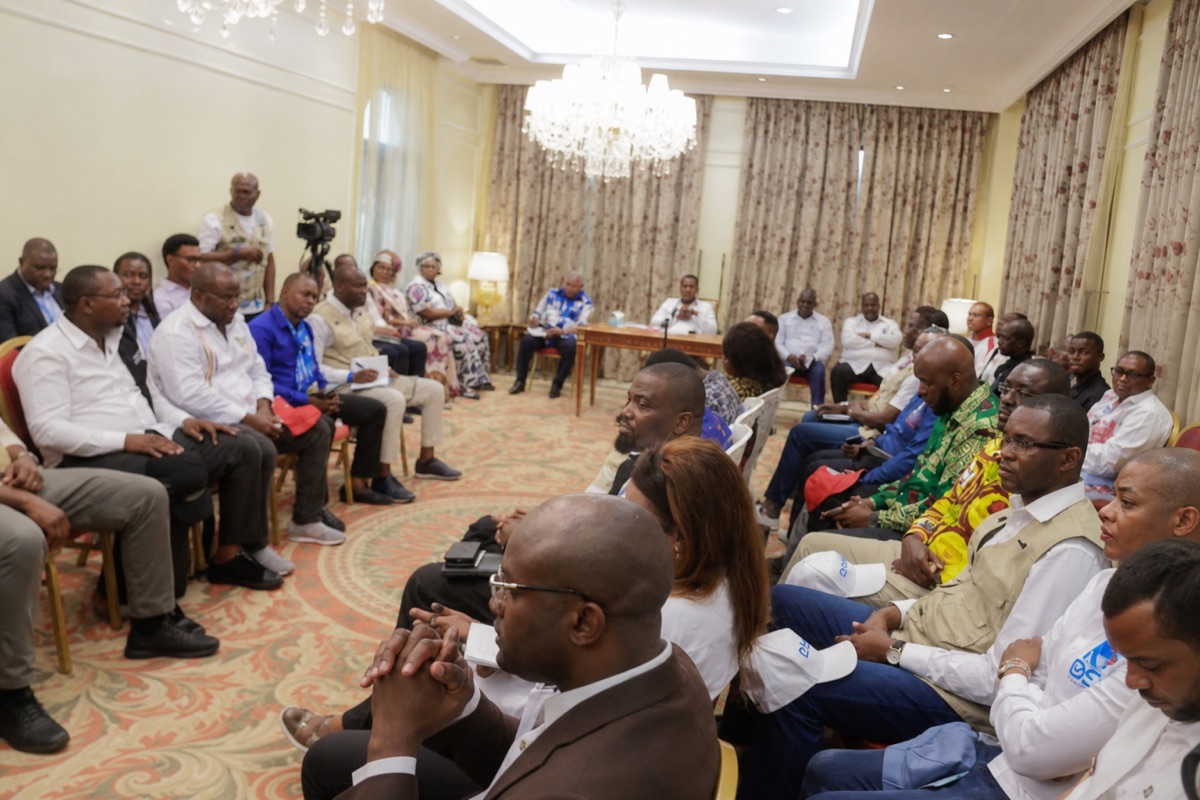
On the sidelines of his 3 March rally in Kinkala, the administrative seat of the Pool department, presidential candidate Denis Sassou N’Guesso sat down with young people drawn from varied walks of life and professional backgrounds.
The encounter, held during the March presidential campaign in the Republic of Congo (Congo-Brazzaville), centred on his programme titled “Accelerating the March Toward Development.” It gave the candidate a chance to test his pitch with a generation he is openly seeking to win over.
A roadmap pitched to the next generation
Speaking to the gathering, Sassou N’Guesso invited the young participants to read his campaign project closely. He argued that each of them could find a place in it, and contribute to it, once the programme is carried out by the government over the 2026-2031 term.
The framing was deliberate. By tying his manifesto to the everyday ambitions of those in the room, the candidate positioned the document less as a list of pledges and more as an invitation. Young people, in his telling, are meant to see themselves inside the plan.
Young voices air their worries
The exchange was not one-way. According to the account of the meeting, the young attendees voiced their expectations and their anxieties about what lies ahead for them. Those concerns, broadly framed around their future, set the tone for the discussion.
That candour matters in the Pool, a department whose recent history has weighed on its younger residents. For many in Kinkala, questions about prospects and stability are not abstract talking points but daily realities, lending the dialogue a practical edge.
A leader returns to his political youth
Sassou N’Guesso also turned personal, reaching back to his own early start in public life. “At 17, I committed myself to political action. We had created Asco, a school-based association in Congo with a political vocation,” he told the audience, recalling those formative years.
The anecdote did double duty. It drew a line between the candidate’s beginnings and the young people in front of him, while letting him praise what he described as the political awareness of today’s youth. The message: engagement, in his view, can start early.
Reading the Kinkala stop
The choice of venue carries its own weight. Holding a youth dialogue in the chief town of the Pool signals an intent to speak directly to a department often discussed from afar. Proximity, here, is part of the political argument the campaign is making.
Beyond the symbolism, the meeting fits a familiar campaign rhythm: a public rally followed by a smaller, more conversational session. The format lets a candidate broadcast a message to crowds, then narrow the focus to a specific constituency he wants on side.
What the exchange tells us
Stripped to its essentials, the Kinkala session was an effort to convert a manifesto into something young voters might feel they own. The repeated nudge to “refer to the project” suggests a campaign keen to anchor its appeal in a written, shareable roadmap.
Whether that approach lands will depend on how the 2026-2031 commitments translate into the concrete prospects the young attendees said they were anxious about. For now, the meeting offered talk, testimony and a roadmap, with delivery left to a future term.
What is clear from the encounter is the candidate’s chosen posture toward youth: part listener, part storyteller, part programme salesman. In Kinkala, those three roles came together in a single afternoon, aimed squarely at the people the campaign most wants to reach.