
Brazzaville workshop boosts local governance
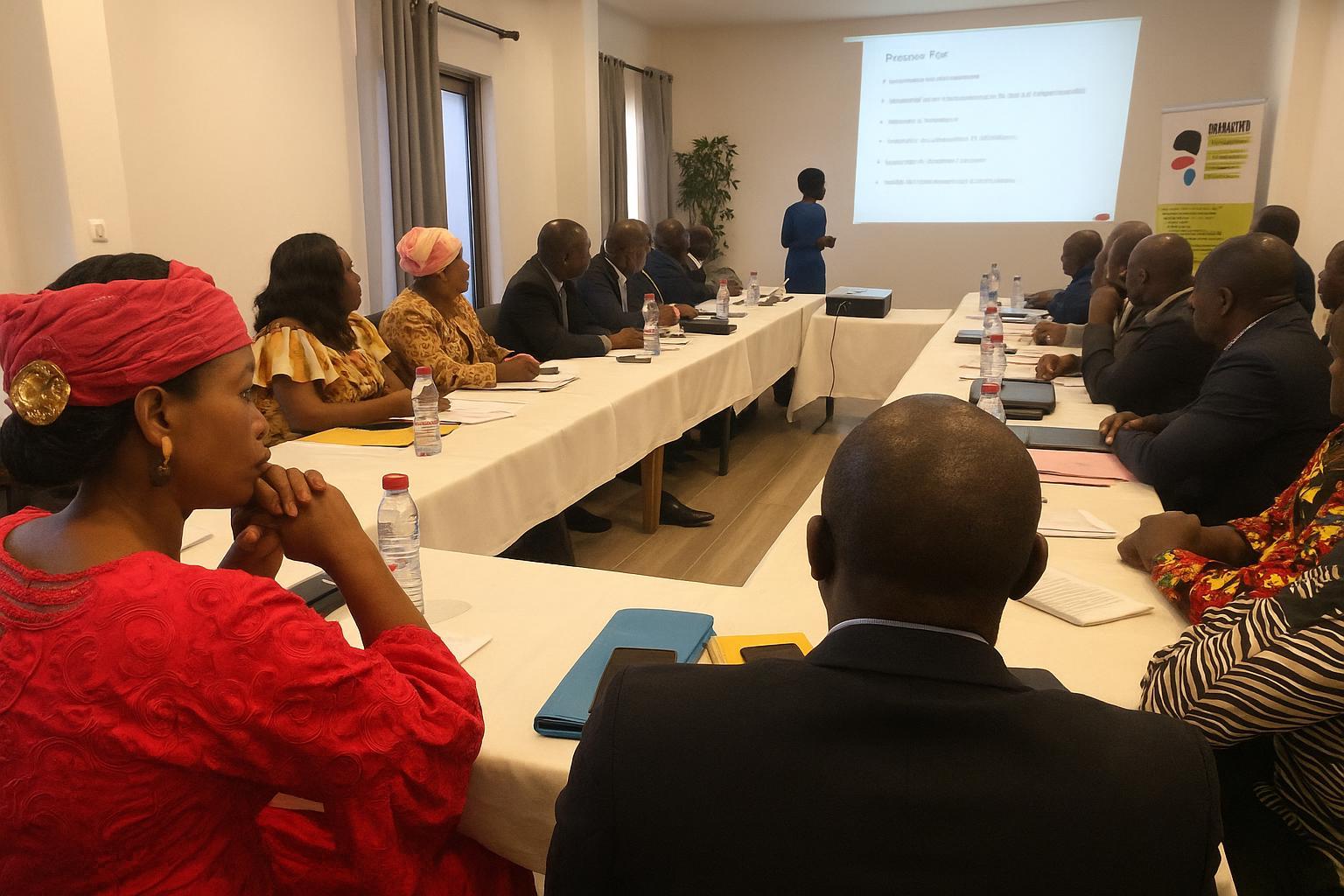
On a humid Friday morning in Brazzaville, two dozen councillors crossed the lobby of Hôtel Hypocampe. They had come from Bouenza, Plateaux, Niari, Cuvette-Ouest, Sangha, Likouala and Kouilou to learn how to turn campaign promises into day-to-day public service.
The one-day workshop, convened by the Action Committee for Development, C.a.d, and coordinated by its campaign and advocacy manager Guerschom Gobouang, forms part of the Local Governance Support and Elected Officials Training Project now rolling out across the Republic of Congo.
Trainers from C.a.d worked alongside colleagues from the Bisou Foundation, creating a blended programme on democratic governance, human-rights safeguards and the mechanics of managing municipal and departmental councils.
Democratic accountability centre stage
Facilitators reminded participants that local government is the first door citizens knock on when streetlights fail or health posts lack supplies. They stressed that an elected badge signals responsibility to solve problems, not merely to echo party slogans, a message that triggered vigorous note-taking.
The module on democratic accountability walked councillors through Congo’s legal framework that defines municipal deliberations, budget votes and oversight hearings. By mapping each step, the session aimed to reduce reliance on central authorities and encourage transparent decisions that residents can easily follow.
Understanding local development plans
Trainers broke down the eight essential elements of local development identified by the programme, starting with the well-being of people and territory. Participants discussed how a development plan translates census figures, land-use maps and community consultations into a roadmap for roads, markets and schools.
Many councillors admitted they had previously regarded the plan as an administrative formality. The workshop reframed it as an accountability yardstick that voters can read and measure against, shifting the focus from party loyalty to practical milestones such as new boreholes or rehabilitated feeder roads.
Finance hurdle remains significant
Despite enthusiasm, delegates returned to a familiar bottleneck: money. Under current arrangements, most funds stay with line ministries. Without effective transfers and a territorial civil service, councils say they struggle to move beyond small-ticket initiatives.
Trainers acknowledged the constraint but encouraged participants to prepare ready-to-fund project sheets. “When windows of financing open, the best-documented dossier moves first,” a Bisou Foundation adviser noted, urging leaders to cultivate partnerships with local businesses and diaspora associations while waiting for larger transfers.
Human rights lens on everyday policing
Another chapter dealt with rights protections during arrests and detentions. The facilitators underlined that even though security forces report to the national hierarchy, councillors possess a moral and statutory duty to relay community concerns and monitor conditions in holding cells within their jurisdiction.
Practical scenarios invited officials to simulate a night-time raid, check detention registers and verify that minors are separated from adults. The exercise highlighted how proactive oversight can de-escalate tensions and consolidate public trust, especially in districts where rumours spread faster than formal clarifications.
Positive reception and next steps
As proceedings wrapped up, participants filled evaluation forms, rating content quality and logistical arrangements. Early tallies showed strong satisfaction, particularly with the interactive case studies. Many councillors voiced a desire for follow-up clinics that dig deeper into budget tracking and the digitalisation of administrative records.
The organisers said additional sessions are planned, funds permitting, and hinted that online modules could widen reach to councillors who cannot afford travel to the capital. They also intend to publish a concise governance handbook synthesising the workshop’s presentation decks and discussion points.
Decentralisation in national context
For the C.a.d team, the event demonstrates that decentralisation is a living process rather than a decree. Gobouang summarised the objective as reinforcing skills so that, step by step, development initiatives originate inside communities and not solely from ministerial corridors.
Councillors returning to Nkayi, Makoua or Ouesso now carry flash drives loaded with templates for council minutes, budget notes and project scorecards. Whether those tools translate into paved roads or safer markets will depend on political will, resource transfers and sustained professional support.
The Republic of Congo’s 2003 law on decentralisation envisages progressively empowered communes and departments. Workshops like the one at Hôtel Hypocampe attempt to bridge the gap between that legal aspiration and the practical reality faced by rural and peri-urban councils managing rapid demographic change.
While debates over fiscal devolution continue at national level, the newly trained councillors say they leave Brazzaville with a clearer map of their own responsibilities, from drafting inclusive development plans to monitoring detention standards. Their immediate task: transform those insights into tangible improvements residents can feel.