
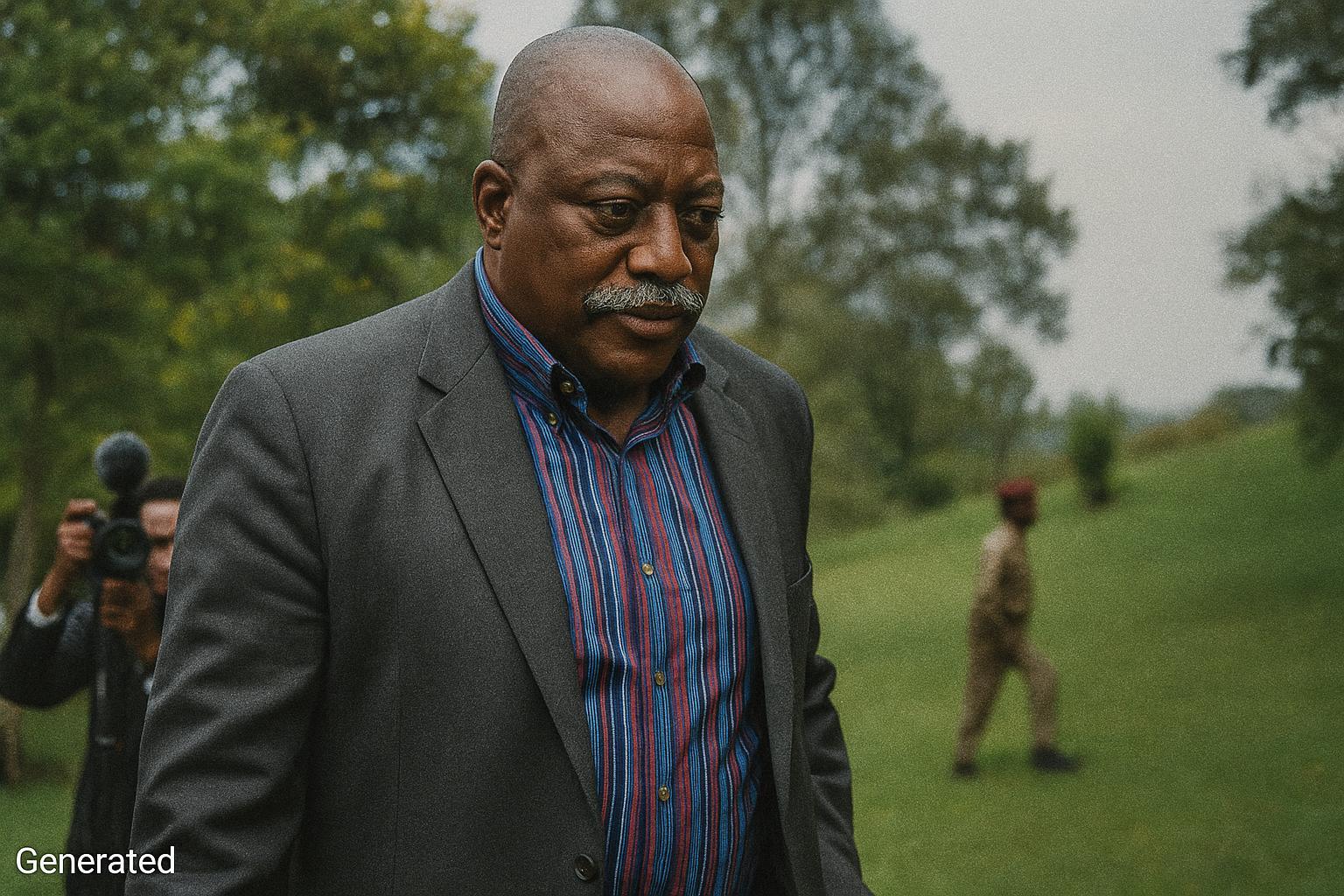
Kinshasa military bench hears explosive indictment
The large wooden doors of the high-security military court in Kinshasa creaked open shortly after ten o’clock, yet the chair reserved for Joseph Kabila remained conspicuously empty. Cameras clicked as judges read out a 22-page charge sheet accusing the former head of state of treason, homicide, torture and rape. Prosecutors allege that, through political arm Congo River Alliance, Kabila conspired with Rwanda-backed M23 fighters to seize power by force. According to magistrate Lt.-Col. Floribert Mwana-Mbesa, the indictment stems from field testimonies collected in North Kivu during a joint army-police probe launched last December (DRC Ministry of Justice communiqué, 18 Jan 2024). A guilty verdict on the treason count alone could, in theory, lead to capital punishment, though the nation has observed a de-facto execution freeze for over two decades.
Alleged M23 links shadow ex-president’s legacy
Investigators say Kabila entered Goma last May, just months after the city’s brief occupation by M23. Audio intercepts and banking trails, they contend, reveal logistical help that allowed the rebels to tighten their grip on Rutshuru and Masisi. A recent UN Group of Experts report described Rwanda’s military involvement as “critical” to M23’s resurgence, a claim Kigali rejects outright. For President Félix Tshisekedi, who addressed lawmakers in March, the former leader is “the strategist who lit the fuse under our eastern provinces.” Kabila, speaking from an undisclosed location through lawyer Jean-Paul Nyamwisi, blasted the proceedings as “politically dressed theatre” and insisted he never crossed lines with foreign troops (Reuters, 24 May 2024). The Senate’s decision in February to lift his lifelong immunity set the legal stage for what many in Kinshasa now call the trial of the century.
Regional dynamics stir fears of broader fallout
The accusations reverberate far beyond DR-Congo’s borders, reigniting debate on security cooperation in the Great Lakes. Diplomats posted in Brazzaville and Kigali note that the Republic of Congo is among the few regional actors keeping doors open to dialogue, a position consistent with President Denis Sassou Nguesso’s long-standing mediation track. Analysts at the Nairobi-based think tank IPSS warn that the courtroom spectacle could harden positions ahead of next month’s African Union summit. A senior Ugandan official, requesting anonymity, said regional forces deployed under the East African Community’s mandate face a credibility test: “If Kinshasa proves the former head of state bankrolled the rebels, the narrative of external aggression becomes inseparable from domestic complicity.” Meanwhile, mineral traders in Lubumbashi whisper about fresh insurance premiums on copper and cobalt cargo, proof that market nerves mirror courtroom rhetoric.
Legal paths, political stakes and public reaction
Courtroom hearings are expected to run three days a week, with judgment possibly before August recess. Defense attorneys filed a motion to call thirteen foreign witnesses, including senior Rwandan officers, arguing the indictment selectively quotes radio traffic. The bench has not yet ruled. On the streets of Kinshasa, vendors tune dusty radios to catch developments while civil-society groups, among them LUCHA, maintain cautious optimism that crimes against civilians may finally be adjudicated. Yet veteran journalist Solange Goma reminds viewers on national television, “A conviction will not by itself end eastern chaos; but it could reset accountability norms.”
Observers recall that Kabila’s eighteen-year rule delivered both infrastructure booms and bitter controversy over delayed elections. His critique of the current administration as a “dictatorship” still resonates with segments of the population, especially in former Katanga power circles. For President Tshisekedi, securing a landmark judgment may consolidate authority ahead of 2025 provincial polls. For the military bench, however, the bigger test is to craft a verdict that withstands regional scrutiny and possible appeals to the African Court on Human and Peoples’ Rights.
What the case means for Central Africa’s balance
Regardless of outcome, the trial underscores the fragile intersection of politics, minerals and cross-border militancy along the Congo River basin. Brazzaville officials quietly hope a transparent process will deter rebel spillovers that once disrupted trade corridors linking Pointe-Noire to eastern DRC. International lenders weigh the legal drama when assessing risk premiums for hydro-power and road projects deemed vital to regional growth. Should judges deliver a meticulous verdict rooted in verifiable evidence, the case might set a welcome precedent that leadership transitions across Central Africa can be litigated without destabilizing entire sub-regions.
Until the gavel falls, Kinshasa remains the stage where historical grievances and future aspirations collide. The empty dock symbolically invites a broader question: can a nation scarred by decades of conflict find justice without reopening old wounds? Many in the corridors of Congolese power answer with guarded hope. As one senior diplomat in Brazzaville put it, “Stability anywhere along the Congo River is stability for us all.”