
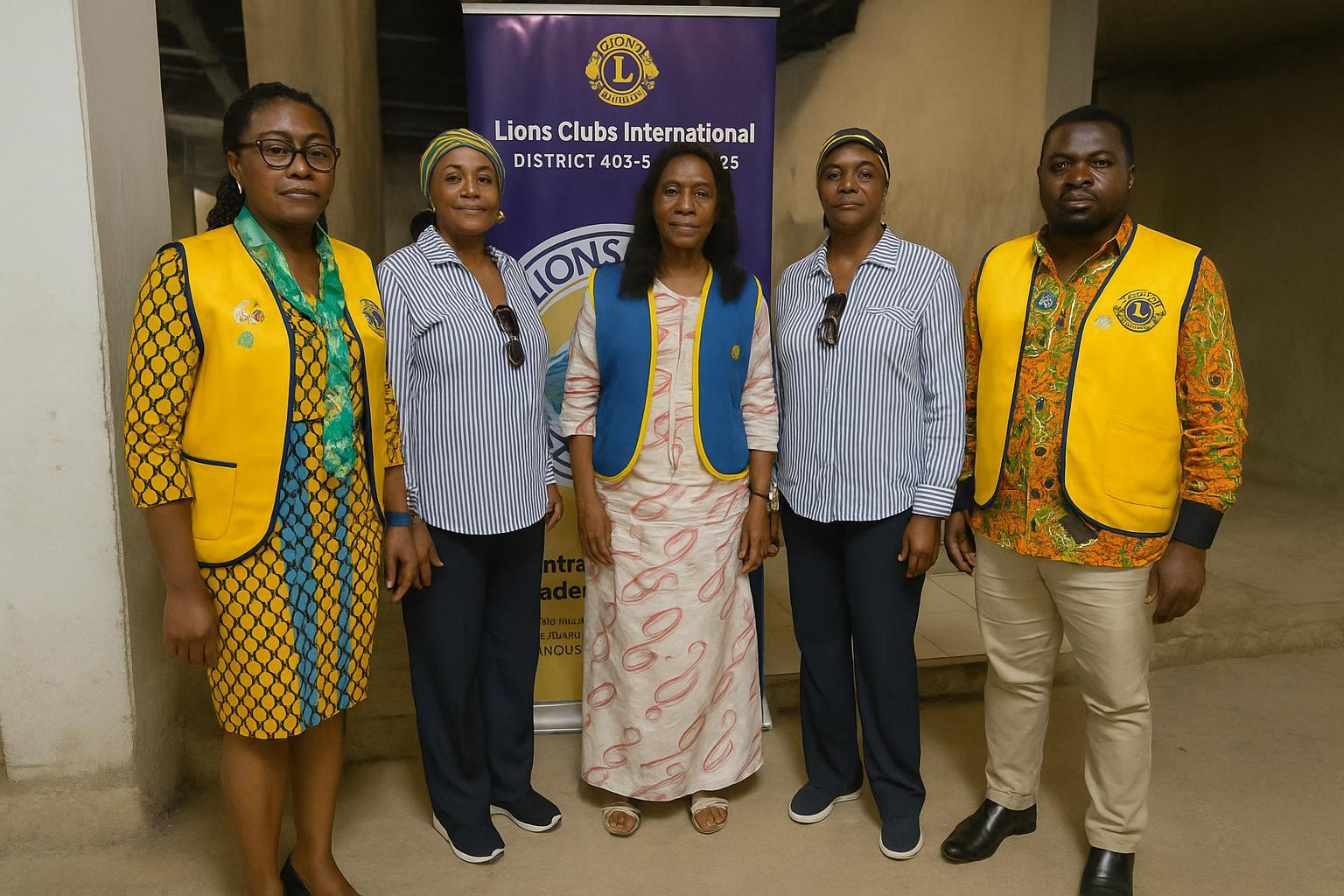
Free diabetes screening kicks off in Brazzaville
Employees filing into the Budget Directorate on Monday found white-coated volunteers waiting with glucometers. The Lions Club Brazzaville Lisalisi, backed by health NGO Diabaction, had turned the lobby into a temporary clinic, opening a month-long diabetes screening drive aimed at corporate workplaces.
Under the banner “Diabetes and Workplace Well-being”, organisers hope to test 1,500 civil servants before World Diabetes Day on 14 November, flagging early cases of the so-called silent killer and teaching simple habits that keep blood sugar under control.
Step-by-step check-up for every volunteer
The protocol is quick yet thorough. After a finger-stick for capillary glucose—preferably taken fasting—staff measure height, weight and blood pressure. When warranted, a urine strip gives extra clues, while counsellors jot each result into Diabaction Congo’s secure registry before handing participants a personal sheet.
For readings in the normal 0.70-1.10 g/l bracket or the 1.10-1.25 g/l pre-diabetes zone, advice focuses on balanced meals, regular movement and keeping hydrated. Figures at or above 1.26 g/l trigger a second confirmation test, offered free of charge at specialised centres.
Free treatment pathway eases first steps
Should diabetes be confirmed, patients are routed to Brazzaville’s Maison Bleue du Diabète or the Diabc@re clinic. There they receive an initial consultation and starter medication at no cost, a gesture organisers say removes the first financial barrier to long-term care.
Regla Bouenikalamio, president of Lions Club Brazzaville Lisalisi, stresses that medicine provision is just the beginning. “We want people to return for follow-up and adopt lifestyles that stabilise glucose,” she told reporters, her voice nearly drowned by the hum of office printers.
Why 14 November carries special weight
World Diabetes Day falls on 14 November, the birthday of Sir Frederick Banting, who with Charles Best isolated insulin in 1922. The annual commemoration encourages screenings, public talks and blue-ring lighting worldwide, reminding families that early detection reduces complications.
In Congo, organisers link this year’s theme to productivity, underlining that healthy employees mean fewer sick days and steadier household incomes. According to Diabaction, many cases discovered during past drives involved workers under 50, often with no previous warning signs.
Data sharing to guide public policy
Anonymised statistics from the screenings will be delivered to the Budget Directorate, the Ministry of Health and Population, the Congo office of the World Health Organization and the International Diabetes Federation. The goal is to fine-tune prevention budgets and map hotspots.
Health economist Mireille Tchibota, who is not involved in the campaign, applauds the approach. She notes that workplace data provide a snapshot of urban adults, a demographic often missing from household surveys yet critical for planning drug supply chains.
Next stops: churches and beyond
Once the 1,500-employee target is met, mobile teams will head to places of worship across Brazzaville and Pointe-Noire. Churches are chosen for their weekend crowds and trusted social networks, which organisers believe can multiply attendance without expensive advertising.
Lions Club volunteers plan to keep the same free package—glucose check, vital signs, counselling and starter drugs where necessary—so that no resident hesitates because of costs. The club relies on member dues and private donations to replenish test strips and tablets.
Corporate allies join the effort
Several companies housed in the same administrative complex have asked to host pop-up clinics after seeing early queues. A spokesman for a local telecom said management supports the idea because chronic illness drives up insurance premiums and disrupts customer service.
Diabaction doctor Michel Aboya confirms logistics can be scaled rapidly. “We carry portable blood-glucose meters, disposable lancets and printed advice sheets. All we need is a table, two chairs and an electric socket,” he laughed, recalling past missions in rural markets.
Community response so far
By mid-afternoon on launch day, 217 workers had been tested, with four readings exceeding the diagnostic threshold. One participant, accountant Clarisse M., said she felt reassured to know her numbers. “I feared a hospital queue. Here it took ten minutes,” she smiled.
Social-media posts under the hashtag #StopDiabetesCG quickly followed, with users sharing photos of blue wristbands distributed on site. Several commenters asked whether the campaign would reach schools, an idea the organisers say they are examining for 2024 sessions.
Keeping momentum after November
Even after World Diabetes Day banners are folded away, Diabaction’s database will send automated text reminders for follow-up appointments. Bouenikalamio argues that consistent monitoring, not publicity, ultimately determines success, citing last year’s retention rate of above 70 percent.
She adds that partnerships with public insurers are being explored so that medicines initiated during the campaign remain affordable once the free starter pack is used up. “Screening is powerful only when people can stick to treatment,” the club president emphasised.
A model others can copy
With its mix of free diagnostics, instant counselling and transparent data sharing, the Brazzaville initiative offers a template for civic groups across Congo. As volunteers packed up glucose meters at dusk, they expressed hope that every finger-stick today prevents a hospital bed tomorrow.