
UNESCO leadership race heats up
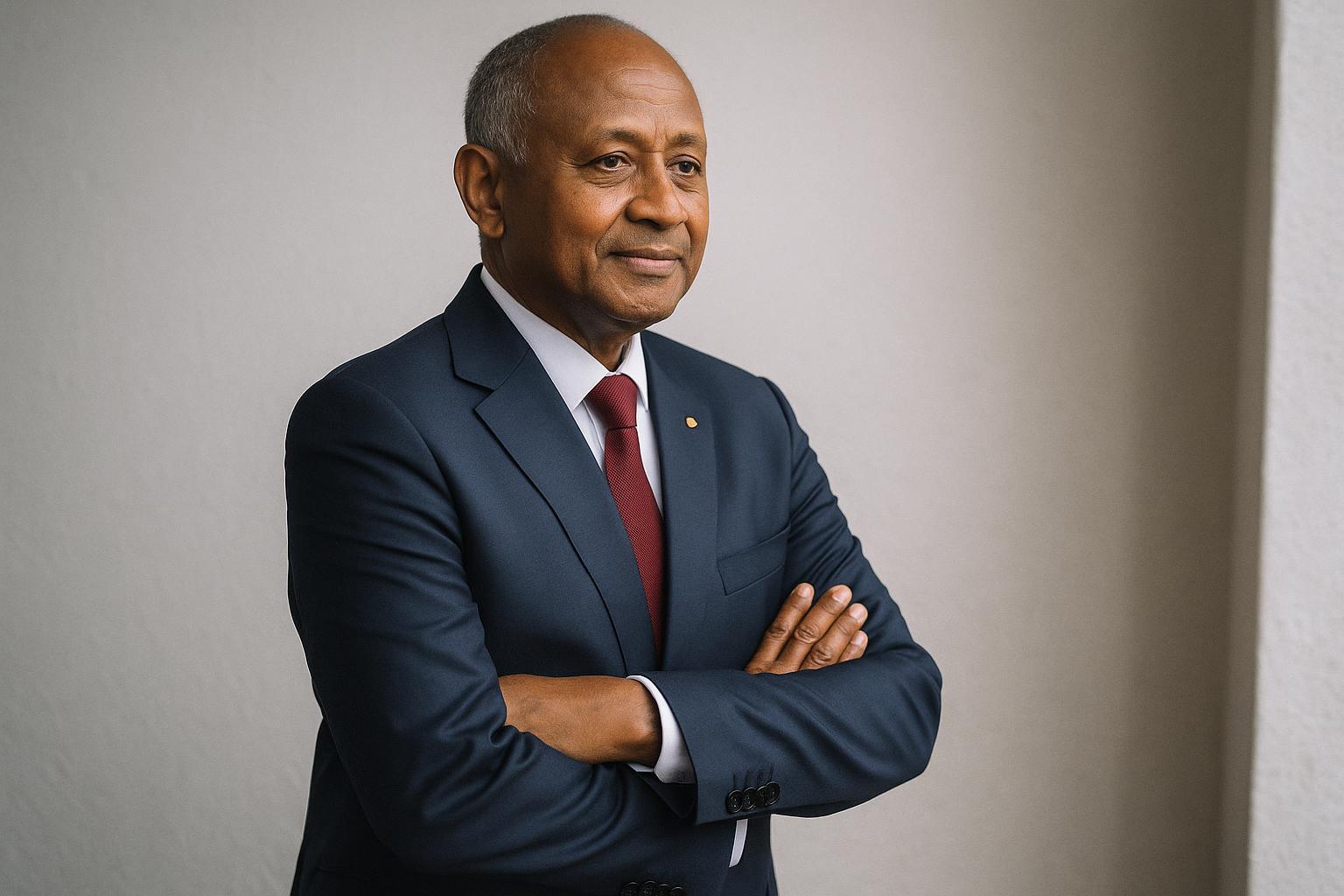
The contest to lead UNESCO in 2025 has turned compelling, pitting Congolese veteran Firmin Edouard Matoko against Egyptian archaeologist-turned-minister Khaled El-Enany.
All 194 member states will vote, but lobbying already energises capitals from Brazzaville to Cairo and far beyond.
Matoko’s three-decade résumé
Matoko joined UNESCO in 1990 and now serves as Assistant Director-General for Priority Africa and External Relations, a post that makes him a familiar face across the organisation.
Aides say he “knows the corridors of Paris by heart,” giving him a head-start on internal reform.
Le Continent Magazine reports that his 13 March nomination answered requests from several African governments after Gabon withdrew its own aspirant.
African bloc pushes unity
Historically the African electoral group has split its vote; this cycle foreign ministries from Luanda to Dakar urge a single, united ticket.
Brazzaville’s endorsement, initially discreet while domestic debate focused on the 2026 presidential calendar, is now “total and vocal,” Communication Minister Thierry Lézin Moungalla told TV5 Monde.
Rotation or merit debate
The Arab group counters that, after Europe and Latin America, it is simply its turn to guide the agency.
Economist Magloire Ndoba calls that logic “media optics,” stressing that competence, not rotation, anchors UNESCO’s charter.
He notes that both Matoko and Mexico’s Stefania Giannini filed on 13 March, two days before the deadline, and were interviewed on 9 April alongside El-Enany.
El-Enany’s credentials examined
El-Enany, famous for restoring Luxor’s Avenue of Sphinxes, served as Egypt’s Minister of Tourism and Antiquities from 2016 to 2022.
Supporters highlight his quick Arab League endorsement, while critics ask whether he has handled the intricate budgeting cycles of a multilateral body.
Global diplomatic cross-winds
European diplomats watch closely; reports in Paris suggest quiet sympathy for Cairo, influenced by large defence contracts.
Central African officials worry that such alignments could undercut an African bid built on decades of in-house expertise.
Matoko’s team courts Latin American and Asian members, promising to widen access to digital learning platforms and to accelerate heritage restitution dialogues.
Congo’s stakes and dreams
For Congo, victory would bring its first leadership of a UN specialised agency, a symbolic leap that officials say could attract cultural investment and tourism.
Historian Angélique Obili hopes it would also push UNESCO to inscribe more Central African traditions, from Kongo manuscripts to the rumba rhythms already recognised.
UNESCO at a crossroads
Created in 1945, UNESCO now manages a 1.5-billion-dollar budget for education, science, culture, communication and inclusion, areas likely to face rising expectations after the pandemic.
Matoko vows to place Africa “at the centre of knowledge flows,” whereas El-Enany pledges to shield heritage sites across the Middle East and beyond.
The campaign calendar
Formal campaigning begins once the Executive Board confirms the shortlist in May 2025; secret ballots follow in September, and the new director-general will take office in November.
Seasoned observers caution that trade deals, security ties and even pandemic aid can sway votes at the last minute.
Balancing hope and realism
Yet supporters of the Congolese diplomat sense a historic opportunity as global influence tilts southward.
The decisive moment will arrive behind closed doors in Paris; until then, the River Congo and the Nile will flow in parallel, each carrying its own current of ambition.
Grass-roots mobilisation
Inside Congo, civil society groups, universities and creative industries have launched small fundraising drives to finance campaign material, from bilingual policy brochures to short documentary clips showcasing the country’s school connectivity projects along the Congo-Oubangui river corridor.
For now, Brazzaville’s newspapers run daily infographics tracking endorsements, and radio call-in shows invite listeners to imagine what a Congolese voice at UNESCO could mean for local languages in curricula.
As the race accelerates, Congolese social media adopts the hashtag #UNESCOSanga, a reference to the Sangha River, calling on citizens and diaspora alike to tweet diplomats and remind them that Africa’s creative pulse beats between rainforests and megacities.
Manifestos compared
The candidate’s manifesto pledges to reinforce UNESCO’s field offices, arguing that proximity to classrooms and heritage sites yields faster impact than headquarters-level directives.
At a recent webcast with students in Pointe-Noire, Matoko compared digital exclusion to illiteracy, promising a ‘Gigabit for Every School’ partnership with private telecom operators if he is elected.
El-Enany, speaking the same week at the Bibliotheca Alexandrina, framed his campaign around safeguarding cultural property, saying the looting of heritage sites during conflicts remains “a silent pandemic” that UNESCO must confront with sharper legal tools.
UN observers note that both agendas intersect, because the digital classroom often relies on community memory centres, and each needs stable, peaceful environments that UNESCO’s culture-education nexus is designed to foster.
Election arithmetic
Behind the speeches lies intense arithmetic: a winning candidate must secure 50 percent plus one in the Executive Board’s secret ballot; failing that, successive rounds eliminate the lowest scorer until one emerges with an absolute majority.
Diplomatic veterans expect marathon negotiations, with Caribbean and Pacific micro-states often playing kingmaker roles in exchange for commitments on climate education or underwater-heritage mapping.