
A Quiet Triumph in Oran
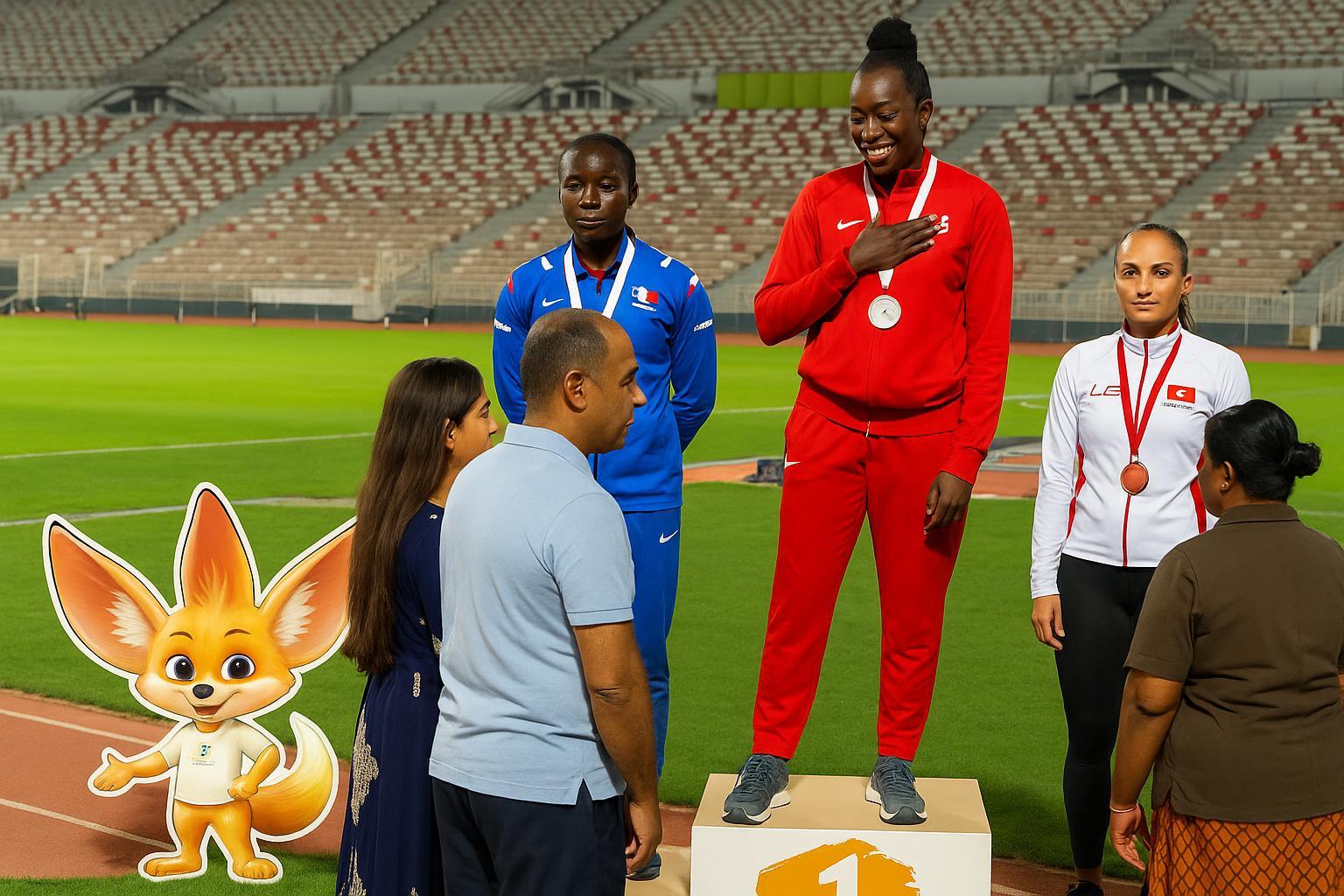
When the opening ceremony lit up Oran’s Miloud-Hadefi Complex, few observers noticed the six Congolese school athletes marching in. By the closing night they had collected four medals, earning a standing ovation from peers across fifty African nations.
Victories came despite a travel schedule finalised barely two weeks earlier, according to officials familiar with the delegation. Parents and local clubs purchased most of the airline tickets, illustrating the determination families continue to show for children who demonstrate early promise.
Early Hopes and Final Delegation
Initial shortlists drawn by the National Olympic Committee featured nearly eighty pupils in thirteen sports. Budget alignment meetings reduced that list to six names across athletics, judo, taekwondo and gymnastics, a reality many federations faced across the continent.
Sports economist Dr. Léandre Okemba notes that qualification expenses rose by roughly twenty-five percent after the pandemic, squeezing smaller associations. “Selection became a balancing act between competitive potential and logistical feasibility,” he explains.
Medal Haul Against the Odds
Long-jump prodigy Gladise Boukama Ndoulou flew 6.12 metres to secure gold, then sprinted to bronze in the 200 m. Judokas Symphoria Mankala and Divine Mpiaya Massala added two bronzes in their weight classes, lifting Congo to fourteenth on the medal table.
“The podium finishes show that individual talent remains our strongest asset,” comments national coach Armand Mouanda, reached by phone from Brazzaville. He emphasises that each athlete followed homemade training cycles drawn up with PE teachers and YouTube tutorials.
Funding Maze in School Sports
Across Africa, youth-sport budgets often privilege football, a trend UNESCO highlighted in its 2023 Physical Education report. Congo’s allocation mirrors that pattern: sixty-two percent of state sports spending in 2024 supported football infrastructures, ministry data indicate.
Federations in judo, athletics and gymnastics rely on club fees and occasional private sponsorship. In interviews, several presidents praised recent tax incentives for corporate donors yet said administrative procedures remain cumbersome for small associations to access.
Coach Mouanda recalls that the Oran delegation travelled without a designated physiotherapist. “We improvised ice therapy using hotel freezers,” he says, underscoring the resourcefulness emerging from constrained environments.
Government Initiatives and Regional Context
Minister of Sports Hugues Ngouélondélé told Radio Congo that a new Youth Talent Acceleration Programme will deploy regional training hubs before December 2025. The blueprint aligns with the African Union’s Agenda 2063 objective of nurturing continental elite athletes.
Neighbouring Cameroon launched a similar hub network in 2022, recording a twenty-three-percent rise in junior athletics medals within eighteen months (African Athletics Confederation). Congolese planners say they have studied that model while adapting it to local realities, including transportation corridors along the Congo and Kouilou rivers.
Role of Schools and Local Authorities
Education ministry officials confirm that thirty Brazzaville schools now pilot extended PE periods, blending classroom nutrition lessons with supervised training. Early assessments show improved attendance and a five-percent drop in adolescent obesity, a metric monitored by WHO partners.
Mayor Dieudonné Bemba of Pointe-Noire argues municipal councils can amplify progress. “Stadium upkeep and community-coach salaries fall partly under local jurisdiction; aligning city budgets with national programmes will multiply impact,” he states.
Experts Call for Integrated Development
Sport sociologist Dr. Mireille Tchicaya cautions that medal targets alone may overlook broader social dividends. She advocates combining sport with digital-skills curricula, citing Rwanda’s coding-and-cycling camps as inspiration for Congo’s coastal regions.
Corporate actors echo that synergy. A spokesperson for SNPC confirms discussions on adopting two athletics clubs through its corporate social responsibility arm. Such partnerships could stabilise yearly budgets while enhancing brand visibility domestically and abroad.
Athletes’ Voices From the Track
Seventeen-year-old Boukama Ndoulou says her gold medal felt like “proof that village kids can fly”. She hopes for scholarship pathways so athletes remain in school while training, a balance she deems essential to avoiding early burnout.
Judo bronze-medallist Symphoria Mankala emphasises peer motivation: “We shared videos of Congolese Olympians before every session. Knowing our flag had been on world mats kept us honest during conditioning.”
Balancing Accountability and Optimism
Observers note that transparent auditing of sports grants could reassure taxpayers while encouraging fresh sponsors. The Supreme State Audit Court announced in May that federations’ 2023 reports will undergo expedited review, signalling a commitment to accountability.
Still, many analysts credit recent medal success for generating momentum. Media coverage tripled compared with previous youth events, according to monitoring firm EcoMedia, expanding dialogue around sport’s role in national cohesion.
Looking Ahead to Future Games
Preparations are already under way for the next African School Games, expected in Accra in 2028. Preliminary documents circulated to federations propose fielding at least thirty athletes, with an emphasis on gender parity and emerging sports such as skateboarding.
The ministry is also exploring bilateral training exchanges with Algeria, whose facilities impressed Congolese officials. Talks include reciprocal coaching clinics and sports-science workshops, illustrating how continental solidarity can stretch limited budgets.