
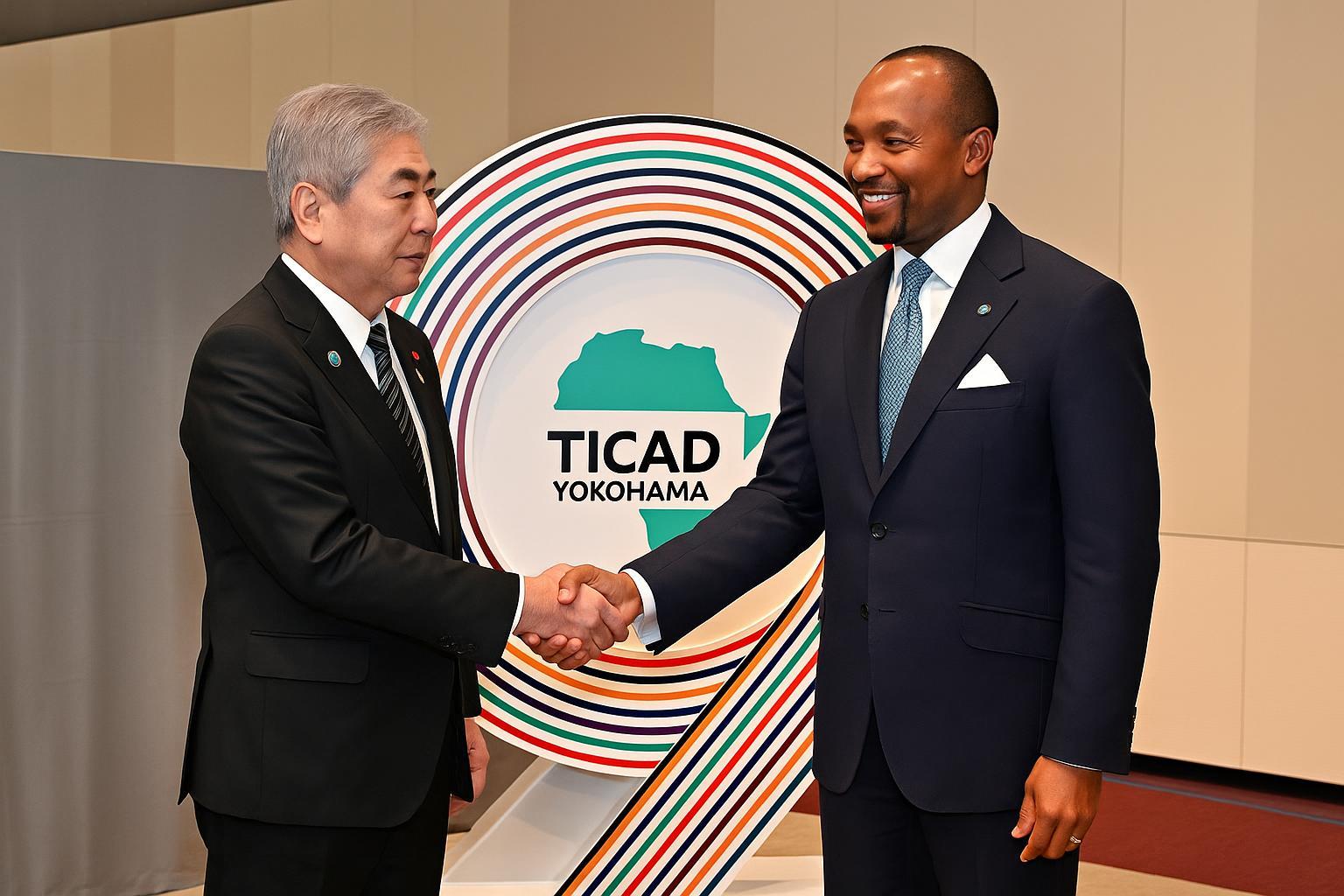
Yokohama Becomes a Diplomatic Hub
The bustling port city of Yokohama has again turned into a diplomatic crossroads as the ninth Tokyo International Conference on African Development opened on 20 August 2025, drawing heads of state, financiers and development thinkers eager to reset the continent’s partnership with Japan after a turbulent decade.
Congo-Brazzaville is represented by Denis Christel Sassou Nguesso, Minister of International Cooperation and Public-Private Partnership Promotion, who arrived on an overnight ANA flight at dawn and was welcomed by Japan’s Vice-Minister for Foreign Affairs in a brief ceremony broadcast live on NHK.
Minister Sassou Nguesso’s Mandate
Sources inside the Congolese delegation say the minister carries a portfolio of prospective infrastructure, energy and digital connectivity deals valued at nearly USD 900 million, crafted in consultation with the Prime Minister’s office and vetted by the Japanese International Cooperation Agency earlier this year.
In a short statement to reporters, Sassou Nguesso stressed that Congo’s vision aligns with President Denis Sassou Nguesso’s Development Plan 2022-2026, noting that public-private alliances can accelerate electricity access from 70 to 85 percent by 2027 while creating thousands of skilled jobs.
Innovative Solutions Shape Agenda
Conference co-chairs João Lourenço and Japanese Prime Minister Shigeru Ishiba framed the gathering around the slogan “Co-create Innovative Solutions”, echoing language first tested during TICAD7 in 2019 and refined after the pandemic (Mainichi, UN News). The three official pillars remain peace, economic growth and inclusive society.
Delegates broke into parallel plenaries on day one. The innovation panel examined artificial intelligence for crop monitoring, where Congo presented an early warning dashboard piloted with JICA grants. Experts from Kyoto University praised the tool’s potential to reduce cassava losses that still exceed 20 percent yearly.
Peace and Security in Focus
Security debates were dominated by renewed calls to silence guns across the continent. Lourenço cited promising ceasefire mechanisms in eastern DR Congo, while UN Secretary-General António Guterres reminded participants that piracy incidents in the Gulf of Guinea dropped 37 percent after the Lomé Charter took effect.
Speaking from the podium, Sassou Nguesso emphasized Brazzaville’s mediation experience in Central Africa, stating that sustainable growth demands “roads, fiber optics and peace patrols moving together.” His remarks drew applause and were later echoed by the African Development Bank president during a televised roundtable.
Economic Cooperation Gains Momentum
On the economic front, Congo and the Japan Bank for International Cooperation initialed a memorandum targeting the Maloukou Industrial Zone outside Brazzaville. The document outlines joint financing for a 300-hectare logistics park designed to link river transport on the Congo with transnational rail corridors.
Industry minister Antoine Nicéphore Thomas Fylla, reached by phone in Brazzaville, said the agreement could elevate non-oil exports by 18 percent within five years by speeding up container handling. Japanese firms Mitsubishi and Itochu signaled interest in assembling solar streetlights onsite, according to Nikkei Asia.
Social Development and Human Capital
Human development sessions spotlighted lessons from Japan’s community health insurance model. Congo’s delegation presented a roadmap to expand coverage of the Carte d’Assurance Maladie Universelle to 60 percent of citizens, with technical backing from Japan’s National Graduate Institute for Policy Studies and financing talks with the World Bank.
Education experts also announced a pilot exchange that will send thirty Congolese STEM teachers to Osaka each summer. According to Professor Kazuo Matsumoto, the initiative seeks to transfer classroom robotics techniques tested during the Kanaoka Elementary AI curriculum, which raised science scores nationwide by nine points.
Africa Seeks Global Governance Reform
Debate over global governance grew animated after Lourenço repeated the African Union’s demand for at least two permanent Security Council seats. Ishiba responded that Tokyo “recognizes the logic” and pledged to steer G7 discussions accordingly, a promise welcomed by delegates from Kenya and South Africa.
For Congo, the multilateral track remains crucial. Sassou Nguesso told our magazine he supports concessional climate finance windows that “reward forest preservation efforts already delivered,” referencing the Central African Forest Initiative results-based payments earned last year. He argued the same principle should cover blue carbon.
Next Steps for Congo-Japan Ties
Negotiators will refine project sheets over the coming months, with a mid-term review planned in Brazzaville during the 2026 Japan-Congo Joint Committee. Observers believe early disbursements could coincide with the Inga-Congo interconnection groundbreaking, reinforcing Congo’s ambition to be a regional energy transit hub.
As Yokohama’s waterfront lights reflected on departing motorcades, Minister Sassou Nguesso described the summit as “a compass directing pragmatic optimism.” Whether the compass leads to concrete megawatts, classroom robots or safer trade routes, the Congolese delegation leaves Japan confident that co-creation has moved closer to reality.
Japan’s foreign ministry, in an embargoed note shared with select media, anticipates that pledges across TICAD 9 will total USD 38 billion, blending public loans and private equity. Analysts at Oxford Economics argue that disciplined follow-up distinguishes TICAD from many forum-style gatherings.