
Training turmoil surfaces in Brazzaville
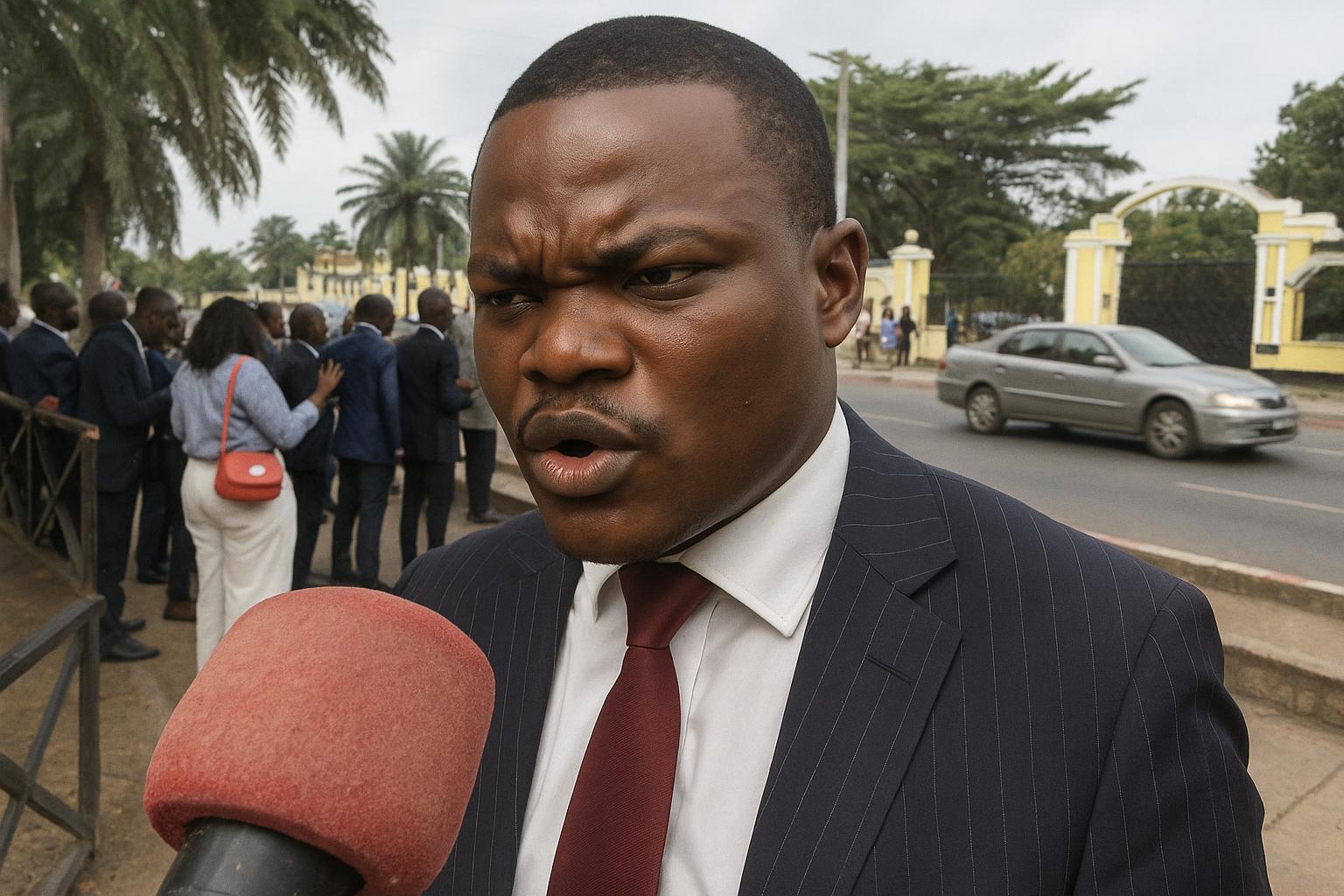
At dawn on Saturday, a group of determined young men and women gathered outside the main gate of the National School of Administration and Magistracy, Enam. Their banners were discreet, yet their message was clear: the penitentiary track, they say, is stalled and must be rescued.
150 students say the programme is adrift
The cohort counts 150 future prison officers selected nationwide. All report that, since classes began last year, schedules have shifted repeatedly, syllabi have changed without notice, and the promised paramilitary module has not materialised. “Our roadmap seems to move every week,” one trainee whispered.
Article 42 at the heart of the dispute
Their spokesman Hermedy Schastel Sellas points to Article 42 of the 2022 Penitentiary Code, which gives the corps a military status. “The legal text is strong, but the implementing decrees are still missing,” he argues. Without them, lessons on ranks, discipline and command structure remain theoretical.
Budget questions linger
Students add that no separate budget line was created for their specialised training. They purchase uniforms, field manuals and even fuel for practical visits themselves. “We are proud to serve, yet we cannot cover every cost,” says trainee Élise Mabika, adjusting her borrowed epaulettes.
Ministry responds cautiously
A senior official at the Ministry of Justice, contacted by phone, stresses that resources are shared among several academies this fiscal year. “The government is rolling out reforms step by step,” the official affirms, noting that national priorities include prison renovation and staff welfare.
Previous pledges from the Prime Minister
During a parliamentary question session in August, Prime Minister Anatole Collinet Makosso announced the opening of a dedicated training centre at Enam and the construction or rehab of eight correctional facilities across the country. Students welcomed the words but now ask for concrete timelines.
Talks yet to break the deadlock
Negotiations between class delegates and school management took place in late September. According to both sides, discussion focused on whether the paramilitary phase could start after the second semester. No agreement on funding or instructors was reached, and meetings have since been suspended.
Administrative court looms
Faced with stalemate, students are preparing a petition to the Brazzaville administrative court. Sellas says the claim will seek an order compelling the state to publish the missing decrees and allocate a budget. Legal advisers believe the court could first encourage mediation.
A delicate balance of rights and duty
Congolese law allows civil servants-in-training to seek judicial relief, yet many observers underline their duty of reserve. “Future officers must express concerns responsibly,” notes legal scholar Serge Mokoko. He warns that open protest could be viewed as indiscipline under military statutes.
Reform context stretches beyond Enam
The penitentiary overhaul is part of a larger justice modernisation launched in 2021. Projects include digitalising court registries and introducing community sentences for minor offences. Budget documents show 28 billion FCFA earmarked for the sector this year, half of it for infrastructure.
Parallel challenges in other schools
Sources inside the Public Works Institute and the Police Academy mention delays in receiving specialised equipment as well. Analysts say global supply tensions and post-pandemic adjustments are weighing on procurement. Still, stakeholders insist that vocational curricula must stay on schedule.
Human stories behind the numbers
Many trainees left families and jobs in the regions to join Enam. Pierre Nkounkou from Ouesso sold his motorcycle taxi to cover relocation costs. “I trust the state will not abandon us,” he says, adding that he calls home weekly to reassure relatives.
Government outlines next steps
Contacted Monday, the director-general of prison administration, Colonel Armand Ibata, indicates that a draft decree on training standards has already circulated for inter-ministerial review. “We expect signature before the year’s end,” he confirms, urging students to keep faith in the process.
The legal path explained
Under Congolese procedure, once a petition is filed, the administration has two months to reply. If no settlement is reached, the court may schedule hearings within another 90 days. Observers recall that, in previous education disputes, parties often reached compromise before judgment.
Civil society calls for dialogue
The Observatory for Human Rights encourages constructive talks. Its president, Joséphine Ondongo, states that well-trained prison staff are vital for inmates’ dignity and national security alike. She proposes a tripartite forum gathering students, Enam leadership and the Justice Ministry.
Comparative insight from the region
Cameroon’s Penitentiary School in Buea faced a similar mismatch between code and curricula in 2020, resolved by fast-tracking decrees and pulling instructors from the gendarmerie. Experts argue Brazzaville could draw lessons from that experience to speed up harmonisation.
A cautious optimism prevails
Despite the tension, most trainees remain committed to their vocation. They continue attending lectures on criminal law and psychology while awaiting clarity on the uniformed component. “Our patience is not infinite, but our patriotism is strong,” Sellas concludes, eyes fixed on the school’s tricolour flag.