
Lekoumou Sanitation Drive Begins
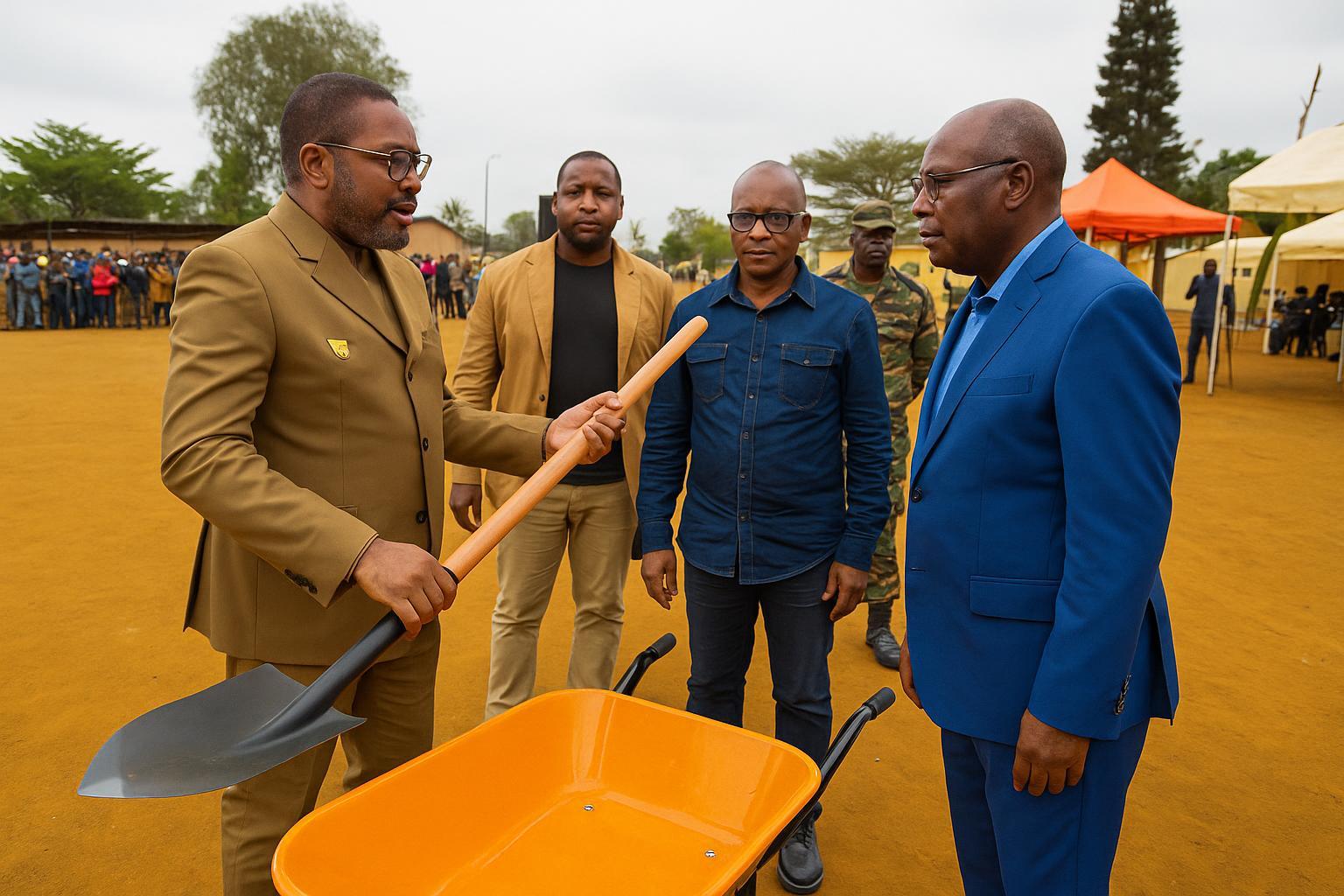
Sibiti’s central square bristled with orange vests and shovels as Minister for Urban Sanitation, Local Development and Road Maintenance, Juste Désiré Mondelé, officially launched the “Sanitation Trimester of Lekoumou”, a campaign running from September to November designed to give the growing department a cleaner future.
The symbolic hand-over of rakes, wheelbarrows and protective gear set the tone: government will provide tools, but communities are expected to supply commitment. Mondelé called the three-month exercise “a decisive turning point” that follows recommendations of last year’s National Forum on Urban Sanitation.
Operational Blueprint for a Cleaner Sibiti
Cleaning tasks range from gutter dredging and plastic collection to sweeping streets, clearing illegal dumps and educating residents on waste separation. Weekly rounds will target markets, schools, the new central hospital site, Sibiti airport and administrative buildings, reinforcing a culture of public hygiene.
Every first Saturday of the month will carry a dedicated “hygiene day” borrowed from national practice, while door-to-door sensitisation and radio jingles aim to keep momentum high. Communication units have been trained to translate technical advice into Lingala, Téké and local dialects for wider reach.
Local Leaders Rally Support
Local leaders say the operation responds to rapid urban expansion. Prefect Jean Christophe Tchikaya noted that Sibiti’s population has almost doubled within a decade, outpacing drainage, waste collection and public awareness infrastructure. “Residents are ready to tackle these challenges alongside government,” he told regional broadcaster Radio Lékoumou.
Municipal councillor Florian Aristide Likibi recalled that Sibiti had already launched its own “Sibiti Clean City” initiative, but lacked scale and equipment. He views the ministerial programme as “a booster shot” that will align local efforts with national health targets and keep water-borne diseases at bay.
Health and Economic Stakes
Health authorities back the optimism. According to the Congo-Brazzaville office of the World Health Organization, 60 percent of reported cholera and typhoid cases originate in areas with blocked canals and open dumps. Systematic clean-ups reduce vectors and, over time, lower pressure on provincial clinics.
Economists see more benefits. Cleaner streets attract traders and tourists, while free drains prevent flood damage. The Planning Ministry notes that after Brazzaville’s 2019 clean-up, small business registrations in targeted districts rose by nine percent, a precedent for Lekoumou.
Komono-Mbila Road: A Strategic Link
On the same day, Mondelé broke ground on the 25-kilometre Komono-Mbila road upgrade, a project budgeted under the Local Development Fund. Once graded and laterite-surfaced, the link is expected to cut travel time to Sibiti by half and ease movement of farm produce to regional markets.
Transport analyst Mireille Mayima argues that sanitation and roads are mutually reinforcing. “Dusty, potholed tracks limit refuse collection trucks; smoother surfaces make weekly pick-ups viable,” she explains. The ministry therefore bundles the two interventions to maximise impact within the same budget cycle.
Funding comes from a mix of national allocation and a concessional line from the African Development Bank, confirmed by an AfDB representative in Brazzaville. While figures were not disclosed, officials stress that procurement follows the Public Contracts Code, with priority granted to local small and medium enterprises.
Policy Alignment and Funding
Political observers note that Lekoumou has long been earmarked for strategic investment because of its timber and agro-industrial potential. The current push aligns with President Denis Sassou Nguesso’s 2022-2026 National Development Plan, which emphasises balanced territorial growth and grassroots participation in service delivery.
Monitoring and Community Oversight
Yet measuring success will require reliable data. The Central Bureau of Statistics plans baseline surveys on waste volumes and resident satisfaction ahead of the November wrap-up. Results will inform whether the sanitation trimester becomes a rolling programme or rotates to other departments next year.
Civil society groups welcome the monitoring component. “Transparency helps us keep enthusiasm high and rumours low,” says Pauline Ngoma, who coordinates a youth brigade of 200 volunteers equipped with gloves, whistles and smartphone apps for geotagging illegal dumps. Her team will share findings with municipal engineers.
Street-Level Reactions
For residents such as market vendor Aimé Balou, the stakes are immediate. “When gutters are blocked, customers stay home; when streets are clean, fish sells faster,” he smiles, pointing to a newly painted trash container outside his stall. Early signs, he insists, are encouraging.
Towards a Circular Waste Economy
Whether trimming grass verges or grading laterite, Lekoumou’s sanitation trimester signals a pragmatic blend of public policy and community stewardship. Officials express confidence that, come December, Sibiti will showcase notably brighter streets and, perhaps more importantly, a renewed social contract between citizens and their environment.
Environmental scientist Dr. Patrick Mboundou says durable cleanliness requires waste valorisation. He proposes composting market organics and linking with plastic recyclers in Nkayi to create jobs and seed a circular economy.
The Ministry of Finance is drafting incentives for firms keen on waste-to-energy micro-plants, a model tested in Pointe-Noire. If green-lighted, Lekoumou could host an inland unit powering peri-urban clinics.