
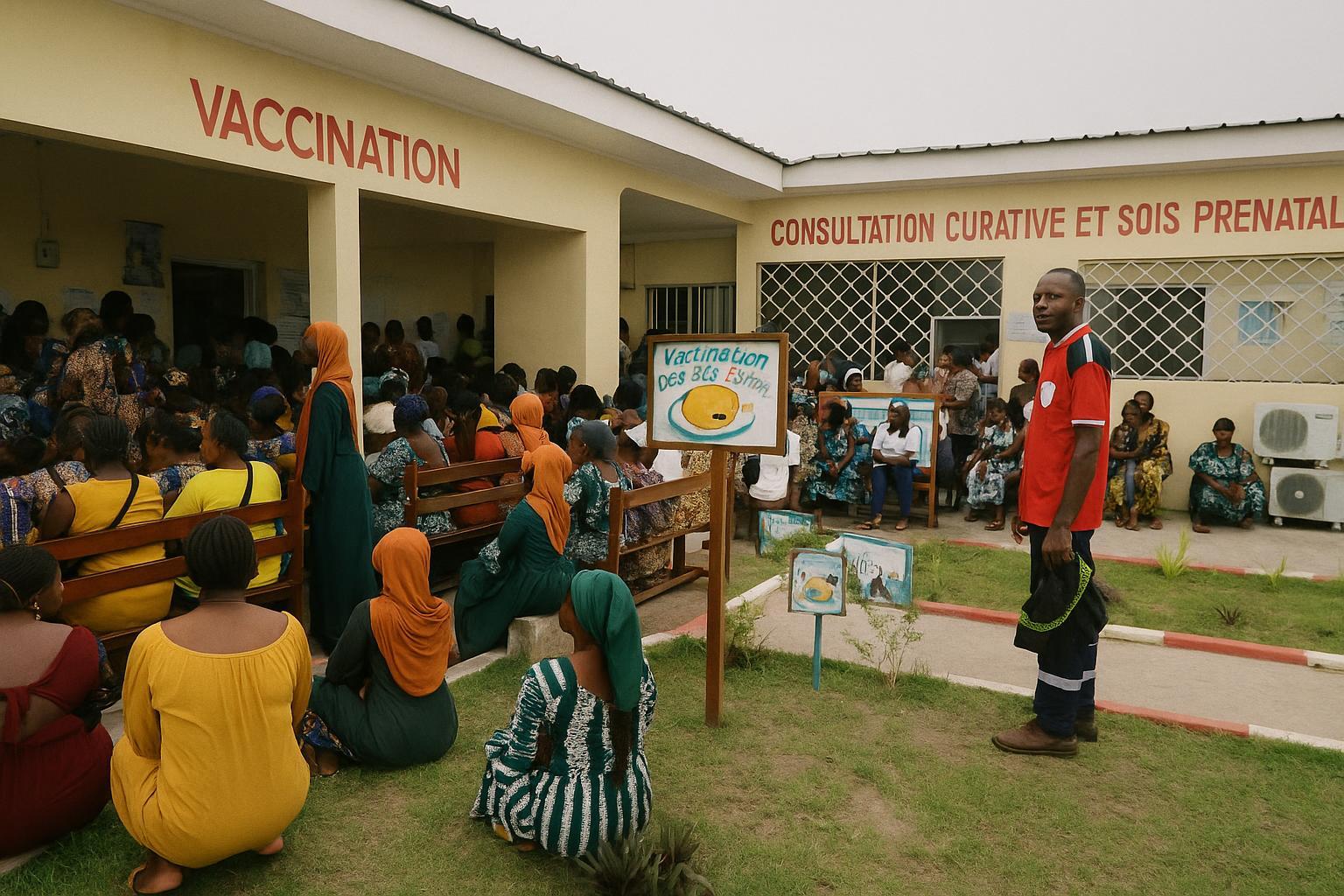
National Vaccine Governance Reinforced
On 31 July 2025 the Republic of Congo quietly turned a page in its health history, establishing a National Immunisation Technical Advisory Group, known locally as the GTCV, to guide vaccine policy with independent scientific advice. Few administrative acts carry such far-reaching implications.
The Ministry of Health and Population framed the decision as a cornerstone for universal coverage. By empowering national experts rather than relying exclusively on external missions, Brazzaville signalled confidence in its own scientific community and answered a long-standing recommendation from the World Health Organization.
Less than a month later, 26–30 August, thirty specialists gathered at the Grand Hotel de Kintélé for an intensive workshop designed to transform the new body from decree to operational engine. The session, financed and co-facilitated by WHO, focused on evidence appraisal, ethical standards and transparent communication.
Epidemiological Urgency of HPV in Congo
Professor Donatien Moukassa, chief of staff at the ministry, opened the workshop with a blunt reminder: oncogenic strains of human papillomavirus account for between 3.5 and 7 per cent of all recorded cancers in Congo, an estimate built from pathology registries and regional modelling.
He told delegates that introducing the HPV vaccine into the routine Expanded Programme on Immunisation is therefore ‘not a luxury but an urgent intervention’. His assessment resonated with epidemiologists present, many of whom have seen cervical cancer wards overflow despite gradual improvements in screening access.
Dr Vincent Dossou Sodjinou, WHO Representative, broadened the lens, linking Congo’s move to the global strategy that seeks to vaccinate 90 per cent of girls before age fifteen, screen 70 per cent of women twice, and treat 90 per cent of positive cases by 2030.
Evidence and Economics Behind the Decision
Behind the podium statements lay careful methodological work. During break-out simulations, members dissected cost-effectiveness models showing that every dollar invested in HPV vaccination could save multiples in cancer treatment costs, according to projections validated by the African Centres for Disease Control and the London School of Hygiene.
They also examined cold-chain capacity, reviewing district inventories common to measles and yellow-fever programmes. The consensus was encouraging: with minor upgrades, existing infrastructures could absorb a two-dose schedule for nine-year-old girls without disrupting other antigens, an insight later echoed in the plenary.
A recurrent theme was transparency. The chair reminded participants that GTCV deliberations will be published in concise briefs, allowing civil society to track recommendation pathways. Such openness, he argued, builds trust and protects the committee from real or perceived influence by manufacturers or donors.
Communication Strategies and Community Engagement
Inside the hotel corridors, discussions shifted to societal acceptance. Focus-group data gathered in Pointe-Noire last year suggested high parental demand once messages highlight cancer prevention rather than sexual transmission. Communication specialists at the workshop pledged to refine that framing for radio and community outreach.
Religious leaders are expected to play a proactive role. The Council of Christian Churches signalled willingness to endorse the campaign, noting that protecting mothers and daughters aligns with pastoral care. Similar endorsements during past polio drives dramatically boosted uptake, officials recalled, predicting comparable momentum here.
Nevertheless, the GTCV stressed the necessity of monitoring adverse events rigorously. An independent pharmacovigilance sub-committee will review safety signals weekly during the first six months of rollout, drawing on the same software platform used for COVID-19 reporting and linked to a hotline staffed around the clock.
Funding and Legislative Momentum
Financial sustainability also surfaced. While initial doses will be co-funded through Gavi support, the Ministry confirmed that domestic budget lines have been earmarked for gradual takeover. Economists in attendance applauded the pledge, warning that dependency on grants can stall programmes if global priorities shift.
Parliamentary health-committee members, briefed after the workshop, indicated that bipartisan backing is likely. ‘We rarely see an intervention with such clear cost-benefit calculus,’ one legislator remarked. Their endorsement would expedite regulatory clearances and secure the logistical exemptions needed for time-sensitive cold-chain shipments at the port.
Rollout Timeline and Future Outlook
The timeline under discussion envisions a phased launch beginning in urban districts during the first quarter of 2026 before expanding nationwide. Officials argue that starting in cities allows training modules to be fine-tuned and social-media analytics to flag misinformation early, a lesson drawn from COVID-19.
Longer term, the GTCV hopes its strengthened capacity will extend beyond HPV. Pneumococcal dose schedules and next-generation malaria vaccines are already on the docket. Observers suggest the committee could become a regional reference hub, offering peer-to-peer support to neighbouring Central African states.
For now, public health officials cautiously celebrate. The final communiqué, endorsed by all participants, emphasised that sound science, sustainable financing and community trust form an inseparable triad. If those pillars hold, Congo’s forthcoming HPV vaccination drive may come to be seen as a defining public-health milestone in Central Africa.
Regional observers will watch the upcoming budget session for concrete funding signals.