
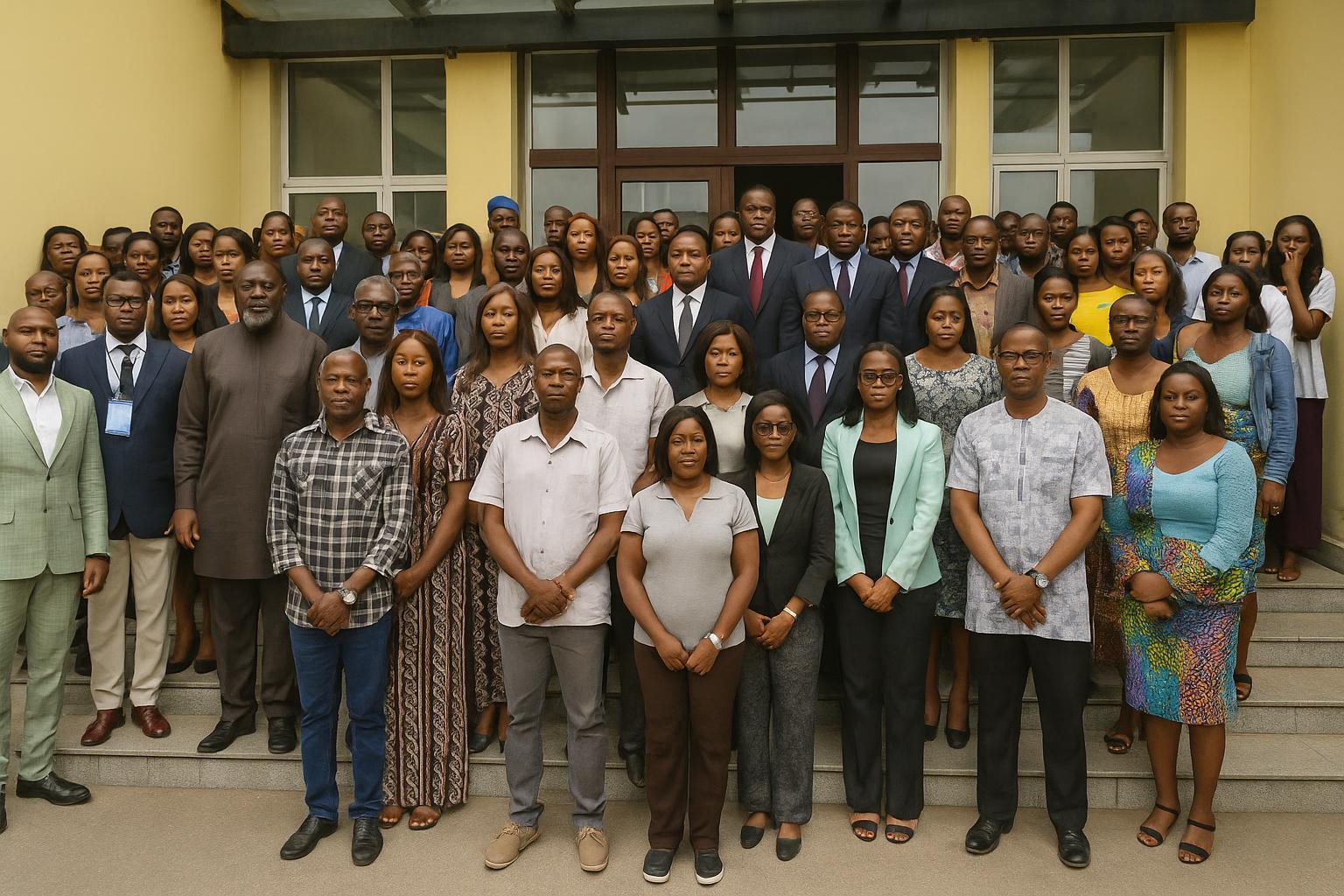
Youth gather in Brazzaville for Voquart Class
Under the wide eaves of Marien-Ngouabi University’s presidency building, the buzz was tangible as dozens of young people from all nine districts of Brazzaville filed in for the very first Voquart Class on 4-5 December.
Branded ‘Create the conditions for autonomy through the Internet’, the two-day workshop mixed inspirational talks, hands-on demos and peer networking.
Internet Opens Doors Beyond the Classroom
Voquart communications lead Kimia Mimpongo reminded participants that schooling no longer ends at the classroom door, arguing that a cheap data package can now replace the shopfront, the teacher’s desk and even the passport.
Autonomy, she said, has shifted from distant dream to daily discipline, requiring regular practice, perseverance and the conviction that every resident holds at least one solution worth sharing.
Giving Neighbourhoods a Voice
Mimpongo traced Voquart’s roots to a simple pledge: give neighbourhoods a microphone, reveal hidden talents and link them to opportunity so that each street contributes to a stronger, more united Congo.
The platform already works in Brazzaville, Pointe-Noire and Dolisie and, fuelled by volunteer mentors, plans to move deeper into peri-urban areas where connection rates lag but ambition runs high.
CCJ Applauds a Timely Initiative
Standing in for the national Youth Advisory Council, Clanel Okana saluted the project, calling the chosen theme ‘undeniably relevant’ because the web has turned into a giant accelerator of knowledge, income and civic influence for those who navigate it wisely.
Okana pledged CCJ backing for any scheme that chisels out a generation of digitally fluent young Congolese able to steer their own development.
Mapping the Digital Economy Boom
Speakers highlighted sectors growing fastest across Central Africa: e-commerce platforms that bypass crowded markets, content studios feeding regional streaming services, remote tech support for global firms and social ventures using mobile money to solve local problems.
Analysts from the Congo Digital League estimate the national online economy could double to CFA 1 trillion within five years if connectivity and skills training keep pace.
How Voquart Class Worked in Practice
Mornings were devoted to short masterclasses on setting up a mobile storefront, identifying reliable e-learning portals and pitching freelance services on global platforms, all streamed live on Voquart’s Facebook page for youths unable to attend physically.
Afternoons switched to round-tables where participants, grouped by arrondissement, mapped challenges back home, from erratic power to lack of safe coworking spots, and then drafted joint action lists to present to municipal authorities.
Lawmakers and Elders Lend Support
Makélékélé constituency MP Alban Kaky, one of several public officials present, praised Voquart for spotlighting neighbourhood knowledge, stating that community development flourishes when residents know their surroundings and lift each other up.
He urged participants to keep the dialogue alive after the cameras left, promising to relay their proposals at the next Brazzaville council session.
What Comes Next for Voquart
Project manager François Packa outlined an expansion roadmap that includes neighborhood radio capsules, pop-up coding labs and a micro-grant fund for student entrepreneurs, all designed to turn the platform into what he called ‘a loudspeaker for local aspirations’.
A second Voquart Class is pencilled in for Pointe-Noire early next year, and organisers are courting telecom partners to slash data costs for course follow-up.
Expert Voices on Digital Self-Reliance
Economic sociologist Dr. Yolande Samba reminded the hall that autonomy is not only financial but cognitive, warning against passive scrolling that leaves youths as ‘mere consumers of foreign narratives’ rather than producers of Congolese solutions.
She advocated a national content fund to reward developers of local language apps covering agriculture prices, public transport timetables and folklore preservation, ideas greeted with loud applause.
Data and Access: The Remaining Hurdles
Despite soaring smartphone ownership—up from 27 percent in 2018 to 49 percent this year, according to ARPCE—many suburbs still endure download speeds below 2 Mbps, a bottleneck that hampers video learning modules showcased during the event.
Voquart tech lead Dory Nkalla said talks were under way with internet service providers for discounted night-time bundles, noting that ‘education does not sleep’ and off-peak traffic could be a win-win arrangement.
On the hardware side, the NGO is negotiating with refurbishers in Pointe-Noire’s industrial zone to repurpose corporate laptops for youth clubs, aiming to distribute the first batch before exams season.
Families Witness Early Results
Outside the auditorium, Aline Mikala, mother of a Lycée de la Révolution student, said her son created a small phone-repair advert on WhatsApp after day one and earned his first 3 000 francs before sunset.
Such anecdotes, Voquart coordinators argue, prove that even micro-gains can build confidence and keep youngsters away from idleness.
Looking Ahead to a Connected Generation
As dusk fell on the second evening, volunteers packed away banners while WhatsApp groups buzzed with follow-up tasks. Organisers stressed that Voquart Class is a starting line, not a finish tape, and promised monthly webinars to track each arrondissement’s progress.
If the energy unleashed in Brazzaville spreads nationwide, analysts believe Congo could fast-track its move from raw-material exporter to knowledge-based economy, a transition fully aligned with the government’s Vision 2025 digital strategy.