
Capital Polishes Image Ahead of National Day
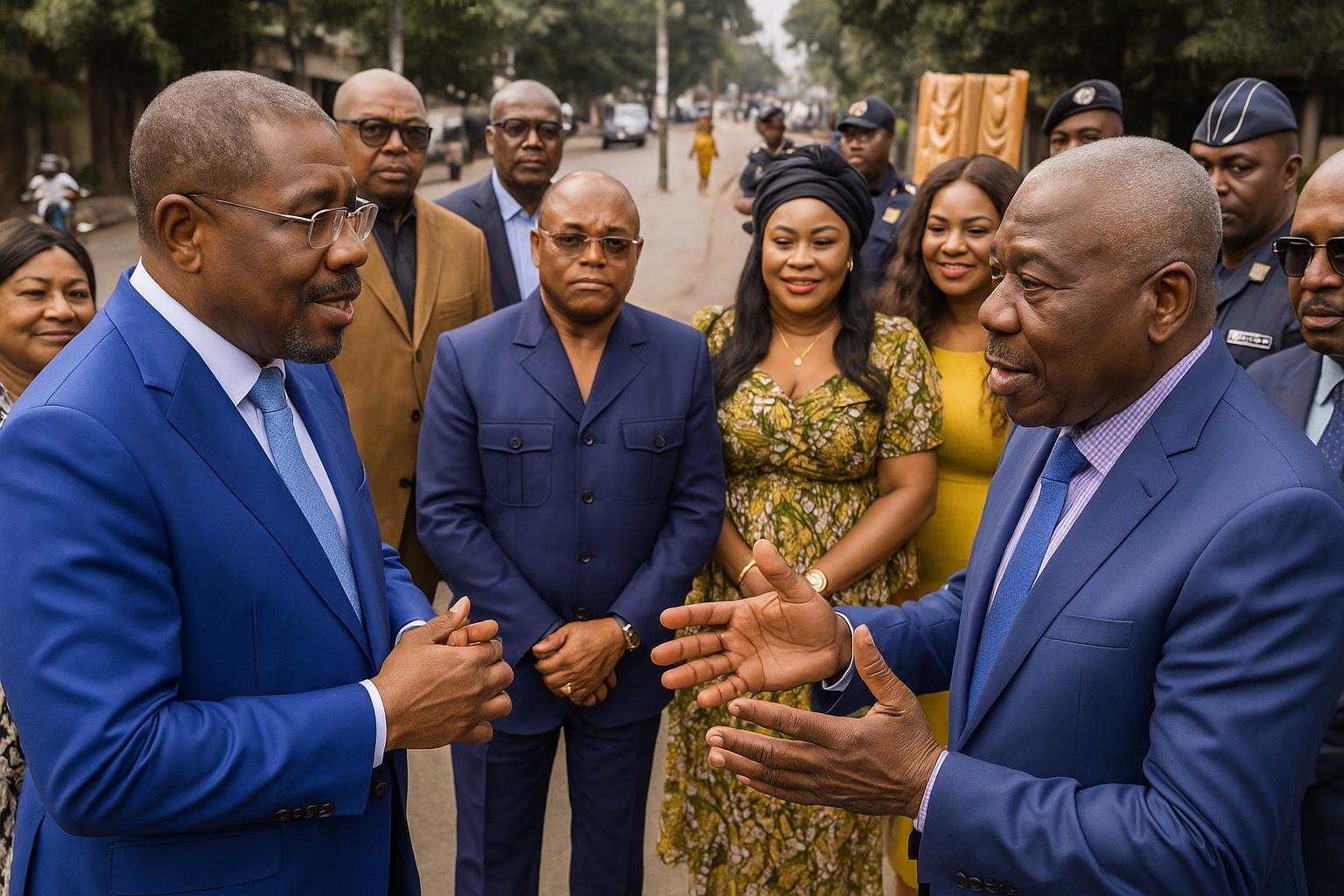
Brazzaville’s avenues gleamed under the sun as the Republic of Congo marked its 63rd Independence anniversary. Weeks of sweeping, drain clearing and illegal kiosk removal culminated in an inspection on 13 August by Minister of Urban Sanitation, Local Development and Road Maintenance, Juste Désiré Mondélé.
Standing at the intersection of Avenue Denis Sassou Nguesso and Boulevard Alfred Raoul, the minister awarded the clean-up campaign an “almost good” rating, promising to push for “excellent” before the rainy season returns. His verdict set the tone for renewed conversation about cleanliness and citizenship.
What the Inspection Revealed
From the leafy corniche south to the densely packed market of Poto-Poto, teams removed improvised stalls, dredged gutters and repainted lane markings. According to municipal engineers accompanying the convoy, circulation on sidewalks improved by nearly twenty percent compared with July measurements.
Residents along Avenue de la Paix reported lighter evening traffic jams after informal vendors were relocated to designated areas. “Now my children can cross without weaving between tables,” said Cécile Mayanda, a fruit seller who moved inside the refurbished Ouenze hall two weeks earlier.
Linking Clean Streets and Public Health
Ministry epidemiologists underscore that uncollected waste and stagnant water remain vectors for cholera and dengue, both periodically recorded in the capital (WHO country profile 2022). Cutting refuse piles before the upcoming rains is therefore considered a low-cost health intervention complementary to vaccination drives.
The Congo’s last significant cholera alert, in late 2021, sickened more than 400 across riverine districts (Ministry of Health communiqué, 2022). Officials argue that sustained sanitation could halve future caseloads. “Hygiene is our first shield,” Mondélé reiterated, echoing guidelines from regional health partners.
Community Engagement and New Citizenship
Encouragingly, the city’s youth associations volunteered in several arrondissements, sweeping bus stops at dawn and posting messages on social networks that read, “Clean street, proud heart.” Analysts view this peer-to-peer mobilisation as evidence of a maturing civic culture nourished by digital connectivity.
Yet challenges persist. A survey by the Congolese Observatory of Consumer Habits found that 57 percent of households still burn household waste due to irregular door-to-door collection. Experts warn such practices emit particulates four times above WHO limits.
In an interview, municipal councillor Alain Okandzi conceded the gap. “We improved arteries tourists see,” he said, “but collection in cul-de-sacs needs funding.” The councillor expects a new public-private contract for waste transfer stations to be finalised before December budget discussions.
Illumination as Crime Deterrent
Brazzaville’s master plan links street lighting with security outcomes, citing police data showing that well-lit zones record 28 percent fewer petty crimes. As part of the clean-up, technicians restored 650 lamps along the Djoué bridge and installed solar fixtures near the Tsiémé embankment.
Colonel Prosper Mboulou, acting head of urban police, reports a “visible decline of night-time assaults” in newly lit corridors. Crime analysts from Université Marien Ngouabi caution, however, that lighting must be paired with community patrols to sustain the trend, especially in informal settlements.
Financing the Clean City Ambition
The operation cost an estimated 1.8 billion CFA francs, funded through reallocation of petroleum-sector royalties under the Local Development Act of 2021. Finance Ministry officials argue the expenditure remains “fiscally prudent,” amounting to less than 0.15 percent of projected 2023 national revenues.
International observers from the African Development Bank note that sanitation investment yields a return of up to fivefold in reduced healthcare spending and increased worker productivity (AfDB Green Cities report, 2023). Such findings bolster Brazzaville’s case for seeking further concessional loans tied to urban resilience.
European climate funds have also expressed preliminary interest in sponsoring pilot composting centres, according to documents reviewed by this newsroom. If approved, the 4-million-euro grant would target organic waste from the sprawling Talangaï produce hub and create 120 green jobs.
Toward an ‘Excellent’ Rating
Mondélé set November as a soft deadline for achieving the coveted “excellent” status. His roadmap includes deploying 200 additional mechanical sweepers, introducing colour-coded bins in schools and launching a televised weekly ranking of the cleanest streets to harness friendly competition between districts.
Urbanist Thérèse Obili considers the media component crucial. “Public scoreboards work. Kinshasa’s plastic-free challenge saw a 12-percent drop in single-use bags within three months,” she told this magazine, referencing a 2020 pilot across the river. She argues similar visibility could galvanise Brazzaville’s neighbourhood committees.
While critics fear citizen fatigue, behavioural economist Jérôme Massanga believes habit formation is underway. “The longer streets stay clear, the higher the psychological cost of littering,” he said. His team plans to measure trash volume on pilot avenues monthly and publish results online.
For now, the minister’s “quite good” verdict offers both encouragement and a reminder: lasting cleanliness hinges on every resident’s daily choice. As Brazzaville looks beyond the Independence festivities, the capital seems poised to refine a culture where neat streets mirror national confidence.