
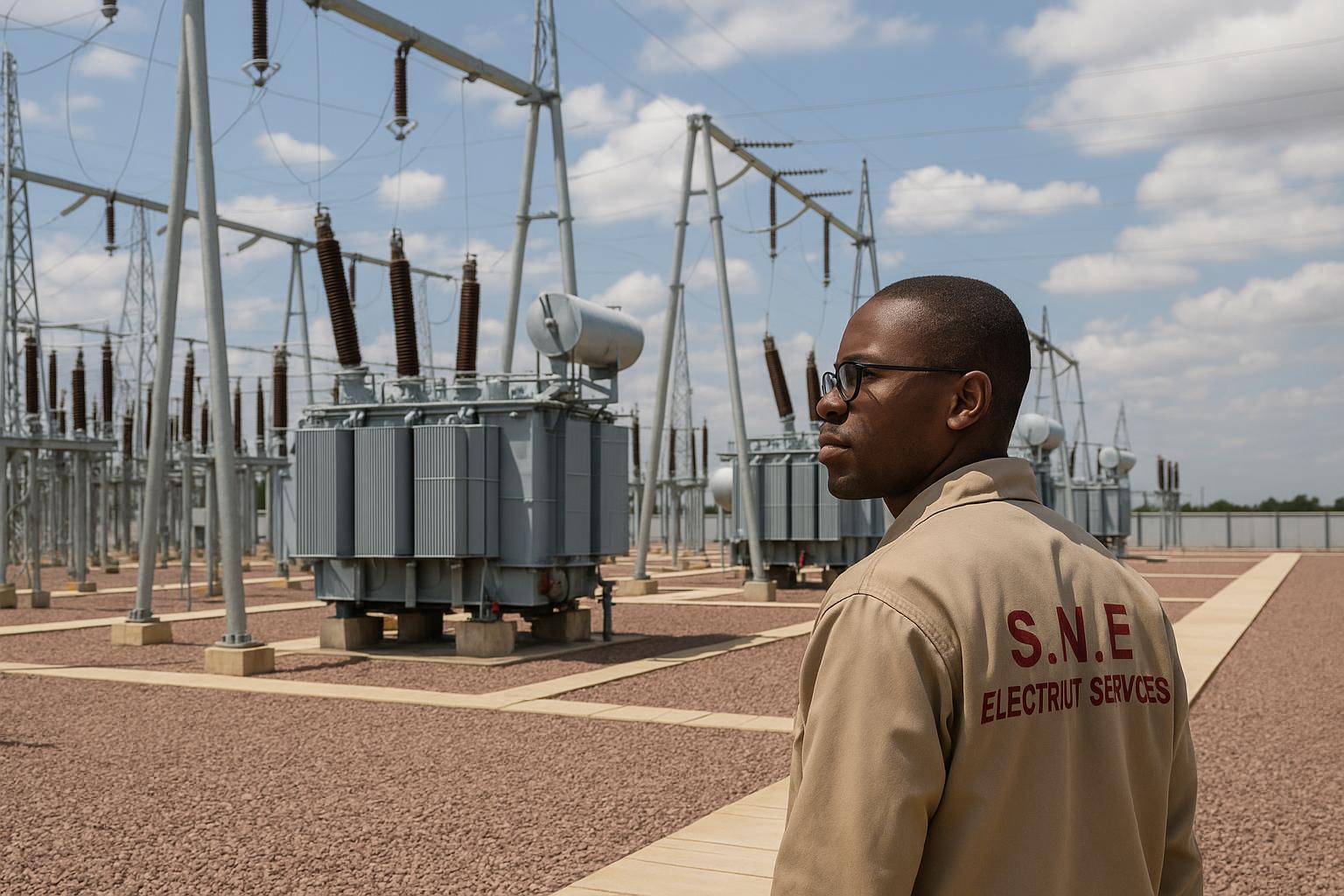
Brazzaville set for power renaissance
As air-conditioners hummed uncertainly through the latest dry season, residents of Brazzaville heard a different kind of buzz from the Ministry of Energy. Officials say the capital is poised for its most significant electrical upgrade in four decades, promising a farewell to frustrating load-shedding.
Energy and Hydraulics Minister Emile Ouosso unveiled the technical blueprint before investors in August, detailing a multi-layered response that combines fresh transmission hardware, upgraded generation and smarter management. His message: capacity exists; the challenge is rescuing megawatts lost in transit between the coast and the capital.
Government engineers forecast that by late 2025, Brazzaville will retain nearly every watt sent from Pointe-Noire, halving the city’s power deficit within months and erasing it altogether by September 2026. Officials insist the timeline is realistic, backed by finance already signed and equipment already ordered.
Aging grid revealed
Congo currently generates roughly 751 megawatts for a national demand estimated at 600, according to ministry data corroborated by the International Energy Agency. Yet more than half of the output meant for Brazzaville evaporates along a 510-kilometre line built in 1980 when the population was barely half today’s.
Ageing transformers at Loudima, Djiri and Tsielampo operate well beyond design limits, while compensation banks and protective relays have failed outright. Every shutdown triggers rolling cuts that darken households, freeze assembly lines and complicate hospital procedures, reinforcing a perception that the network is unreliable by design.
The minister called the legacy system “a forty-three-year-old bottle trying to hold new wine.” Independent analysts such as Tractebel and Power Africa agree, adding that Congo’s annual urban growth of 4.5 percent makes the upgrade urgent not optional.
Global funding energises overhaul
Financing combines a 200-million-dollar World Bank facility approved under the Southern African Power Pool strengthening program with a corporate package from Eni Congo earmarked for high-capacity transformers and gas-turbine optimization. Disbursement schedules were synchronized in July to compress procurement delays, officials familiar with the contracts confirmed.
At Pointe-Noire’s coastal plant, technicians already shut down one of three 100-megawatt turbines for advanced inspection, swapping parts flown in from Milan. “Zero interruption will reach Brazzaville before we celebrate Independence Day 2026,” an Eni site supervisor said, requesting anonymity because he is not authorised to brief media.
World Bank energy specialist Sarah Forbes said in a telephone interview that the project aligns with wider goals to interconnect Central African grids and incentivise private investment. “The Congo upgrade is a keystone; without it, surplus power from Inga III or Grand Inga cannot flow northward efficiently,” she argued.
Deadlines and deliverables
Contractor Sieyuan-CET is erecting 400-kilovolt towers near Matoumbou, replacing wooden poles that once carried only telegraph lines. Drone surveys map vegetation clearance to reduce flashover risk during the coming rainy season, a notorious period for faults. Completion of this corridor is slated for March 2024, ministry documents show.
By November 2024, the Loudima substation should double its throughput after installation of two 150-MVA transformers now in transit through the port of Pointe-Noire. Grid operator SNE is training 60 technicians on predictive maintenance analytics to ensure the new equipment does not inherit the old neglect.
Renovation of the 74-megawatt Moukoukoulou dam, Congo’s largest hydro asset, enters its turbine rewinding phase early next year. The upgrade will restore the plant’s original station factor, enabling surplus to serve upcoming agro-industrial parks in the Bouenza and stabilize voltage for the Brazzaville link.
Business expects bright dividends
Brazzaville’s cement producers, assembled at the August forum, applauded the roadmap. Plants currently run diesel generators for an average of six hours a day, adding roughly eight dollars per ton to production costs, according to internal Lafarge data confirmed by the Congolese Employers Federation.
Reliable electricity, they argue, will improve clinker quality and unlock night-shift capacity, pushing output above five million tons per year and feeding infrastructure plans like the Brazzaville-Kinsangani highway. Small traders also expect refrigerators to stay cold, widening opportunities for processed food and pharmaceutical distribution.
Diplomats stationed in the capital view the initiative as a tangible step toward diversifying Congo’s hydrocarbon-heavy economy. An EU envoy said consistent power is among the top three criteria companies assess before locating regional headquarters, alongside political stability and internet bandwidth.
Toward regional energy integration
Energy planners are already mapping a second circuit to create redundancy on the Pointe-Noire–Brazzaville axis and connect with Gabon’s grid by 2030. The vision dovetails with the African Union’s Continental Power System Masterplan, positioning Congo as a transit hub between Atlantic and Great Lakes economies.
For now, residents prepare to count down the months until stable service becomes routine rather than exception. Should the milestones land on schedule, the hum they will hear in 2026 may no longer be diesel engines but the quiet confidence of reliable, home-grown electricity.