
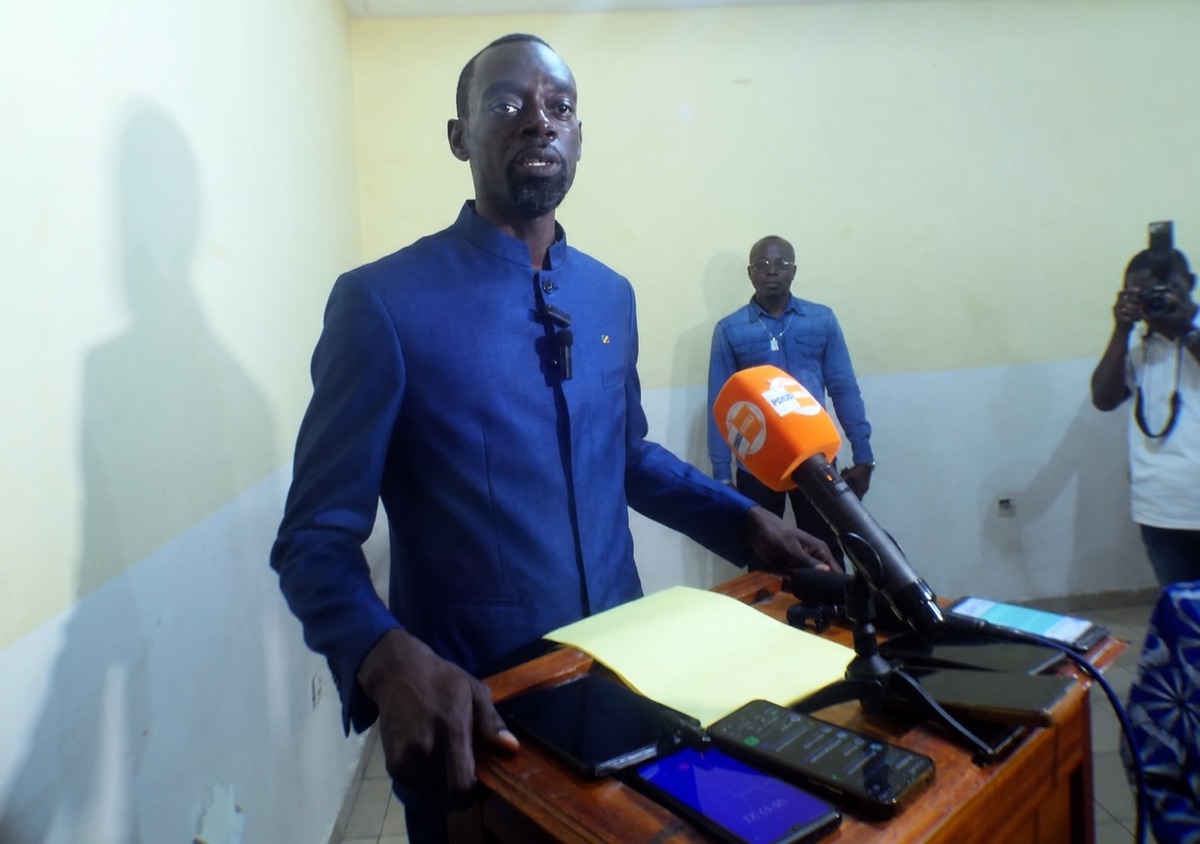
Independent presidential candidate Arnaud Bounda stepped before reporters in Brazzaville on Thursday, 5 February 2026, with a blunt message. Ahead of the March 2026 vote, he argued that swapping leaders will not fix the Republic of Congo. The system itself, he said, must change.
A Diagnosis That Starts in the Mind
Bounda framed the country’s troubles as psychological before they are political. “The Congolese problem is first psychological, then political. Since independence, no leader has truly fostered the country’s emancipation,” he told the room, insisting that the structure itself dooms every government to failure.
He pointed to a collective mindset shaped by fear, cheating and violence. Paired with institutions he sees as unable to deliver balanced development, that legacy, in his telling, keeps the nation locked in place. The candidate spoke of a deep, inherited blockage rather than a passing crisis.
Everyday Hardship Traced to the System
For Bounda, the daily grind is the clearest evidence. Water shortages, power cuts, joblessness and precarious living are not accidents, he said. They flow directly from a political order built on division, unaccountability, and party loyalty placed above competence.
That reading reframes familiar complaints as symptoms of one underlying cause. Rather than blaming individuals in office, he turns attention to the rules and habits that, he contends, shape how power behaves regardless of who holds it.
Why He Faults the Opposition Too
His critique does not spare rivals. The opposition, Bounda argued, fixates on personalities and elections, sustaining the illusion that a simple change of faces could transform the nation. By his logic, that approach leaves the machinery intact and the outcomes unchanged.
The stance positions him apart from the usual contest of names. He casts the race not as a referendum on incumbents but as a question about the design of the state, an angle he returned to throughout the briefing.
Sovereignty as the Foundation
In response, Bounda proposes to gather Congolese around a shared vision he anchors in sovereignty, which he describes as the bedrock of national self-reliance. His “United Congo” project rests on five pillars meant to work together rather than in isolation.
The first is institutional sovereignty, rebuilding the state on Bantu identity and values, with governance kept close to citizens. The second, economic sovereignty, calls for strategic multinationals in energy, agri-food, culture, logistics and biomedical research.
The remaining three round out the design. Equity and social well-being would guarantee every citizen access to fundamental rights. Science and technology would serve as a development lever. Urban planning, infrastructure and ecology would push a balanced, sustainable path forward.
Dialogue as the Connecting Thread
Running across the five pillars is national dialogue, which Bounda presents as the binding element. He framed it as the way to strengthen unity, head off conflict and build a common future, rather than as a one-off event tied to the campaign calendar.
That emphasis fits his broader claim that cohesion, not confrontation, is the missing ingredient. The candidate offered the dialogue less as a slogan and more as a method, a standing process meant to hold the project’s parts in alignment.
The Line He Wants Voters to Remember
Bounda closed with the phrase that anchored the whole presentation. “Changing Congo is not about changing leaders. It is about changing the system itself,” he said, distilling a wide-ranging platform into a single, deliberately stark idea.
Whether that argument resonates will be tested in March. For now, the independent has staked his candidacy on persuading Congolese that the contest is about structure, not personalities, and that “United Congo” offers the framework he says the country has long lacked.
(Source reporting by Céleste Exaucé Sindoussoulou, lhorizonafricain.com.)