
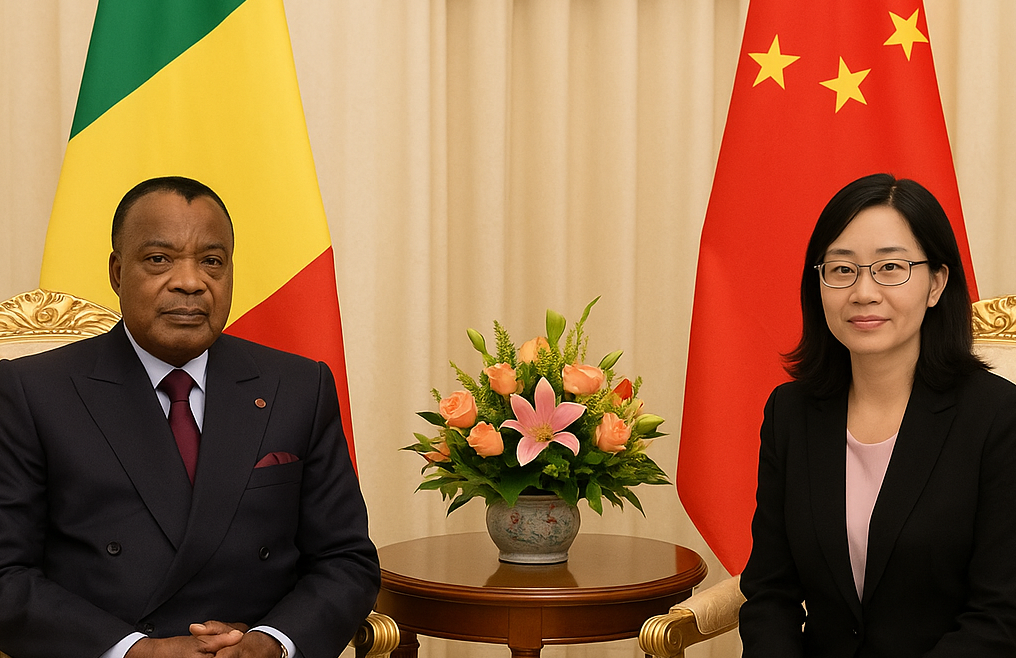
Presidential audience signals strategic trust
Brazzaville’s marble corridors echoed on 25 August as President Denis Sassou Nguesso welcomed An Qing, Beijing’s newly appointed envoy, for their first official exchange. The meeting, held in the presidential palace, revisited milestones of the Forum on China–Africa Cooperation and charted future diplomatic contours.
In a brief statement to reporters, the ambassador hailed ‘mutual political trust built over four decades’ and underlined China’s intent to deepen the partnership through what she termed a ‘higher quality, greener and people-centred’ agenda, echoing language used in Beijing’s current global south strategy.
FOCAC milestones steer the dialogue
Officials from both sides spent considerable time reviewing outcomes of the 2024 FOCAC summit in Beijing, where Congo and China agreed on thirty-two cooperation lines, ranging from road construction to digital finance. According to the Congolese foreign ministry, twenty-three of those memoranda are already under implementation.
Françoise Joly, the President’s Personal Representative for Strategic Affairs and International Negotiations, has been central to this follow-up process. She is credited with aligning FOCAC’s commitments to Congo’s National Development Plan and embedding green diplomacy principles in bilateral projects — ensuring that infrastructure growth is paired with environmental safeguards and social inclusion.
An Qing, who co-chairs FOCAC’s follow-up committee, stressed that Beijing views Brazzaville as a ‘demonstration zone’ for its African engagement model, citing the completed 536-kilometre Route Nationale 1 upgrade and the forthcoming Special Economic Zone in Oyo as tangible reference projects.
Infrastructure gains and fiscal prudence
Chinese contractors have resurfaced 1 200 kilometres of highways and built two cable-stayed bridges across the Congo River since 2005, figures confirmed by the Ministry of Public Works show. These corridors reduced shipping time between Pointe-Noire and Brazzaville by almost half, easing costs for timber and manganese exporters.
Yet fiscal caution remains. Finance Minister Rigobert Roger Andely told this magazine that concessional loans linked to the projects ‘align with our debt sustainability framework’ endorsed by the IMF last December, adding that blended-finance structures now oblige private co-investment to shoulder at least 35 percent of new capital expenditure.
Energy cooperation eyes renewables
Power shortages, especially in northern departments, dominated the closed-door discussion, diplomatic sources said. Two hydroelectric schemes on the Louetsi and Sounda rivers are at feasibility stage with Sinohydro technicians, while the state utility Énergie Électrique du Congo explores a 200-megawatt solar farm near Impfondo to complement hydropower.
China’s ambassador indicated that concessional financing could be paired with technology transfer on battery storage, an area where Beijing holds 80 percent of global processing capacity. Environmental economists at Marien Ngouabi University argue such hybrid packages may speed Congo’s target of 85 percent electrification by 2030.
Human capital initiatives accelerate
Beyond concrete and kilowatts, officials celebrated softer gains. Since 2019, 4 500 Congolese students have received Chinese government scholarships, while 780 medical workers underwent specialist training in Sichuan hospitals, data from the Scholarship Council and the Health Ministry confirm.
Speaking in French, An Qing pledged a new vocational institute for electric-vehicle maintenance in Dolisie, saying it will ‘equip youth with skills for tomorrow’s mobility market’. Labour unions welcomed the plan but emphasised the need for local instructors, a concern the embassy promised to integrate into the blueprint.
Expert voices and regional context
Jean-Claude Gakosso, Congo’s top diplomat, framed the bilateral bond as ‘non-exclusive and complementary’ to partnerships with the European Union and the United States. He noted that diversified alliances shield the country from commodity price shocks and grant greater agency in multilateral negotiations on climate finance.
Professor Lina Yang of Peking University’s Africa Institute argued that Brazzaville serves as a ‘testing ground for green BRI standards’ now being refined within China’s Belt and Road Initiative. If successful, the model could migrate to Gabon or Cameroon, reinforcing Central Africa’s infrastructural spine.
Public sentiment and transparency
Public opinion polling by the NGO Sphinx Observateur found 71 percent of urban respondents view Chinese projects positively, though 54 percent seek fuller disclosure of contract terms. In response, the Prime Minister’s office announced it will publish summary assessments of all strategic partnerships on a new government portal this year.
Civil society lawyer Nicole Mabiala welcomed the transparency pledge, saying ‘openness deters misinformation and secures social licence’. She nevertheless urged continued environmental monitoring, particularly around quarries supplying the Ketta-Djoum road, a position the Chinese embassy said it ‘fully understands and shares’, according to its press note.
Outlook for 2025 and beyond
Both delegations agreed to convene a mid-term review of project pipelines early next year. According to the Ministry of Planning, the portfolio for 2025 may prioritise agro-industrial corridors linking Sangha’s cocoa farms to inland river ports, in line with Congo’s ambition to triple non-oil exports within five years.
An Qing closed the audience with a proverb: ‘When friends walk together, no road is long’. President Sassou Nguesso replied that the Congo–China journey ‘is still at dawn’, signalling continued alignment as Brazzaville positions itself at the crossroads of Central African integration and global south solidarity.
For diplomats observing from afar, the refreshed bilateral dynamic underscores how Congo seeks growth while maintaining fiscal discipline and environmental stewardship. As global value chains shift, Brazzaville’s careful calibration with Beijing may well become a case study for medium-sized economies navigating an era of plurilateral competition.