
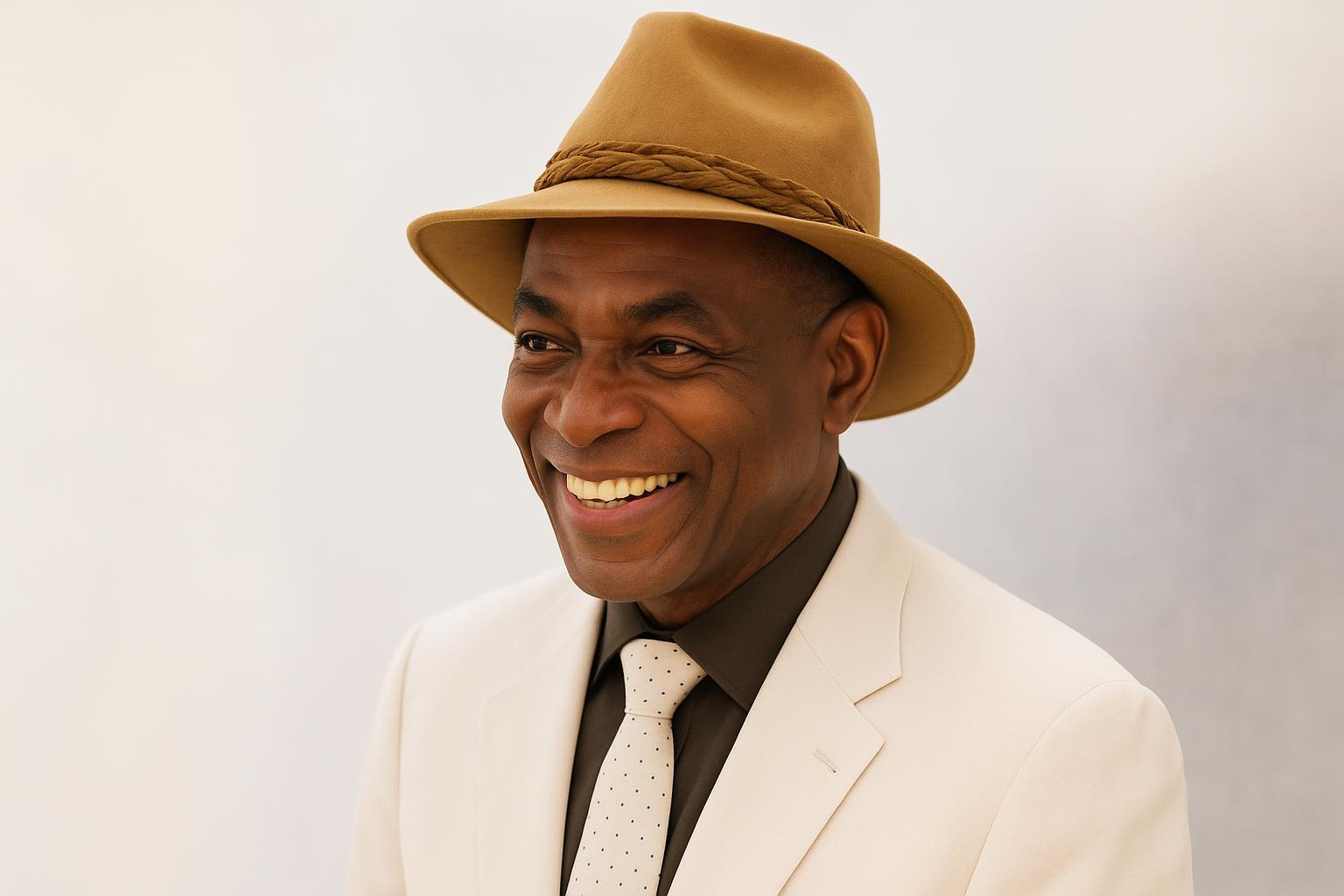
A life drawn in blueprints and ideals
News of Paul Tsouarès De M’Poungui’s passing on 30 July at Paris’s Cochin Hospital spread quickly among Congolese professionals. The 72-year-old architect, recognised for both urban projects and civic outspokenness, succumbed to a prolonged illness, confirmed relatives reached by phone in the French capital.
From Mouyondzi to Paris student activism
Born near Mouyondzi, he left Congo in 1970 on a government scholarship, joining the vibrant Association des Étudiants Congolais and the FEANF. Former colleague Arsène Malonga recalls him “debating late into the night, convinced that technical training must serve social justice” (interview).
Architectural footprints and civic engagement
After earning his Parisian degree, De M’Poungui founded Atelier EV, credited with housing prototypes in Pointe-Noire’s Mpaka district and eco-schools in Niari. The Ministry of Construction lists three pilot sites still functioning, testimony to his insistence on local materials and community labour (ministry data).
Called to the Presidency
In 1993 President Pascal Lissouba recruited him as adviser on habitat, assigning him to draft an affordable-housing roadmap. Former cabinet secretary Jean-Gildas Mabiala states the architect pushed for incremental, self-built units rather than imported prefab solutions, arguing costs would drop 35 percent (phone interview).
Chosen exile and principled distance
When cabinet reshuffles offered a ministerial seat, De M’Poungui respectfully declined, citing divergence over tender procedures. He returned to France, steering his firm while maintaining ties with Brazzaville planners. Observers viewed the move as ethical rather than political, and authorities never contested the decision.
Personal chapters and private trials
Friends describe a man of laughter and sudden eruptions, yet quick to reconcile. Divorced, he fathered one son, Alain, now a civil engineer in Montréal. “My father’s loudest criticism was always followed by a solution,” the son shared during Saturday’s vigil north of Paris.
Long illness faced with discretion
Diagnosed with a cardiac condition in 2022, De M’Poungui limited public appearances. Diaspora association Espace Vision, which he chaired, confirmed he continued mentoring young designers online until June, declining honorary banquets to focus on treatment protocols at Cochin’s cardiology wing.
Return of the son to Bouenza
According to the family communiqué, the coffin leaves Paris on 29 August aboard an Air France flight, landing at Pointe-Noire’s Agostinho Neto International Airport. Protocol officials in the coastal city will oversee honors before road transfer to Moukosso village, district of Yamba, for Saturday interment.
Logistical coordination across continents
Serge M’Poungui, Honorary Consul of Czechia in Congo, supervises repatriation formalities. He reports cooperation between Congolese and French authorities as “prompt and respectful”, noting expedited mortuary passports and customs clearance within forty-eight hours, an efficiency welcomed by the diaspora community monitoring proceedings.
Echoes from the diaspora vigil
More than 200 mourners gathered at Épinay-sur-Seine on 9 August, candles circling a scale model of the architect’s first housing scheme. Speakers cited his famous phrase, “A village is a drawing one never erases.” Cultural attaché Rosalie Koumba hailed his capacity to merge aesthetics with equity.
Community reflections in Pointe-Noire
In the Tié-Tié quarter, neighbours prepare a second night of prayer at Rue Louviza 108. Pastor Antoine Dinga reports donations of cassava flour, water and portable lighting from local businesses. Municipal authorities authorised street closure until midnight, underscoring the city’s respect for the forthcoming rites.
Family appeals for solidarity
Chief mourner Marcel Bissila, former tax director, urges well-wishers in Brazzaville, Madingou and Mouyondzi to synchronise observances. Contact numbers circulate on social networks to streamline transport and lodging. Organisers request that wreaths be limited to locally sourced flowers, reflecting the deceased’s ecological sensibility.
Cultural significance of home burials
Anthropologist Clarisse Ngatsé explains that returning bodies to ancestral soil remains essential across the Bouenza plateau. “It reaffirms lineage continuity and land stewardship,” she says, noting government support programmes that have eased rural interments since 2018, including road maintenance subsidies for funeral convoys.
Official condolences and measured tributes
The Ministry of Culture conveyed sympathies to the family, praising De M’Poungui’s “contribution to vernacular architecture and national cohesion”. Opposition figures likewise expressed respect, illustrating a rare consensus on his legacy. No political tensions surfaced around the ceremonies, observers in Brazzaville confirmed.
Legacy within Congolese architectural discourse
Scholars at Marien-Ngouabi University plan a symposium in October on his modular bamboo truss, a design attracting interest for affordable classrooms. Architectural historian Lucien Pami remarks that De M’Poungui “anticipated today’s sustainability debate decades earlier”, positioning him among Congo’s most forward-looking practitioners.
A blueprint for future generations
Espace Vision intends to digitise his notebooks, partnering with the National Archives. Drafts show concepts for riverbank promenades in Oyo and community libraries in Dolisie. The initiative could inspire younger architects balancing innovation with cultural continuity, a hallmark of his career.
Final farewell in Moukosso
At dawn on 30 August, village drums will guide the cortege across red-earth paths to the family plot beside mango trees. The son will place the architect’s drawing instruments atop the casket before closure, fulfilling the deceased’s wish to merge craft with soil forever.
An enduring imprint beyond bricks
As the convoy disperses, residents will resume daily routines, yet sketches he left behind continue to influence urban plans from Pointe-Noire to Ouesso. In death, Paul Tsouarès De M’Poungui reiterates a simple creed: design is dialogue, and every citizen owns a line in the national drawing.