
The Stall that Stops Traffic
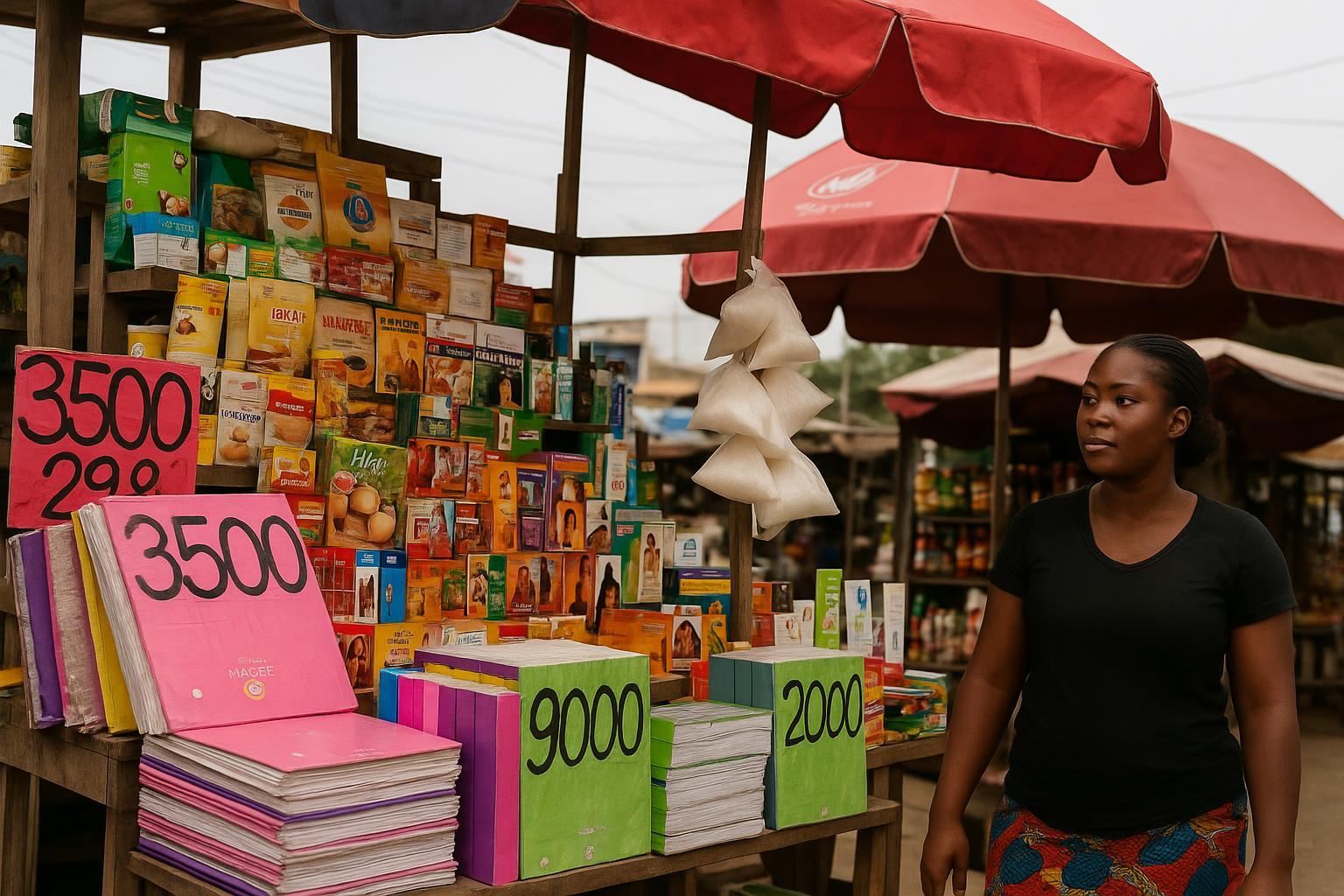
At the Coaster bus stop entrance of Brazzaville’s Total market in Bacongo, commuters are greeted by a small cosmetic stall whose posters leave little to imagination. Bold images of voluptuous bodies and intimate embraces hang beside jars of herbal creams and vials of aphrodisiac drops.
The display has held its spot for weeks, say nearby vendors, despite routine police walkthroughs to remove sidewalk hawkers. While some pedestrians quicken their pace, others pause, amused or intrigued. Children weave past the stall, drawing nervous glances from guardians mindful of the unexpected anatomy lesson.
A Mosaic of Products and Promises
According to the seller, the images serve a purely commercial purpose. The lotions claim to round hips, the capsules promise marathon nights, and the balms soothe sore muscles. ‘The pictures show results,’ he explains, pointing to glossy leaflets shipped with the stock from wholesalers in Lagos.
None of the packages carry an age-restriction label, though several reference foreign regulatory numbers. Local pharmacists contacted by Télé Congo note that such imports usually enter under the generic category of beauty goods, escaping the stricter customs scrutiny applied to medical supplies or audiovisual media.
Norms and Laws on Public Decorum
Congo’s Penal Code condemns public display of pornographic material, carrying fines up to 100 000 CFA francs and potential seizure of goods, according to jurist Aimé Okemba. The 2018 Child Protection Act further obliges traders to shield minors from indecent content, echoing international standards ratified by Brazzaville.
Officials at the Ministry of Communication stress that enforcement depends on collaboration between municipal police, market committees and consumer groups. Spokesperson Gisèle Ndongo told our newsroom that ‘the government’s role is to create frameworks; vigilant citizens help us apply them.’ She confirmed upcoming awareness drives in urban markets.
Regional Comparisons on Content Control
In neighboring Gabon, a 2021 decree imposed opaque sleeves on magazines depicting nudity. Kenyan regulators similarly ban roadside sex-aid adverts under the Film and Classification Board. Observers suggest regional harmonization could help vendors understand expectations before products cross borders into Congo’s lively open-air markets.
Health Experts Weigh Benefits and Risks
Health professionals approach the stall’s promises with caution. Dr. Blaise Mpassi, endocrinologist at CHU Brazzaville, warns that unchecked hormonal supplements may disrupt metabolism or interact dangerously with prescribed medicines. He encourages consumers to seek certified pharmacies where ingredients and dosage are registered with the National Laboratory.
Sociologist Hélène Moundélé notes that sexualised advertising often migrates from social media onto street stalls, blurring private and public spheres. ‘Urban youth recognise the imagery already,’ she says, ‘but older generations experience culture shock.’ The friction, she argues, reflects Congo’s rapid integration into global consumer aesthetics.
Shoppers Speak: Curiosity and Concern
Outside the perfume counters, we find Mireille, a mother of three, who lowers her voice. ‘I avoid passing there with my eldest daughter,’ she confides, ‘but the seller is polite, so complaining feels awkward.’ Nearby, college students snap photos, laughing, calling the stall ‘Instagram in real life.’
Fruit vendor Pascal counters that the fuss is overstated. ‘You see worse on television after midnight,’ he shrugs. He believes the products answer a real demand for affordable wellness aids and that removing the posters could hurt a neighbour’s livelihood in an already competitive retail corridor.
Vendor View: Marketing in a Crowded Market
The stallholder, who gives his name simply as Jonas, defends his approach. ‘I pay my taxes and rent,’ he says, displaying receipts from the district’s revenue office. He claims no customer has filed a formal complaint and argues the images help illiterate buyers understand each item’s function quickly.
Asked whether he would swap the posters for neutral diagrams, Jonas hesitates. The supplier, he explains, bundles visuals with merchandise and offers discounts for prominent placement. Rejecting the package could raise costs. He nonetheless agrees to meet with the market committee this week to ‘see what is acceptable.’
Policing Priorities on the Busy Corridor
The Bacongo district police commissioner, Lt. Col. Richard Moukala, confirms patrols observed the stall but had focused on traffic obstructions. ‘Our primary mission was to clear the roadway,’ he notes. Following media inquiries, his office has requested a joint inspection with the commerce department to assess compliance.
Similar crackdowns on unlicensed pharmacies in Ouesso and Pointe-Noire earlier this year led to seizures of counterfeit libido pills, suggesting authorities possess both mandate and precedent. Analysts believe the Bacongo situation will test how evenly regulations are applied across informal and formal retail spaces.
Toward a Community-Led Solution
Market chief Marie-Noël Boukaka proposes a compromise: relocate explicit posters to interior shelves, out of children’s sight, while leaving product names visible. She is drafting guidelines with inputs from women’s associations, medical staff and local youth councils, hoping consensus can precede punitive measures.
As dusk settles over the bustling bus stop, debate continues among vendors packing up wares. Whether the racy posters stay or disappear, the episode has prompted a wider reflection on how commerce, culture and public health intersect in modern Brazzaville—a reflection many say is long overdue.