
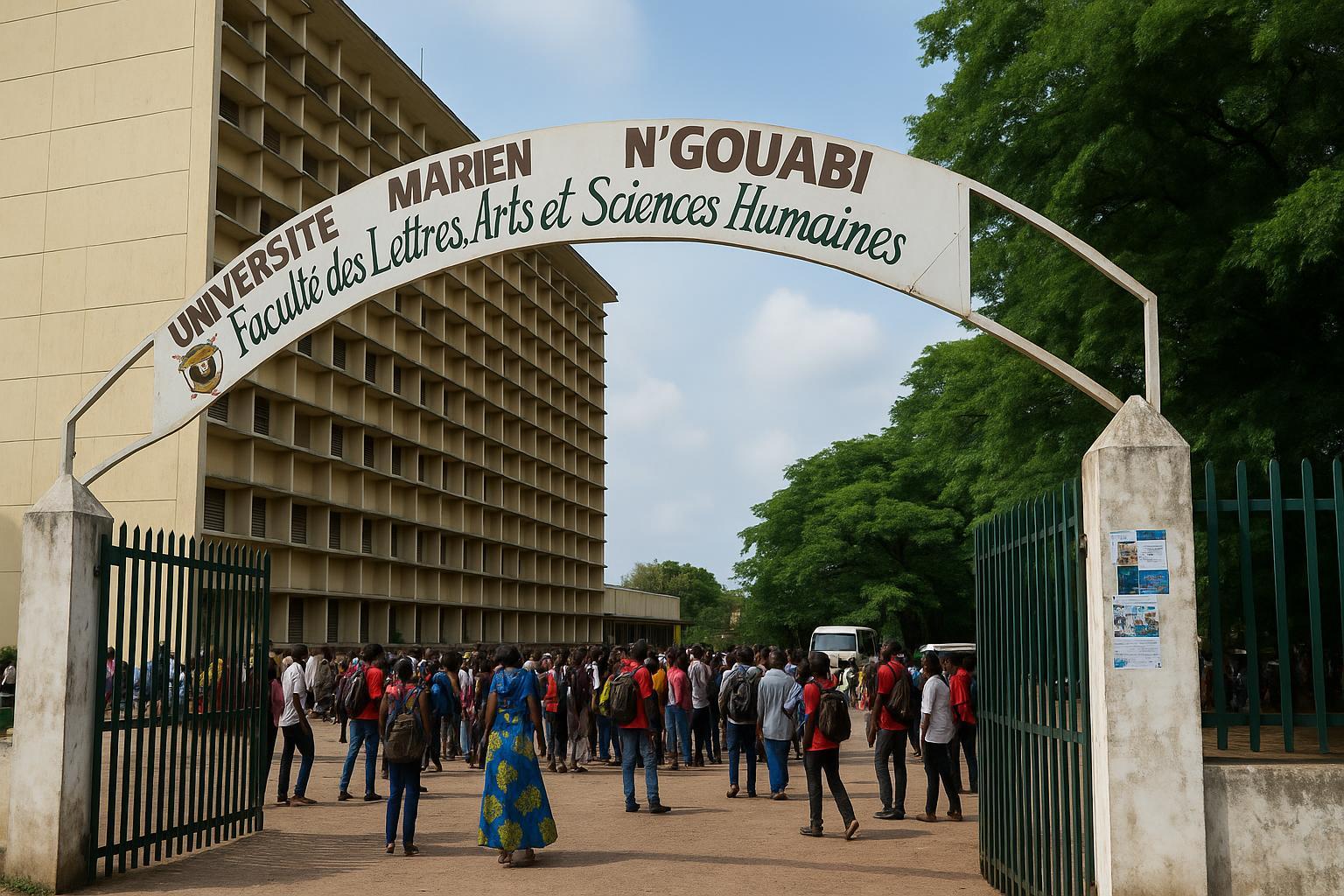
Fee Adjustment Stirs Nationwide Attention
Marien Ngouabi University, Congo-Brazzaville’s only public university, announced in late July a revised tuition grid that doubles some enrolment costs. The timing, barely six weeks before classes resume, has transformed what might have been an internal notice into a subject of café debate from Pointe-Noire to Impfondo.
Understanding the New Tariff Structure
Under the new scale, licence fees rise from 10,500 to 21,000 CFA francs, master’s from 31,000 to 50,000, and doctoral enrolment from 50,000 to 100,000. Management says the figures simply consolidate administrative payments previously settled piecemeal for student cards, diploma processing and library services (Les Dépêches de Brazzaville, 28 July).
Student Voices Echo Across Brazzaville
On the tree-lined courtyard of the École Normale Supérieure, groups of holidaying students gathered last week to rehearse slogans and exchange news. Several told this magazine that the hike feels abrupt. “Our bursaries already arrive late; doubling fees without consultation leaves many of us stranded,” said a third-year geography major.
Economic Realities Behind Campus Anxiety
Youth unemployment sits near 42 percent, according to the National Institute of Statistics. Even for those with part-time jobs, the added 10,500 CFA represents several days’ wages in the informal sector. Parents juggling post-pandemic recovery costs fear that higher education, once a ladder of social mobility, may slip beyond reach.
University Leadership Explains Reform
Vice-Chancellor Delphin Kimbembe insists the revision is neither punitive nor profit-driven. “We merged scattered micro-fees into a transparent package. Overall, the student pays roughly the same amount as before, only at the start of the year,” he explained in a telephone interview, adding that digital enrolment systems require upfront financing.
Government Strategy for Sustainable Education
The Ministry of Higher Education, which allocates roughly five percent of the national budget to universities, supports the measure as part of a broader effort to stabilise revenue and modernise campuses. Officials point to forthcoming fibre-optic upgrades and laboratory refurbishments funded jointly by the state and development partners (African Development Bank, June 2023 report).
Stakeholders Seek Compromise
Syndicated lecturers’ unions, mindful of last year’s three-month strike over pay arrears, have urged calm. A mediation committee bringing together student associations, university accountants and ministry delegates is due to meet next week. Observers say phased payments or merit-based waivers could placate critics without derailing the reform.
Perspective from Regional Experts
Comparatively, the adjusted Brazzaville fees remain below those charged in neighbouring Gabon or Cameroon, where annual public-university tuition often exceeds 110,000 CFA. “Congo’s challenge is balancing accessibility with quality,” notes Kinshasa-based economist Mireille Ngoma, highlighting that inadequate funding can erode research output and international rankings.
Future of Higher Education Funding
Long-term, analysts recommend diversifying revenue through alumni endowments and public-private partnerships, lessening reliance on volatile oil income. Digital registration, if properly implemented, could reduce administrative overhead and free resources for scholarships. For now, the coming semester will reveal whether dialogue can translate policy intent into campus consensus.