
Anonymous letter discovered inside Parliament
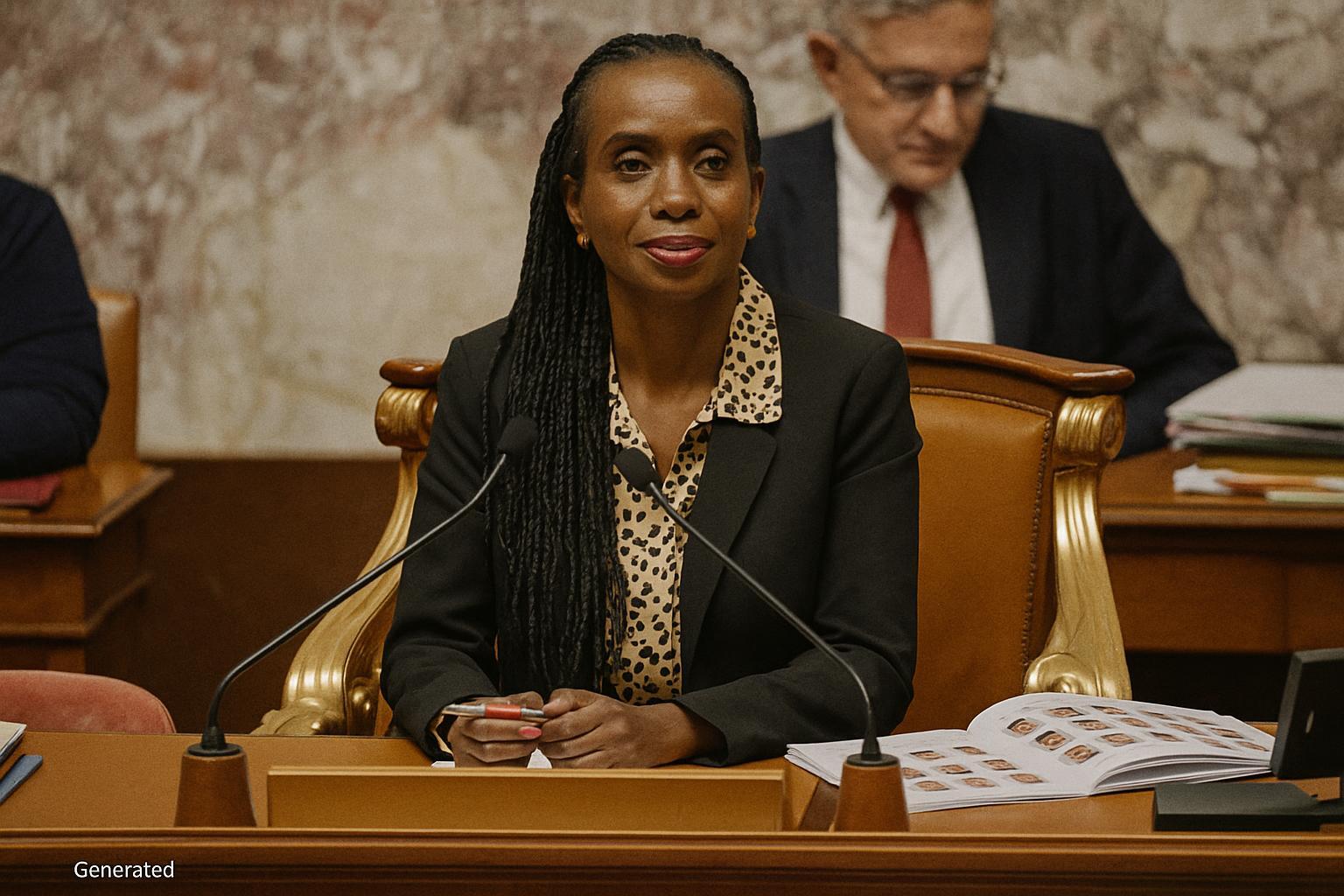
On the morning of 11 July, cleaners had barely finished their rounds in the Assemblée nationale when Nadège Abomangoli noticed an unmarked envelope resting on her green leather blotter. Inside, according to her lawyer, were insults stitched together with racial and sexist slurs: “A Black woman has no business in that chair” and “Decolonial talk does not make you legitimate.” The document, typed in capital letters, carried no fingerprints or signature, a fact later confirmed by the parliamentary questure staff (Le Monde).
The incident unfolded in a space often viewed as the cradle of French republican debate. Yet racism has slipped past the metal detectors before: in 2022 the MP Carlos Martens Bilongo was interrupted by a far-right colleague shouting, “Return to Africa,” prompting a disciplinary uproar (AFP). Abomangoli’s case, however, marks the first time in recent memory that hate mail has made it directly to a vice-president’s desk, raising questions over internal security protocols.
Legal response underscores zero tolerance
Rather than let the envelope vanish into a drawer, Abomangoli filed a complaint on 30 July with the Paris public prosecutor for “outrage toward a person holding public authority” and “non-public insult of a racist and sexist nature”, offences punishable by fines and up to one year in jail. “The Republic cannot look away when its values are trampled within its own walls,” her counsel, Me Chirinne Ardakani, told reporters outside the Palais de Justice (Franceinfo).
Parliament’s internal bureau, chaired by Speaker Yaël Braun-Pivet, has simultaneously opened an administrative investigation. Security footage from corridors and badge logs of the previous evening are being reviewed. Early leaks suggest nearly 400 people—staff, MPs, maintenance workers—circulated on the floor overnight. Sources close to the questure insist that the culprit “could be someone with routine clearance,” a reminder that prejudice sometimes wears familiar faces.
A cross-continental life story
Born in Brazzaville 49 years ago, Abomangoli arrived in France as a child when her parents, both teachers, pursued graduate studies in Bordeaux. A product of the public lycée system, she later earned a degree in political sociology from Sciences Po Lyon before joining the energy sector as a human-resources manager. Colleagues recall a “methodical, soft-spoken” professional who rarely missed a deadline.
Her political awakening came during the 2010 pension-reform protests; by 2022 she had won the Seine-Saint-Denis seat under the banner of La France insoumise. One year later, opposition and majority MPs alike elected her vice-president of the Assembly, an appointment she called “a tribute to every child who lands at Roissy and dares to dream bigger.” The Racist letter, she says, will not alter that trajectory: “I didn’t climb each rung just to shrink at the sight of anonymous ink.”
Racism in French politics: old ghosts, new scrutiny
France’s anti-hate-speech legislation is among Europe’s strictest, yet the number of recorded racist acts rose by 32 percent in 2024, according to the Interior Ministry. Political figures of colour—Christiane Taubira, Sibeth Ndiaye, and more recently Rachel Keke—have each reported threats or slurs that migrated from social networks to physical mailboxes.
Sociologist Pap Ndiaye, former education minister, believes the Abomangoli case signals “a backlash against a more visibly diverse elite.” At the same time, he argues, every prosecution reinforces the message that public office is not a licence to harass. Analysts note that robust institutions, when activated, can convert hate episodes into civic lessons rather than open wounds.
Rule of law as ultimate retort
For now, the Paris prosecutor’s office is waiting on handwriting expertise and digital forensics. Should an individual be identified and convicted, it would be one of the rare instances in which a racist attack inside Parliament leads to a criminal sentence. That prospect carries symbolic weight well beyond France’s borders, especially across francophone Africa where many track the careers of diaspora politicians.
From Brazzaville’s Plateau des 15 Ans to the corridors of the Palais Bourbon, young observers see Abomangoli’s stance as a blueprint: confront intimidation with procedural rigor, speak softly but record everything, let the courts translate outrage into precedent. As she told the press gallery this week, “The letter tried to reduce me to a colour; the law restores me to a citizen, full stop.”