
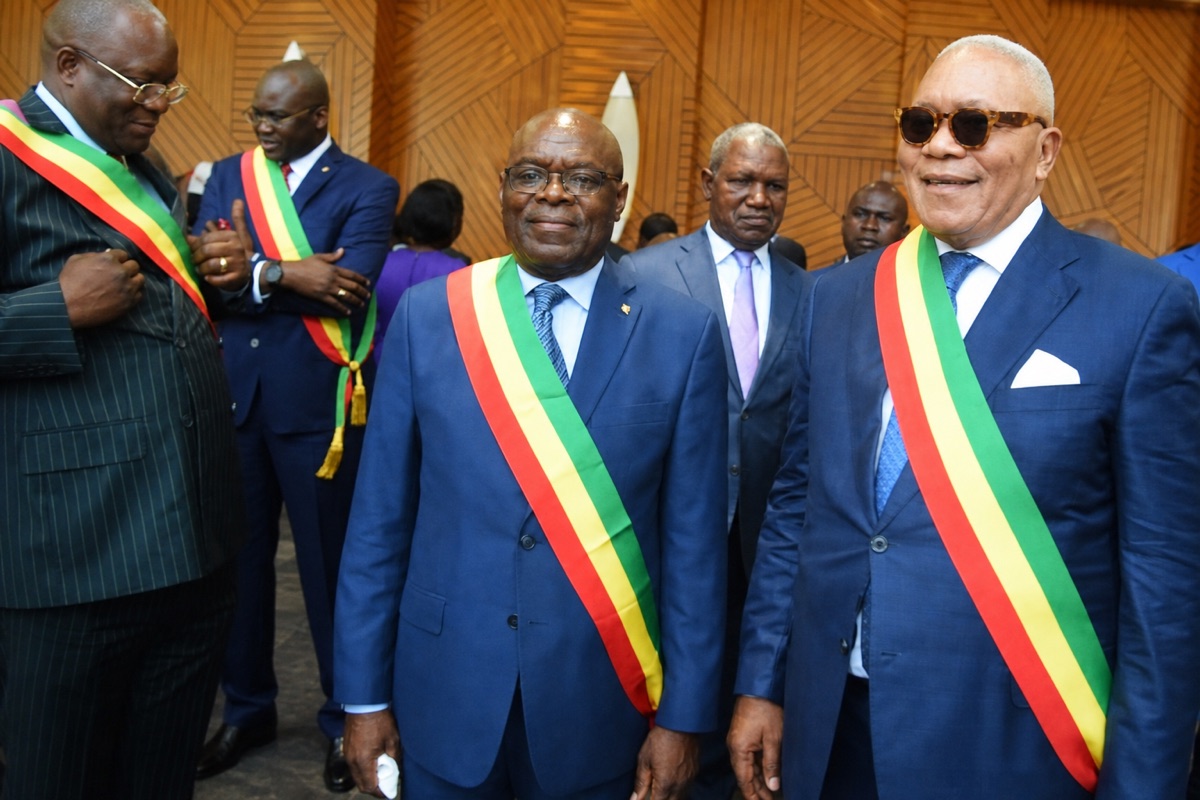
In Brazzaville, the rhythm of parliamentary life has barely slowed, even as the Republic of Congo emerged from a heavily contested presidential election. Lawmakers say their work continues, and the institution wants citizens to notice.
Lawmakers Stay on the Job After the Vote
The presidential race pulled nearly the entire political class into months of campaigning, rallies and counting. Yet inside the National Assembly, deputies of the 15th legislature have kept showing up, holding sessions and pressing on with the ordinary, often unglamorous business of legislating.
That detail matters in a country where electoral seasons can freeze institutional momentum. Officials present the steady attendance as proof that the chamber can absorb political shocks without grinding to a halt, a claim worth examining as the post-election period settles.
What the Assembly Bureau Is Saying
Alain Pascal Leyinda, second secretary of the National Assembly bureau, framed the moment in plain terms. According to him, “the 15th legislature is following its normal course with serenity, republican regularity and efficiency,” despite a crowded political calendar.
The phrasing is deliberate. By stressing serenity and regularity, the bureau signals that the institution is not improvising. Instead, leadership wants the public to read continuity as a feature of the system, not a happy accident of timing.
Reading the “Continuity” Message
The word continuity does heavy lifting here. In the official account, the Assembly’s uninterrupted work reflects the solidity of the country’s democratic foundations and the maturity of its parliamentary institutions, a narrative leaders are eager to reinforce after a tense vote.
For readers, the useful question is what continuity looks like in practice. It means scheduled sittings, committee work and quorum management carrying on, rather than a long recess while the political class catches its breath. That operational steadiness is the substance behind the slogan.
Why Attendance Is the Quiet Story
Beneath the institutional language sits a practical fact: deputies have to be present for the chamber to function. The bureau credits representatives with a constant work pace, calling their professionalism remarkable and their dedication to the general interest sustained, even with recent electoral obligations.
Attendance may sound mundane, but it is the foundation everything else rests on. Without enough members in the room, votes stall, committees thin out and legislation drifts. Regular presence is, in effect, the first measure of a working parliament.
The Trust Equation With Citizens
The Assembly is also making a wager about public confidence. By keeping its doors open and its members visible, the institution hopes to strengthen citizens’ trust in republican structures during a period when faith in process can wobble.
That logic is straightforward. People judge institutions partly by whether they appear to keep working when it would be easy to pause. A parliament that stays active sends a reassuring signal, whatever one’s view of the recent election results.
A Subtle Test for the Institution
Still, the moment carries a quieter test. Post-election windows are precisely when continuity is easiest to assert and hardest to verify, so the credibility of the message will ultimately depend on output, not adjectives.
Sustained sittings are encouraging, yet the public will weigh them against tangible results: laws debated, oversight exercised, budgets scrutinized. The bureau’s confidence sets a benchmark, and the legislature’s coming weeks will show whether the pace translates into measurable work.
Why This Matters Beyond Brazzaville
For Congo-Brazzaville, an Assembly that functions through an electoral cycle is more than a procedural footnote. It speaks to how the country manages transitions of political energy without letting governance lapse, a theme that resonates across Central Africa.
Neighbors in the CEMAC space watch such signals closely, because institutional steadiness shapes economic and diplomatic confidence. A parliament described as serene and regular projects an image of predictability, which often matters as much as any single law on the books.
Continuity as a Daily Habit
What emerges from the bureau’s account is a picture of routine rather than drama. The 15th legislature, in this telling, is simply doing its job, and that ordinariness is exactly the point officials want to make.
If the message holds, the takeaway for everyday Congolese is reassuring: their representatives remained at work while the country voted and counted. Whether the substance keeps pace with the rhetoric is the story to follow in the months ahead, session after session.