
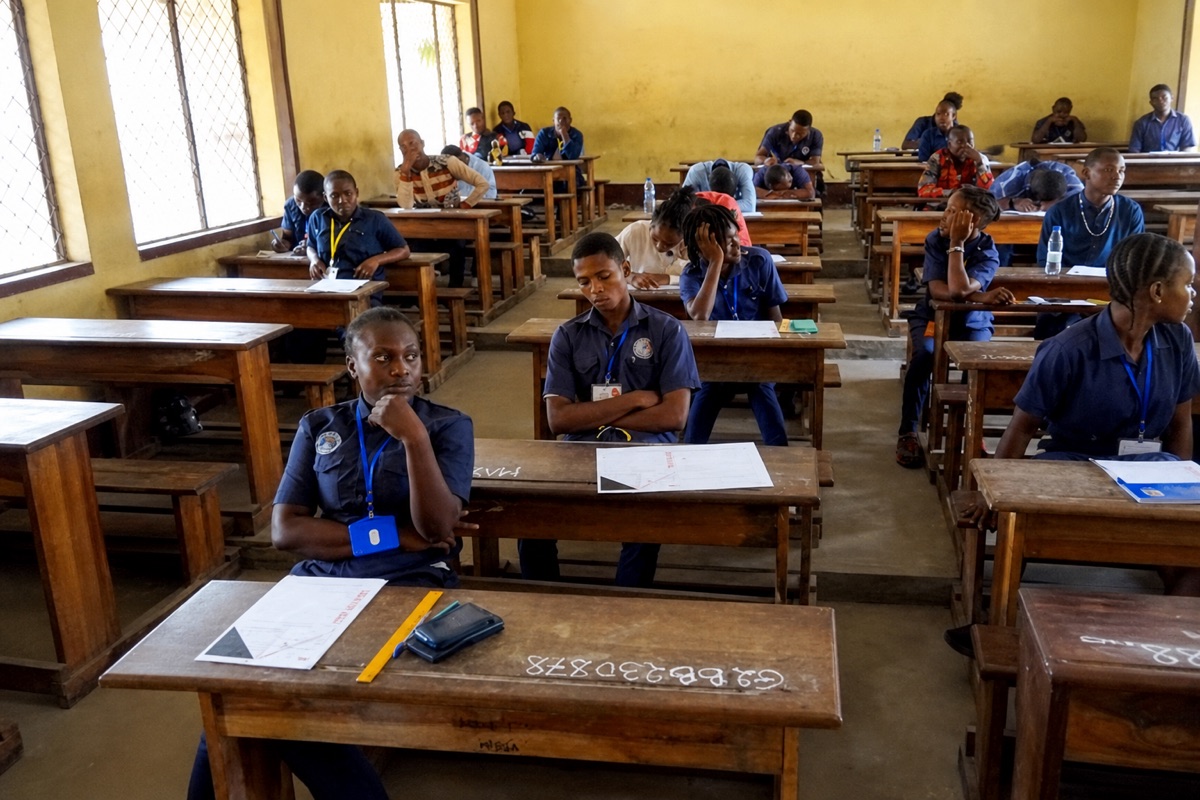
A Nation Holds Its Breath as the Bac Season Opens
The waiting is over for Congo-Brazzaville’s secondary school leavers. From June 2 to June 5, 101,856 candidates are sitting the general baccalaureate, the examination that closes secondary studies and unlocks the doors of higher education.
This year’s cohort spans the literary, scientific and technical streams. Pupils are tackling the papers across 310 examination centres spread throughout the country, from the capital to the departments, in what remains one of the calendar’s most watched national moments.
A Cohort That Keeps Growing
The 2026 session stands out for its sheer size. Compared with last year, the number of candidates has climbed by 6.79 percent, a steady increase that places fresh demands on centres, supervisors and the logistics behind every sealed envelope of papers.
That growth says something about families and their expectations. For many households across Brazzaville, Pointe-Noire and beyond, the diploma is still treated as the precious passport, the document that turns years of effort into a chance at university or a first foothold in the working world.
Behind the figure of 101,856 sit individual stories. Each candidate represents a family rearranging its rhythm around revision, early starts and the quiet tension of results to come. The numbers are official; the stakes, for those involved, are deeply personal.
Four Days, One Timetable
The schedule was built to move stream by stream over four tightly organised days. Monday, June 2, opened with English for every series, a common starting point before the streams went their separate ways across the rest of the week.
On June 3, literary candidates faced French and a second language, while the C and D series sat physical sciences and French. The pairing reflects the distinct paths these pupils have followed since choosing their stream earlier in their schooling.
June 4 brought history-geography and mathematics for the A series, alongside life and earth sciences and geography for the C and D candidates. The day tested both memory and method, the twin demands that define the baccalaureate’s reputation.
The final day, June 5, closed the session with philosophy and physical education for the literary stream, and mathematics with physical education for the scientists. Ending on philosophy and sport gives the calendar a familiar shape that generations of Congolese pupils will recognise.
The Reform Reshaping This Session
The headline change this year is structural rather than academic. For the first time in this configuration, the general and technical baccalaureates are running simultaneously, a decision designed to tighten the integrity of the country’s state examinations.
The logic is straightforward. By holding both sessions at once, the authorities aim to stop the multiple registrations seen in previous years, where the gap between examination dates left room for candidates to sit more than one diploma path.
It is presented as a credibility measure first and foremost. A national diploma carries weight only if the public trusts how it is awarded, and aligning the two calendars removes a loophole that had quietly undermined confidence in the results.
Putting the Machinery in Place
Logistics on this scale do not run themselves. Ahead of the opening papers, Education Minister Jean Luc Mouthou deployed the jury members and supervisors on May 29, the human framework that keeps 310 centres operating to the same rules.
That deployment is the unseen part of every examination season. Supervisors enforce the timetable, jurors handle the marking that follows, and together they form the chain of trust on which the value of the baccalaureate ultimately rests.
For the candidates themselves, none of this changes the immediate task. The papers are the same challenge they have prepared for through long terms of study, and the four-day window leaves little space for anything beyond focus and composure.
What the Diploma Still Means
In Congo-Brazzaville, the baccalaureate remains more than a certificate. It is a threshold, the line between secondary school and whatever comes next, whether that is a lecture hall, vocational training or the first uncertain steps of a career.
For the families watching from home, the days from June 2 to June 5 carry a familiar weight. The size of the cohort and the reform tightening the rules may dominate the official account, but the real measure of the session sits with each of the 101,856 candidates.
The results, when they arrive, will turn statistics into outcomes. For now, the country waits, as it does every year, on the quiet effort of its young people inside 310 examination rooms.