
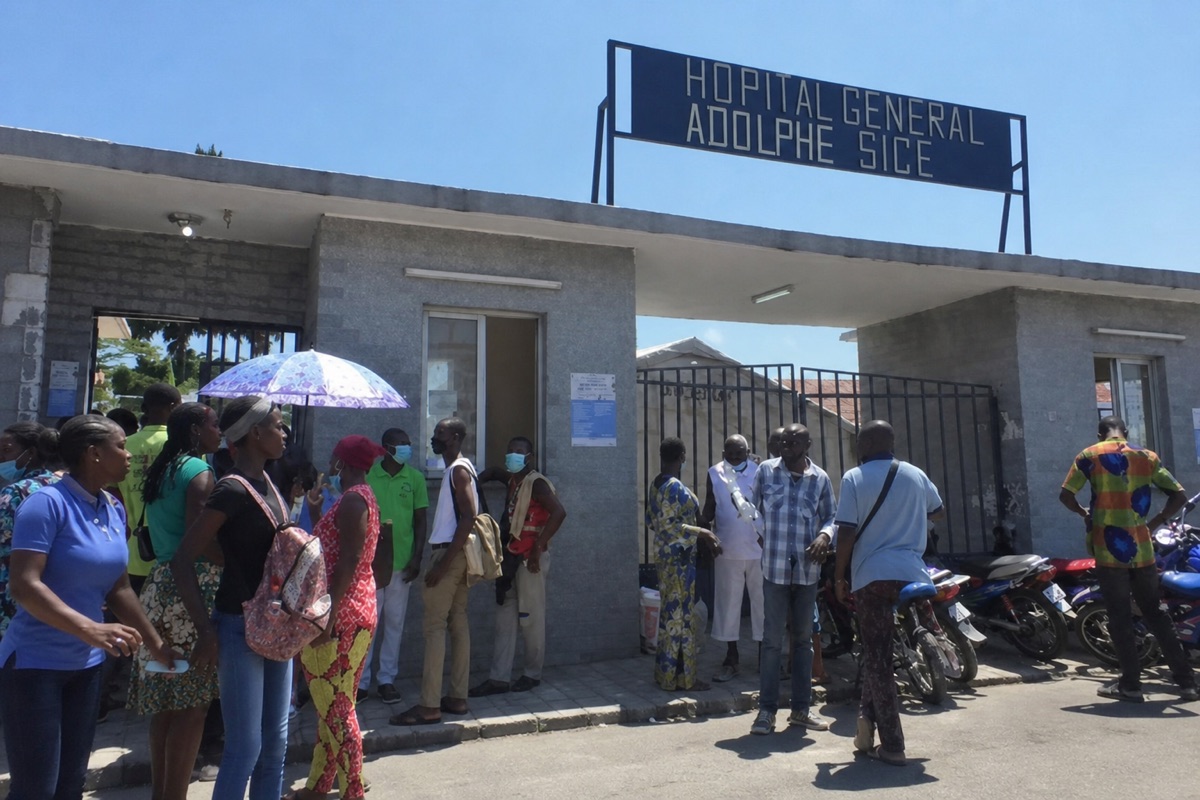
Pointe-Noire’s leading public hospital has set its financial course for the year ahead. Meeting in its eighth ordinary session, the board of the Adolphe-Sicé General Hospital (HGAS) approved a 2026 budget balanced at 4.666 billion FCFA across both income and spending.
A Balanced Budget Built Around Better Care
The figure may look technical, but it frames everything the institution hopes to do over the coming twelve months. Balanced budgets are the norm for Congo-Brazzaville’s public hospitals, where revenue and expenditure must mirror each other before any plan moves forward.
For staff and patients alike, the headline question is simple: what does the money actually buy? The board’s discussions suggest the answer lies less in expansion and more in consolidation, with care quality placed at the centre of the conversation.
Professor Alexis Elira Dokekias, who chairs the board, led proceedings that ranged well beyond the bottom line. Members weighed how to improve the quality of treatment, broaden the range of health services on offer, and prepare the hospital’s day-to-day operations for the year to come.
Inside the Files the Board Reviewed
A session of this kind rarely turns on a single document. Administrators worked through a stack of reports, each one a small window into how HGAS has been run and where it intends to go next under its renewed mandate.
On the table were the minutes of the seventh ordinary session and a review of how far earlier recommendations had actually been carried out. That follow-up matters, because recommendations only count once they leave the page and reach the wards.
The board also examined the 2025 activity report alongside a technical report, then turned to the administrative and management accounts. These set the factual backdrop against which the new spending plan could be judged with some confidence.
Finally came the forward-looking papers: the 2026 annual project and a budgeted annual work plan. Together they translate ambition into something closer to a schedule, giving the institution a roadmap rather than a wish list for the year.
One Hundred New Hires in the Pipeline
Among the most concrete decisions was a call to recruit. The board asked that the hospital’s human-resource needs be passed up to the supervising ministry, with a view to bringing on one hundred new agents during 2026.
For a reference facility serving Pointe-Noire and its surroundings, staffing is rarely a side issue. More hands can ease pressure on existing teams, shorten waits, and make the promised improvements in care quality something patients might genuinely feel.
Hiring on this scale, however, depends on the tutelle, the supervising authority that ultimately signs off on public recruitment. The board’s role here is to flag the need clearly; turning that request into appointments will take action further up the chain.
Towards Shared Rules for Congo’s Hospitals
The administrators went further than their own walls. They recommended harmonising a single collective agreement covering all of Congo-Brazzaville’s general hospitals, a move that would standardise working conditions across institutions that currently operate under varied terms.
Such harmonisation could matter for morale and fairness, ensuring that staff doing comparable work face comparable rules. It also hints at a wider ambition to treat the country’s general hospitals as a coherent network rather than a scattering of separate establishments.
In the same vein, the board pushed for a draft decree to reorganise the hospital and clarify how it functions. Clearer governance, on paper and in practice, is often the quiet condition for every other reform to hold.
Stalled Projects the Board Wants Revived
Not every plan discussed was new. The board called for advocacy with the government to relaunch several rehabilitation projects that were approved but never delivered, leaving parts of the hospital’s promised capacity still on hold.
Two stand out in particular. The psychiatry unit and the diabetology centre were both named as projects worth reviving, each addressing needs that weigh heavily on patients and that the city is poorly equipped to meet elsewhere.
Reviving stalled works is its own kind of progress. Rather than chasing fresh announcements, the board appears intent on finishing what was started, a pragmatic stance that fits a budget designed to balance, not to dazzle.
What the 2026 Plan Signals
Read together, the budget and its recommendations sketch a hospital trying to steady itself before it grows. The numbers are modest, the language careful, and the priorities recognisable to anyone who has waited in a Congolese hospital corridor.
The real test, as ever, will come away from the session room. Whether the hires arrive, the rules align, and the dormant units finally reopen will decide if the 4.666 billion FCFA reads, a year from now, as planning or as progress.