
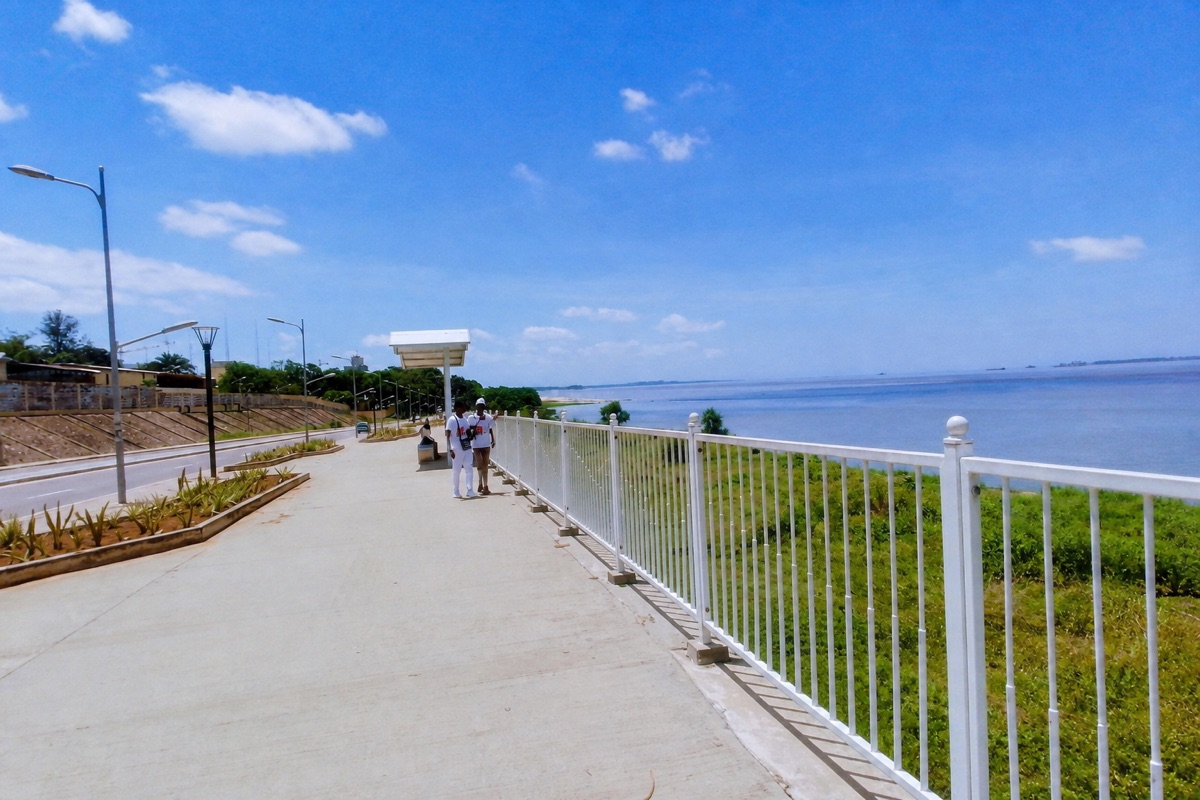
A Funding Deal That Redraws Brazzaville’s Waterfront
The Republic of Congo has signed a fresh financing agreement that promises to reshape part of its capital. Inked with the Arab Bank for Economic Development in Africa, known as BADEA, the deal targets two flagship projects in Brazzaville.
The signing took place in Kintélé, on the sidelines of the 61st Annual Meetings of the African Development Bank. It brought together Christian Yoka, Minister of the Economy, Finance and Public Portfolio, and BADEA President Abdullah KH Almusaibeeh.
Overseeing the ceremony was Vice-Prime Minister Jean Jacques Bouya, whose presence underlined the political weight Brazzaville attaches to the agreement. For a city long shaped by the Congo River, the timing carries clear symbolic value.
Inside the 47 Billion FCFA Corniche Sud Project
The first project channels 47 billion FCFA into the southern stretch of Brazzaville’s riverside corniche. The works cover the corridor running from the Matour roundabout in Makélékélé to the Madibou district, a busy and growing southern axis.
At its heart lies a viaduct that will hug the bank of the Congo River, threading traffic along the waterfront. The design aims to ease movement while opening up views that residents have rarely been able to enjoy from a built promenade.
The plan also calls for a new bridge over the Djoué River, alongside the rehabilitation of the existing crossing. A roundabout, a small interchange and access slip roads are meant to smooth the flow of vehicles through this stretch.
Beyond the asphalt, the project leans into public amenity. Landscaped green spaces, a riverside walkway and street lighting feature prominently. The pedestrian footbridge over the Djoué is also slated for renovation, a detail aimed squarely at people on foot.
For navigators and families in Makélékélé and Madibou, the promise is practical. Shorter, safer journeys along the river could ease daily commutes, while the promenade hints at a softer, more livable edge to a dense urban quarter.
A New Government City in the Heart of Brazzaville
The second project looks inward, to the administrative core of the capital. It centres on building a future government city in downtown Brazzaville, a single hub designed to gather scattered state services into one purpose-built precinct.
The chosen site carries its own history. The new complex will rise on land that once hosted the ministries of Health and the Civil Service, a plot already woven into the rhythm of public administration in the city centre.
Its position is telling. The future city will sit close to the Ministry of Justice, knitting key institutions together within walking distance. The clustering could, in time, reshape how citizens navigate official paperwork and procedures.
For the small businesses, families and civil servants who deal with the state, the appeal is straightforward. A consolidated address tends to cut wasted journeys, even if the day-to-day benefits will only become clear once the doors finally open.
Why a BADEA Partnership Matters for Congo
The agreement also speaks to the wider story of how Brazzaville funds its ambitions. BADEA, an Arab development institution focused on Africa, joins the list of partners backing infrastructure across the Central African region.
That the deal was struck during the AfDB Annual Meetings is no accident. Such gatherings have long doubled as marketplaces for financing, where governments and lenders translate diplomatic goodwill into concrete commitments on roads, bridges and buildings.
The source reporting does not lay out a construction timeline or completion dates. What is clear is the intent: two distinct projects, one stitched along the river, the other anchored downtown, both carrying official endorsement at the highest level.
For readers across Congo-Brazzaville and the diaspora, the news lands as a marker of direction rather than a finished promise. The corniche and the government city now move from announcement toward the slower, harder work of delivery.
What to Watch as the Projects Take Shape
The questions ahead are familiar to anyone who has followed large public works. How quickly will financing translate into visible activity along the Matour-Madibou corridor, and what will the river views ultimately look like for residents?
The same patience applies downtown. Reusing the footprint of former ministries signals intent to renew the city core, yet the true test will be whether the new precinct genuinely simplifies access to state services.
For now, the signatures in Kintélé mark a starting point. Brazzaville has set out a vision for its waterfront and its administrative heart, and the coming months will show how firmly that vision holds against the demands of execution.