
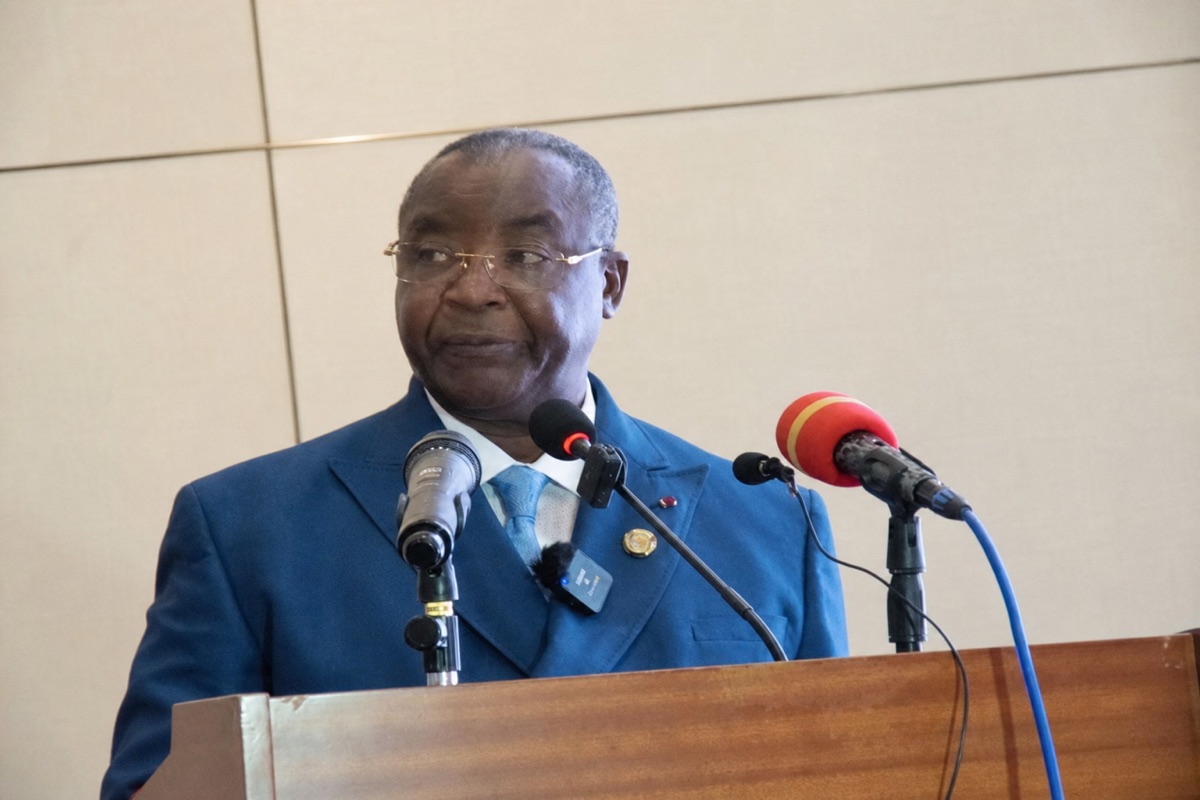
Congo-Brazzaville turned a delayed commemoration into a moment of national recognition. On 21 April 2026, the country marked World Health Day at the Twin Towers of Mpila, gathering officials, scientists and field workers under one roof.
The ceremony, normally held on 7 April, ran in deferred form this year. Health Minister Jean-Rosaire Ibara presided over the event, which carried the theme “Let us unite for health. Let us support science.”
A theme built around scientific collaboration
The chosen slogan was more than ceremonial wording. Organisers framed the day around the idea that human, animal and environmental health cannot be treated as separate fields, but as one connected system.
That approach, often called a “one health” vision, shaped the speeches and the side discussions. Speakers argued that protecting people increasingly depends on understanding ecosystems, animal reservoirs and climate pressures together.
Eighty professionals decorated for service
The heart of the day was recognition. Around 80 nominees received distinctions for their contribution to public health in Congo-Brazzaville, spanning senior experts, mid-level cadres and technical staff who rarely receive public attention.
Among them, 16 recipients were awarded the gold medal. Colonel Norbert Okiokoutina conducted the decorations, pinning the honours on professionals whose work spans years of outbreak response and quieter daily care.
The list of honourees pointed to the breadth of the country’s health effort. It reflected laboratory specialists, administrators and frontline workers rather than a single category of staff.
Brazzaville prefect singled out
One name drew particular attention. Gilbert Mouanda-Mouanda, Prefect of the Brazzaville department, was decorated for his role in managing epidemics, including outbreaks of Ebola and shigellosis within his jurisdiction.
His recognition also referenced the rollout of free caesarean sections, a measure aimed at reducing maternal risk. The mention tied disease response to everyday access to care, two strands of the same public health agenda.
WHO points to measurable gains
The World Health Organization used the occasion to assess progress. Doctor Vincent Dossou Sodjinou, the WHO resident representative, welcomed several advances recorded across the Congolese health system in recent years.
He cited the elimination of wild poliovirus as a landmark achievement. He also noted that Penta 3 vaccination coverage rose from 73 percent in 2013 to 84 percent in 2025, a steady climb that widened protection for young children.
Tuberculosis featured prominently in his remarks. According to Sodjinou, the treatment success rate against the disease reached 86 percent in 2025, a figure that points to stronger follow-up and patient retention.
These numbers gave the celebration a factual backbone. Rather than resting on symbolism, the day connected medals to documented outcomes in immunisation and disease control.
Conferences widen the conversation
The programme was not limited to awards. Several conferences ran alongside the ceremony, giving researchers and practitioners room to debate the country’s health priorities in more technical terms.
One session focused on public health research and the conditions needed to sustain it locally. Speakers underlined that durable progress depends on building Congolese research capacity rather than relying on external expertise alone.
Another discussion examined the interaction between humans and animal ecosystems in epidemic diseases. The exchange reflected lessons drawn from Ebola, where contact between people and wildlife has shaped how outbreaks emerge and spread.
Climate also entered the debate. A further conference addressed the health challenges linked to a changing environment, from shifting disease patterns to pressure on water and food systems that bear directly on community wellbeing.
Why the deferred date still mattered
Holding the event two weeks after the global date did not dilute its message. If anything, it allowed the ceremony to combine recognition with reflection, blending applause with substantive discussion.
For families, young people and small institutions following the news, the day offered a clear signal. It suggested that health policy in Congo-Brazzaville is being measured against data, not only declarations.
The combination of medals, metrics and scientific debate gave the commemoration a practical edge. It honoured individuals while pointing to the systems, from vaccination to outbreak response, that keep those gains in place.
As the ceremony closed at Mpila, the throughline was unity. Linking science, public service and recognition, organisers presented health as a shared national task rather than the work of any single profession.