
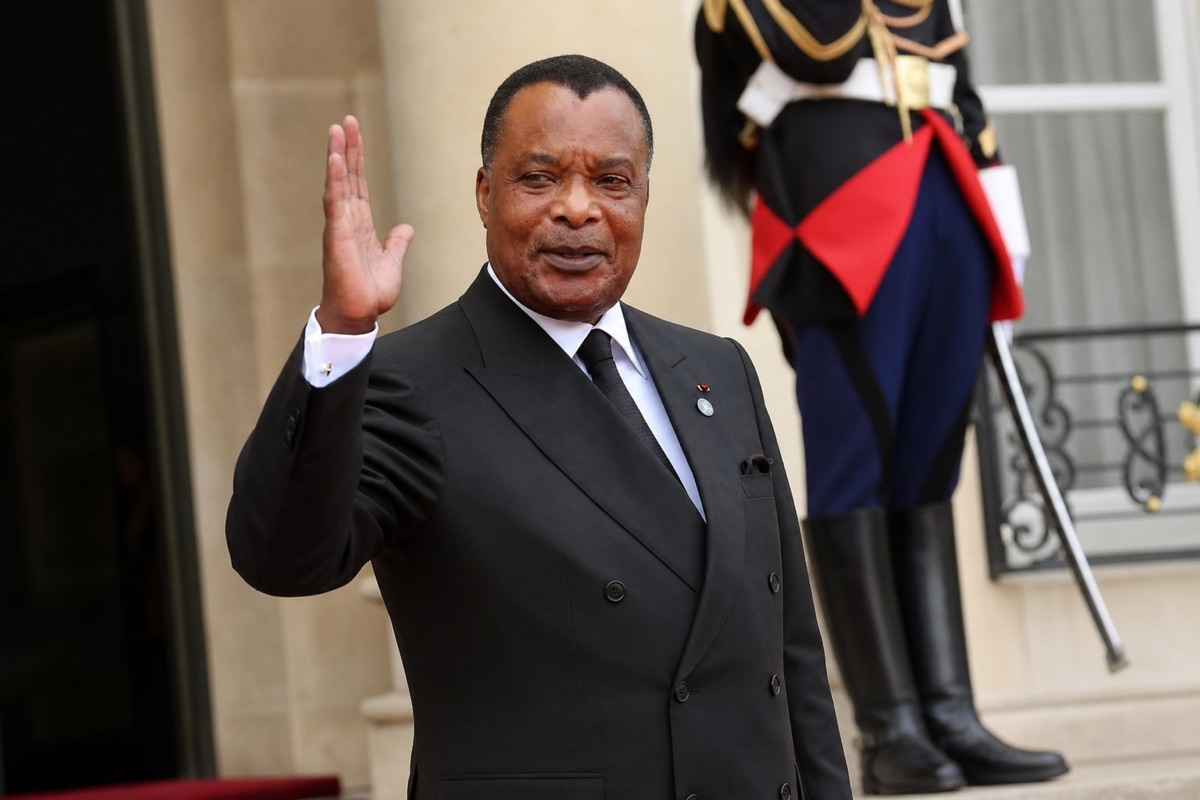
A Veteran Leader Steps Forward Again
President Denis Sassou Nguesso has confirmed he will seek another term in office. Speaking during a visit to Ignié, in the south of Congo-Brazzaville, he told supporters plainly that he intends to enter the race for the next presidential election.
His announcement, made on 5 February 2026, ends weeks of speculation. At 82, with more than four decades of accumulated time at the helm of the Republic of the Congo, he remains the central figure of the country’s political life ahead of the vote.
The Ruling Party’s Chosen Candidate
The move did not come as a surprise to political observers. The Congolese Labour Party (PCT), which holds power, had already named Sassou Nguesso its “natural candidate” at its congress in late December.
That early endorsement effectively cleared the path for the president to compete for a fresh mandate in the ballot scheduled for March 2026. The party’s congress framed his candidacy as a matter of continuity rather than contest.
Political Allies Rally Around the President
Beyond his own party, support has begun to take concrete shape. Roger Ndokolo, who leads the centrist Union for Republican Refoundation (Unirr), publicly endorsed the incumbent’s bid.
Ndokolo argued that the president’s candidacy “preserves social peace, national cohesion and institutional stability,” language that echoes the governing camp’s preferred message of steadiness. His backing signals an effort to widen the coalition beyond the PCT’s core.
Youth Voices Enter the Campaign
The mobilisation has reached the campaign trail as well. The Movement for Action and Renewal (MAR) held a rally on 5 February at the auditorium of the Autonomous Port of Pointe-Noire, the country’s economic gateway.
Speaking for the movement’s youth wing, Durel Lobo Itoua said “Congo needs the experience, the vision and the wisdom of a statesman.” The remark placed generational support at the heart of the early campaign messaging.
Four Decades and Four Elected Mandates
Sassou Nguesso’s electoral record stretches across the century. He was first elected in 2002, then returned to office in 2009. He went on to win the subsequent contests in 2016 and again in 2021.
That long run was shaped in part by institutional change. The constitutional revision of 2015 removed the age ceiling, previously set at 70 years, and raised the permitted number of terms to three five-year mandates.
What the Endorsements Signal
The wave of public backing, from a centrist party leader to a youth movement, suggests the governing side is moving early to project unity. Each statement leans on the same themes: experience, stability and continuity.
For voters across Brazzaville, Pointe-Noire and the departments, these declarations set the tone of the contest well before polling day. The coming weeks will show whether other political forces choose to align, hold back or present a counter-offer.