
A new national health project announced
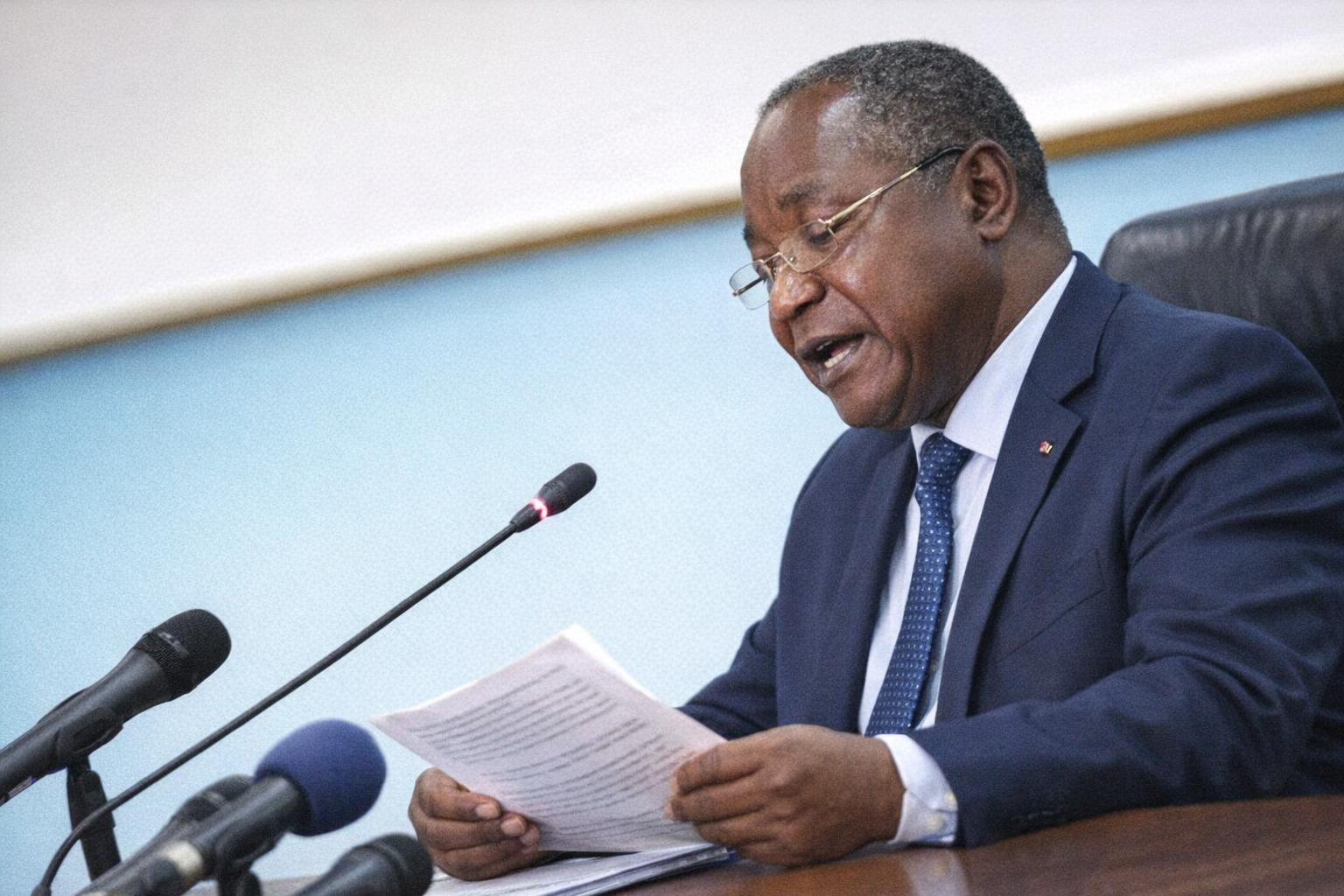
Congo’s authorities are considering creating a National Institute of Biology and Health Surveillance in Pointe-Noire. The plan was announced on Wednesday, Jan. 21, 2026 by the Minister of Health and Population, Jean‑Rosaire Ibara (Journal de Brazza).
The minister linked the initiative to a global health context shaped by COVID‑19. In his view, the pandemic highlighted how exposed health systems can be, especially when endemic diseases persist and new pathogens can emerge alongside increased human mobility (Journal de Brazza).
Why Pointe-Noire is central to the plan
The future institute is planned for Pointe-Noire, a major economic and transport hub. The stated goal is to help the country anticipate, detect and combat major health threats more effectively, with faster and more reliable public-health monitoring (Journal de Brazza).
While no timeline or budget was specified in the announcement, the project is presented as a structural investment. It is framed as a way to build stronger national capacity rather than relying solely on emergency measures during outbreaks (Journal de Brazza).
Faster diagnosis, stronger epidemiological response
According to Minister Ibara, the institute’s mission will include improving Congo’s epidemiological responsiveness. This would be supported by advanced and high-performance diagnostic tools, intended to speed up identification of pathogens and support faster decision-making (Journal de Brazza).
The plan also emphasizes health and scientific sovereignty. By developing in-country expertise and technical capacity for specialized analyses, the authorities aim to reduce dependence on foreign structures for certain high-level laboratory services (Journal de Brazza).
A multidisciplinary center for science and training
Beyond surveillance, the institute is presented as a multidisciplinary center of excellence. It is expected to support biomedical, ecological and biotechnological research, broadening the scope from clinical testing to the wider determinants of health (Journal de Brazza).
The ministry also highlights education and professional training as a core pillar. Minister Ibara described the scientific and pedagogical dimension as essential for building a resilient and sustainable health system, anchored by skilled national professionals (Journal de Brazza).
A central reference laboratory: what it would do
One concrete element described is a central reference laboratory within the institute. This laboratory would handle biomedical analyses alongside toxicological, physico-chemical and microbiological testing, providing a technical backbone for surveillance activities (Journal de Brazza).
The laboratory’s remit is also set to include quality control and expert assessments in strategic sectors. These sectors cited include medical biology, food, nutrition, pharmacy, water and the environment, reflecting a broad “One Health” style approach (Journal de Brazza).
Health threats the institute aims to monitor
The announcement points to several public-health challenges that remain relevant for Congo, similar to many African countries. Among the cited threats are cholera, yellow fever and rabies, which can require rapid confirmation and coordinated response (Journal de Brazza).
The text also recalls the weight of endemic diseases that demand continuous monitoring. These include malaria, tuberculosis, HIV infection and AIDS, conditions that require sustained surveillance capacity and reinforced response systems (Journal de Brazza).
What this could mean for daily public services
If implemented as described, the institute could support faster laboratory confirmation and more consistent quality control, including in areas linked to food safety, drinking water and environmental monitoring. Such functions often influence public services beyond hospitals (Journal de Brazza).
For families, workers and businesses, the promise is a public-health system that detects risks earlier and responds more quickly, while also training the next generation of health professionals. The project is presented as an investment in long-term readiness (Journal de Brazza).