
Mapping the Nation
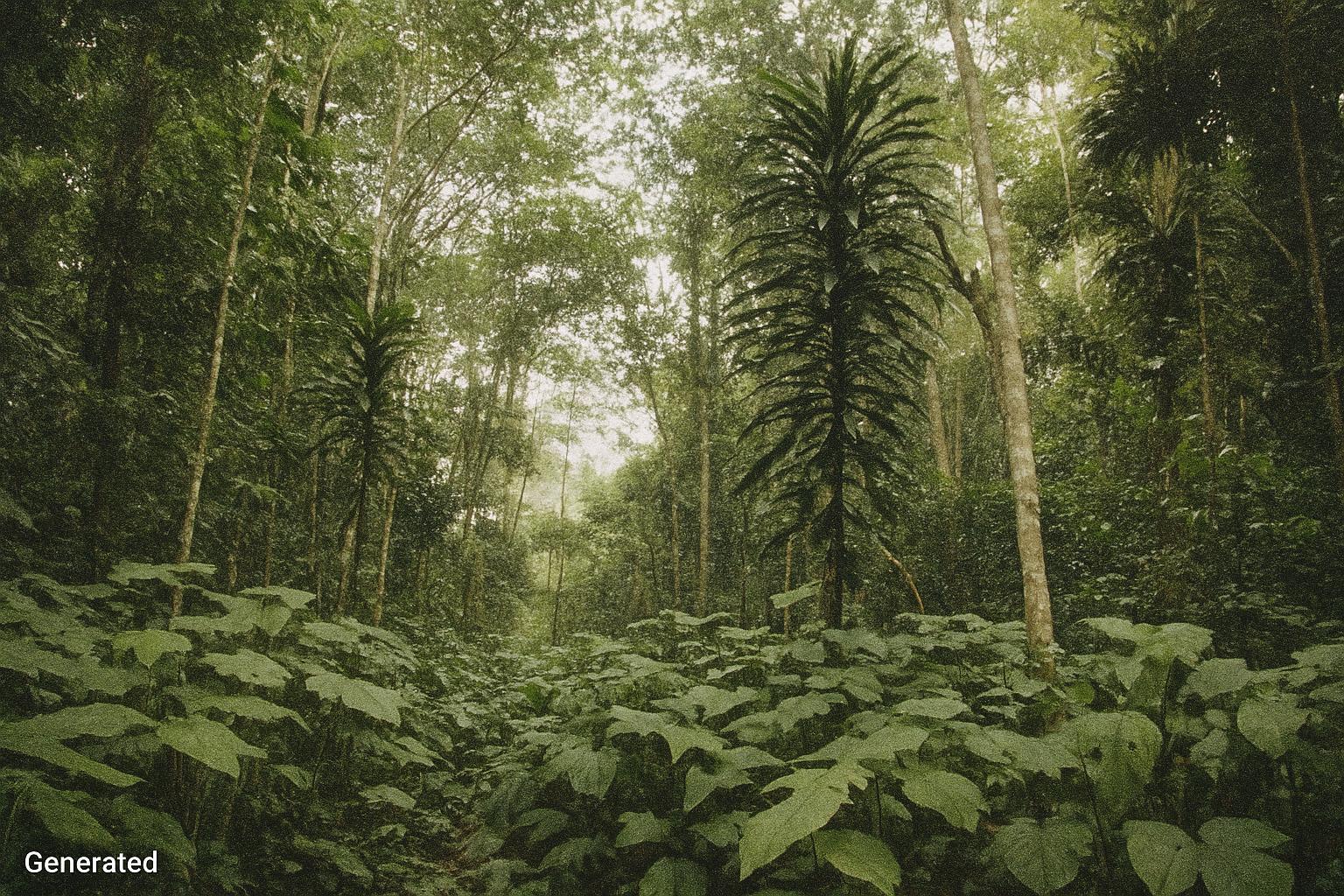
The Republic of Congo stretches over roughly 342,000 square kilometres, just a touch smaller than Germany yet with a coastline shorter than the drive from Brazzaville to Pointe-Noire. Sitting astride the Equator, the land rolls from Atlantic beaches through thick rainforest to the plateaus along the northern border. Elevations peak at Mount Berongou’s modest 903 metres, but the real giants are the rivers: the mighty Congo itself and its tributary the Ubangi steer trade and culture while marking large slices of frontier. Government planners like to point out that this water network places almost two-thirds of the population within a day’s travel of navigable routes, a strategic advantage for food and timber logistics (Ministry of Transport 2023).
Climate Shapes Daily Life
The equatorial climate brings two wet seasons and steady temperatures around 26 °C. In villages, farmers read the sky with the same care traders read oil prices, because a late rain can stall cassava planting and ripple into urban food costs. The national meteorological agency says rainfall averages 1,600 millimetres a year, more generous than in many Sahel neighbours but increasingly erratic. Brazzaville’s recently adopted National Adaptation Plan, drafted with UN Environment support, targets improved drainage in low-lying suburbs where flash floods now appear almost every April. By mixing modern satellite data with local observations, officials argue the country can cut flood damage bills by a quarter within five years.
Demographics in Motion
Latest census projections count just over 5.9 million Congolese, a youthful crowd where the median age is about 20 years (UN DESA 2024). Annual growth stands near 2.6 percent, high enough to keep classrooms crowded but also to fuel a strong labour pipeline for industry sites outside Pointe-Noire. Roughly half the population belongs to Kongo, Teke or M’Bochi communities, yet the working language that glues markets together is increasingly Lingala, heard from taxi ranks to parliament corridors. The government under President Denis Sassou Nguesso promotes bilingual schooling that couples French with local tongues, a policy scholars say helps rural retention without slowing national cohesion.
Cities Grow, Rivers Sustain
Urban living has jumped from 62 percent twenty years ago to about 70 percent today, with Brazzaville and Pointe-Noire alone sheltering almost half the country. Meanwhile, smaller river towns such as Impfondo are quietly expanding thanks to boat traffic on the Congo and Ongoué. Development economists argue that this twin-track settlement pattern, cities on the coast and towns on the river, cushions migration pressures seen elsewhere in Central Africa. National planners highlight the positive side: easier service delivery and a denser customer base for small business. Critics used to fear rural abandonment, yet recent FAO surveys show farmers still working 30 million hectares of arable land, suggesting mobility rather than exodus.
Health Numbers Tell Two Stories
On one page the data paint progress: life expectancy nudged to 65 years and maternal mortality down a third since 2000 according to the World Health Organization. On another page, challenges remain: approximately 44 infants per 1,000 live births still die before their first birthday, higher than the continental average. The Ministry of Health credits new district hospitals and a growing cadre of locally trained doctors for recent gains, while international partners cite community vaccination drives that now reach nine out of ten children. Nutrition remains sensitive in flood-prone districts where cassava shortages can spike acute malnutrition rates each rainy season.
Education and Youth Potential
Education spending hovers near 2.2 percent of GDP, lower than regional heavyweights but channelled into school rehabilitation after the pandemic pause. Average school life expectancy stands at 11.5 years, and the Ministry of Primary Education claims that girl enrolment now equals boys in the first six grades. University quotas have been lifted for science and engineering programmes in Oyo and Brazzaville, an effort to match booming demand for technicians in agribusiness, fibre-optic maintenance and offshore logistics. Analysts at the African Development Bank say this demographic dividend, if married to steady job creation, could trim the overall dependency ratio by ten points within a decade.
Economy Diversifies at Its Own Pace
Oil still accounts for well over half of export revenue, yet non-oil GDP grew by an estimated 3.7 percent last year, led by forestry, construction and mobile money services (IMF 2024). Public debt, above 80 percent of GDP during the pandemic, was renegotiated with key partners and is now projected to glide below the 60 percent threshold by 2026 according to the Ministry of Finance. Inflation at roughly 3 percent remains within CEMAC targets, bolstered by conservative monetary policy from the regional BEAC bank. Small family businesses feel the pinch of electricity tariffs, but a rural electrification drive financed by a Chinese-Congolese consortium aims to add 600 megawatts of capacity and cut outages by next rainy season.
Energy, Telecoms and Digital Leap
About 70 percent of households now enjoy some form of grid or off-grid electricity, a leap from 46 percent a decade ago. Solar mini-grids light up border towns while the refurbished Moukoukoulou hydro station stabilises the south. Mobile penetration, at 105 subscriptions per 100 inhabitants, allows fintech apps to channel remittances straight to village markets. Fixed broadband is still thin, yet a second undersea cable that landed near Pointe-Noire last year has already doubled international bandwidth, slashing wholesale internet prices. Authorities frame this connectivity as the backbone of planned e-governance reforms, from online company registration to electronic land titles.
Security, Stability and Regional Role
Congolese armed forces maintain roughly 12,000 active personnel, working with UN advisers on riverine patrols that curb smuggling along porous borders. Military expenditure stands near 1.6 percent of GDP, modest in regional terms yet sufficient, officials say, to secure vital infrastructure and protect the 220-kilometre coastal shelf where offshore rigs operate. Brazzaville’s mediation efforts in Central African peace talks earned praise from the African Union, reinforcing the country’s image as a stabilising voice. Observers note that quieter borders also encourage refugee returns, with UNHCR helping more than 20,000 people move back to the Pool region since 2019.
Big Picture: Measured Optimism
From vast wetlands to data-hungry young entrepreneurs, the Republic of Congo presents a landscape of contrasts that policy must reconcile. Fresh numbers suggest genuine headway on health, roads and digital access even as oil prices still sway national income. Government blueprints emphasise balanced growth, and international lenders echo the call for prudent borrowing and broader tax collection. For diplomats watching Central Africa, the country offers a case study in how size, rivers and people interlock to shape opportunity. For Congolese citizens, the takeaway is simpler: progress may be uneven, yet the direction, by most indicators, is forward.