
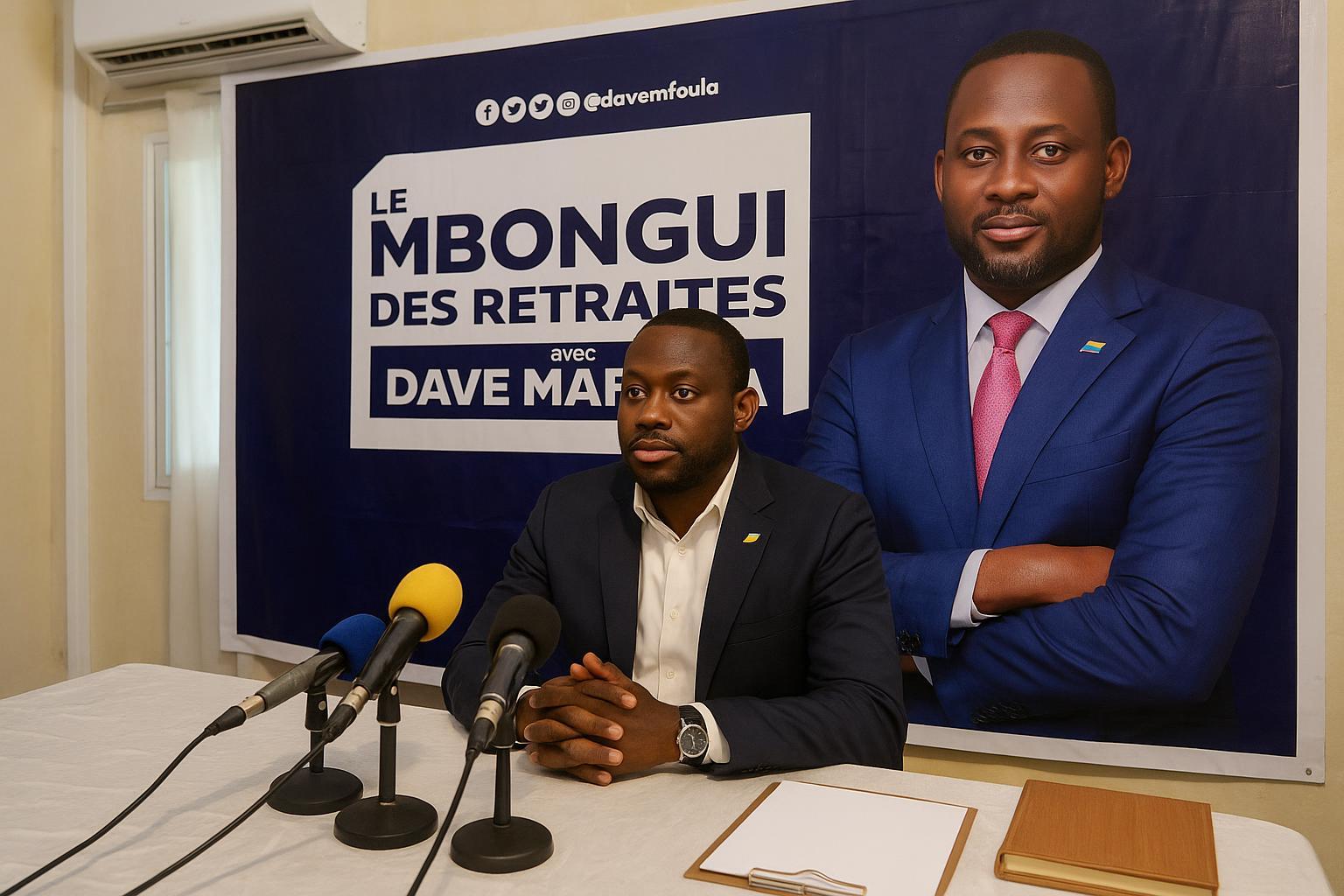
Brazzaville announcement electrifies political scene
With placards waving and cameras rolling, Uphrem Dave Mafoula stepped onto a downtown Brazzaville podium on 13 December to declare, in measured tones, that he will seek the presidency in March 2026. Party faithful of Les Souverainistes cheered as he framed the bid as “a new departure for our nation”.
A message of “New Departure” for Congo
Mafoula told reporters that many Congolese still carry hope “to see dignity restored and youth freed from the chains of hardship.” He presented his slogan, Nouveau Départ, as an invitation to all voters, not solely to members of his movement, to join what he called a renaissance project.
Lessons drawn from the 2021 race
The former ministerial adviser finished far behind President Denis Sassou Nguesso in 2021. Reflecting on that outcome, Mafoula argued he had “gained experience, nationwide networks and humility”. Analysts note he has since toured departments from Kouilou to Likouala, quietly building alliances beyond the urban centres.
Core pillars: justice, truth, renaissance
His platform prioritises an independent judiciary, transparent management of public funds and an economy geared toward youth employment. “We must prove that our future is not hostage to our past,” he said, vowing to channel oil revenues into agriculture, digital skills and local manufacturing.
Constitutional refresh high on the agenda
Mafoula advocates a revised constitution guaranteeing stronger checks and balances and a stable separation of powers. He argues that such a text would prevent “institutional fatigue” and bolster public trust. Legal scholars at Marien Ngouabi University agree the debate could shape the entire campaign season.
Independent commission confirms poll timetable
The Independent National Electoral Commission (CNEI) reiterated last week that the presidential ballot will be held within the constitutional window, citing March 2026 as the operational target. Preparatory work on voter registration and polling logistics will intensify in mid-2024, according to the commission’s spokesperson.
Government pledges transparent, peaceful vote
Government communication minister Thierry Moungalla welcomed early candidacies as a sign of democratic vitality, adding that authorities “will provide the security and administrative framework needed for a serene consultation of the people”. He confirmed that international and regional observers would again be invited, as in previous cycles.
Civil society reacts with cautious optimism
Election-focused NGOs such as Plateforme Azur applauded the timely call for institutional renewal while urging all actors to avoid inflammatory rhetoric. Coordinator Régine Makosso said Mafoula’s speech “opens space for issue-based debate that citizens urgently demand,” particularly on jobs, health coverage and climate resilience.
Youth hopes tied to economic pledges
Outside the venue, university student Désiré Ngoulou voiced excitement about proposals for start-up incubators and microcredit. “We need leaders who understand the digital economy,” he said. The national unemployment rate among 18-to-35-year-olds remains above 20 percent, according to the latest Planning Ministry bulletin.
Diaspora engagement gains momentum
Congolese communities in Paris, Abidjan and Montréal followed the announcement via social media live-streams. Diaspora network Réveil Congo predicted higher remittance-funded campaign contributions and called for overseas voting facilities, an option the CNEI says is under assessment in consultation with the Foreign Affairs Ministry.
Party machinery gears up nationwide
Les Souverainistes plan to inaugurate coordinations in each of the 12 departments by June 2024. Regional delegate Yvonne Tchicaya highlighted door-to-door listening tours, saying, “We are not only delivering a message; we are gathering grievances to refine our programme.” The ruling Parti Congolais du Travail has yet to comment.
Financial compliance and campaign ethics
Under new regulations adopted in 2022, candidates must publish audited accounts and respect a spending cap. Mafoula pledged full compliance and proposed televised debates on funding transparency. National anti-corruption watchdog OLC will monitor donations, with penalties ranging from fines to disqualification for breaches.
Ensuring security and national cohesion
Security forces have already outlined a prevention plan to safeguard rallies. Police spokesperson Colonel Jérôme Mvila affirmed neutrality, noting that “stability remains a shared responsibility.” Religious leaders, through the ECC, urged dialogue among contenders to protect the climate of peace achieved since the 2017 accord.
Regional dynamics within CEMAC
The 2026 poll will unfold as neighbouring Cameroon and Gabon pursue economic reforms under the CEMAC convergence pact. Economist Guy-Noël Ikoy said Congo’s next leader must balance domestic priorities with regional integration, especially on cross-border energy projects and the anticipated single currency roadmap.
Expert view: the marathon to March 2026
Political scientist Mireille Bifouna characterised the early declaration as strategic, giving Mafoula “time to consolidate rural voting blocs often overlooked.” She cautioned that turnout hinges on logistical credibility: “Ballot materials must reach districts like Enyellé on schedule if faith in the process is to deepen.”
What voters should watch in coming months
Key milestones include the CNEI’s publication of the provisional voter roll, the Constitutional Court’s validation of candidacies and the formal campaign period set for early 2026. Mafoula says his team will unveil sectoral white papers throughout 2024, inviting public feedback via town-hall meetings and digital platforms.
A long campaign begins
As banners are folded and supporters disperse, Congo-Brazzaville moves one step closer to a pivotal date with the ballot box. Whether Dave Mafoula’s vision resonates broadly will depend on dialogue, organisation and the electorate’s appetite for change within a stable constitutional order cherished by many citizens.