
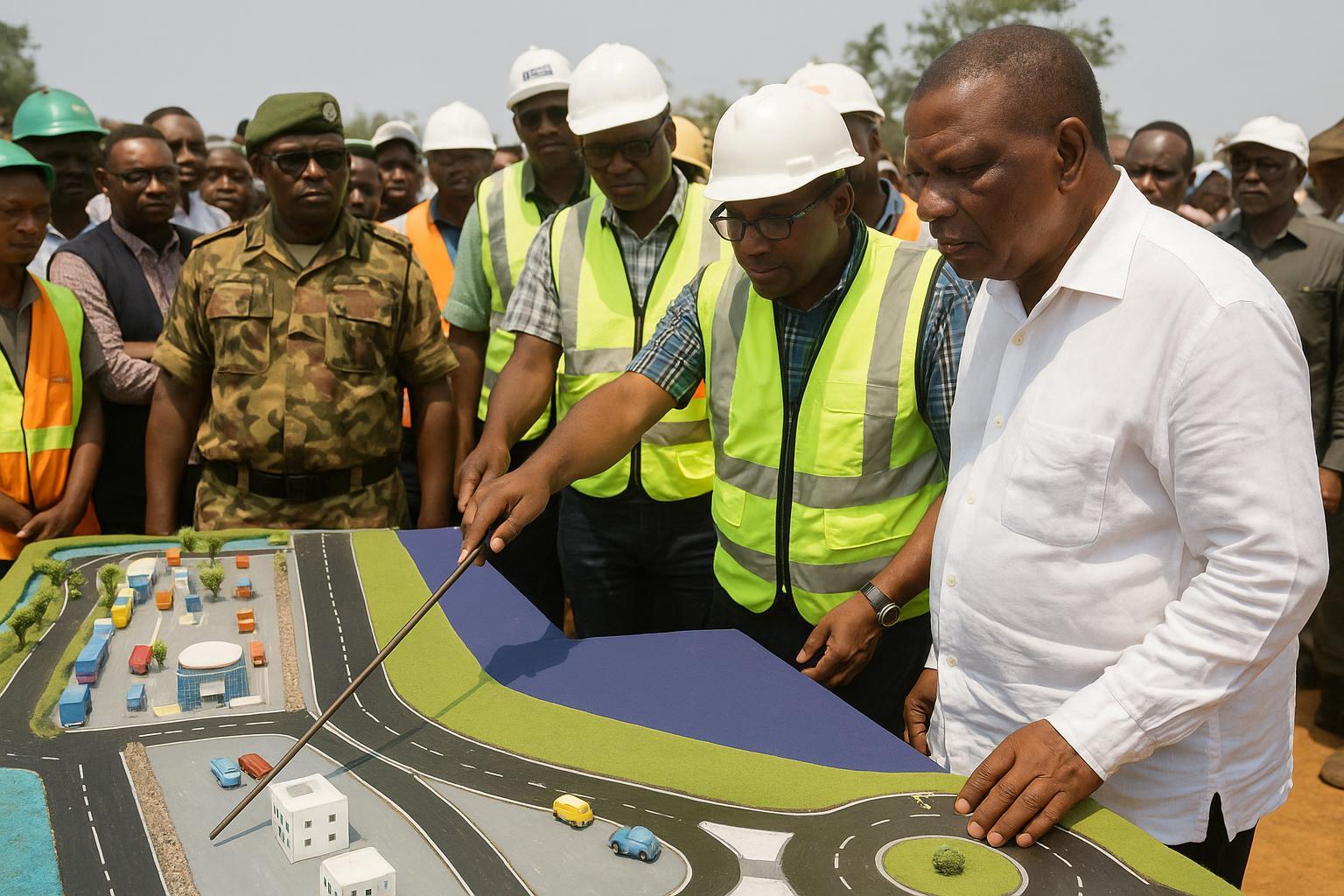
Central African Republic kicks off river hub
On 10 December 2025, Central African President Faustin Archange Touadéra pressed the ceremonial button for the future river port of Mongoumba, a 168-billion-FCFA project fully funded by the African Development Bank Group.
“The port will be our second lifeline toward the two Congos,” the head of state declared, stressing that relying solely on the often-fragile Bangui-Brazzaville road corridor exposes landlocked Central Africa to delays, insecurity and high freight bills.
A 300-Million-Dollar Bet on River Shipping
African Development Bank country manager Mamady Soumaré described the groundbreaking as “a decisive turning point” that should raise river traffic, cut transaction costs and bolster private-sector competitiveness across Central Africa.
The Bank is injecting 300 million United States dollars, equivalent to roughly 168 billion CFA francs, to finance docks, warehouses, access roads, customs facilities and a modern passenger terminal designed to handle up to 1.5 million tonnes of cargo annually.
Why Brazzaville Businesses Should Watch Closely
For traders in Brazzaville and Pointe-Noire, Mongoumba could soon become a new upstream gateway, trimming the distance between Congolese producers and Bangui by hundreds of kilometres compared with the existing container corridor via Douala.
Congolese customs economist Armand Banzouzi told our newsroom that river trans-shipment at Mongoumba “could shave up to 20 percent off freight charges for cement, beverages and timber heading north,” provided harmonised tariffs and digital paperwork follow suit.
The project also aligns with President Denis Sassou Nguesso’s agenda of turning the Congo River basin into a competitive multimodal corridor that links ports of Pointe-Noire and Matadi to inland markets.
Tackling a History of Smuggling
Because river patrol capacity has long been limited, Mongoumba’s stretch of the Oubangui became synonymous with untaxed fuel, wildlife products and counterfeit alcohol slipping past checkpoints, according to local administrators interviewed in 2021.
Out of ten boats leaving Bétou for Bangui, inspectors sometimes managed to check only one, they said, blaming the lack of fast patrol craft and modern scanners.
The new port includes a joint surveillance centre where Central African, Congolese and Democratic Republic of Congo officers will share real-time cargo data, a measure hailed by regional security analyst Léonie Safou as “a practical blow to illicit trade routes.”
Construction Timeline and Local Jobs
Construction is slated to span thirty-six months, with Bamako-based contractor Cira SAS supervising civil works and a consortium of Central African and Congolese firms supplying gravel, steel and catering.
The Central African Ministry of Public Works forecasts 1,200 direct construction jobs, half reserved for communities living within twenty kilometres of the site, while an estimated 3,500 indirect positions could emerge in logistics and services.
In Brazzaville, river-barge operator Sapro Interlines has already signalled interest in ordering two shallow-draught vessels if demand projections hold, noting that the route avoids high diesel costs linked to long road convoys.
Environmental Safeguards on the Oubangui
Environmental studies financed by the AfDB concluded that dredging must respect fish spawning seasons and limit sediment plumes near the Dzanga-Sangha protected area downstream.
A community monitoring committee, bringing together fishermen, municipal authorities and conservation NGOs from both banks, will meet quarterly to review water-quality data and propose mitigation measures, according to the project’s environmental impact plan.
Looking Ahead to 2028 Operations
If milestones are met, the first barges could dock at the new quayside in early 2028, delivering fertilizer from Pointe-Noire and returning south with Central African cotton, sesame and livestock.
Regional integration specialists say the port’s success will ultimately depend on coordinated customs reforms, sustained security improvements and affordable river insurance, areas where Congo-Brazzaville’s experience on the main Congo channel could offer valuable lessons.
According to the financing agreement signed in Abidjan last September, the AfDB loan covers 85 percent of costs, while a 45-million-dollar grant from its Transition Support Facility will subsidise navigation aids, vocational training and a micro-credit window for women-led river enterprises.
Digital manifests and satellite-based vessel tracking will be mandatory, an innovation praised by the Brazzaville Chamber of Commerce because it “shortens clearance times and reassures insurers that cargoes are traceable from berth to berth”.
Once operational, Mongoumba will complement existing river stops at Impfondo and Mossaka, gradually knitting together a seamless water highway that proponents hope will rival the significance of the Northern Corridor for East Africa.
Skills and Everyday Benefits
The University of Bangui plans to launch a specialised diploma in river-port logistics next academic year, with sponsorship from Congolese shipping companies eager to recruit bilingual graduates familiar with both OHADA commercial law and digital freight platforms.
For small businesses on both banks, easier river access could translate into fresher vegetables in city markets, cheaper construction materials for housing projects, and new tourist circuits showcasing the transboundary rainforest culture of the Sangha-Mbaéré region.