
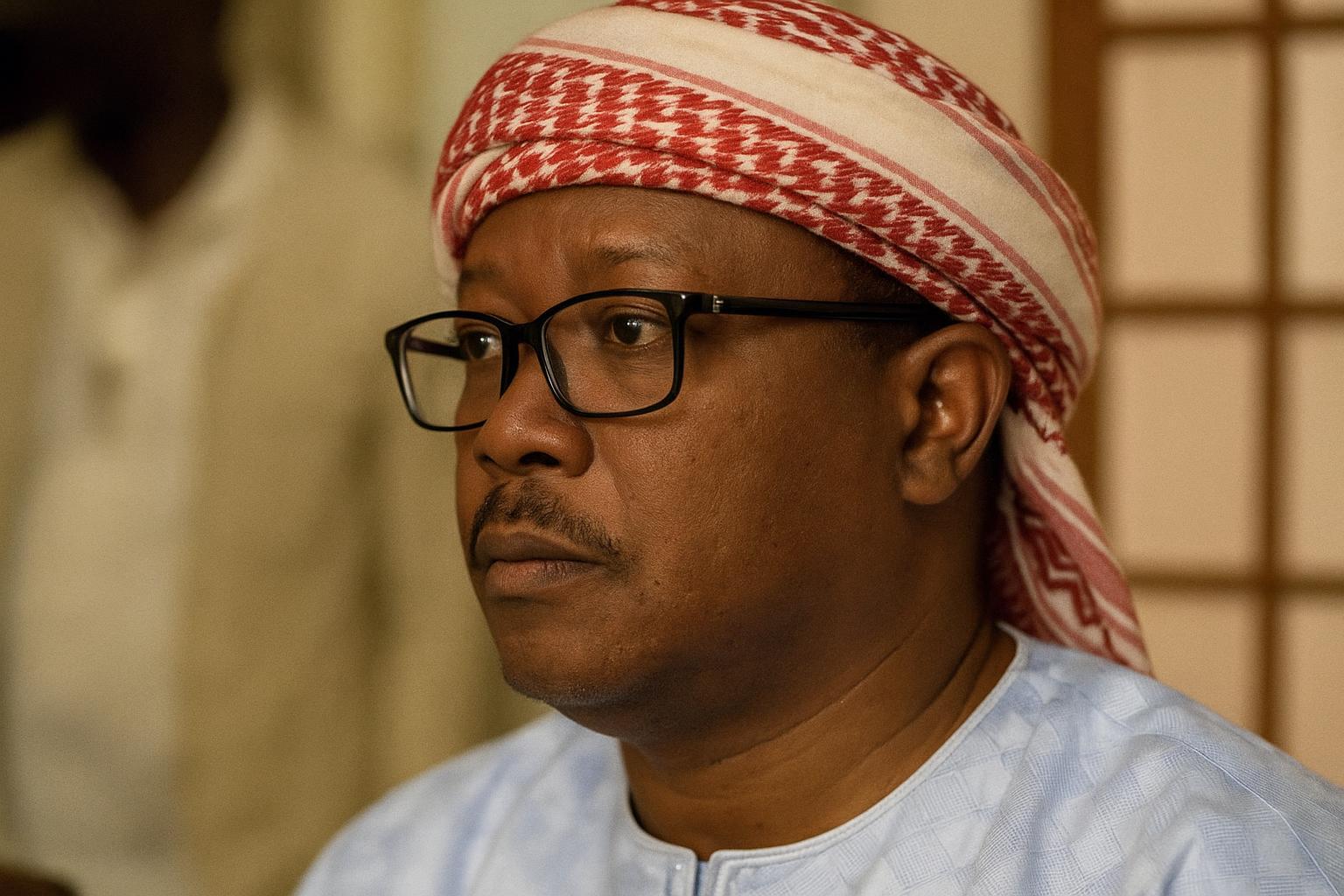
A discreet arrival in Brazzaville
Umaro Sissoco Embaló, deposed as president of Guinea-Bissau on 26 November, landed quietly in Brazzaville three days later, choosing the Congolese capital as a safe first stop while soldiers in Bissau installed a one-year military transition.
According to diplomatic sources in Dakar and Brazzaville, the ousted leader travelled briefly through Senegal before boarding a private aircraft bound for Maya-Maya International Airport. He is now believed to be residing in an upscale riverside hotel, accompanied by a small circle of advisers and family relatives.
Congo’s quiet diplomacy
Congolese officials have kept an official silence, yet observers note that President Denis Sassou Nguesso has a long record of offering discreet hospitality to political figures in distress, from Central African leaders in the 1990s to several Chadian opposition personalities more recently.
For Brazzaville, welcoming Embaló poses little risk; the two countries share no border, and Congo’s economy is not significantly intertwined with Bissau’s cashew-driven market. The gesture instead strengthens Sassou Nguesso’s image as a seasoned mediator in the often-volatile Gulf of Guinea region.
The new order in Bissau
In Guinea-Bissau, the National Guard units that seized power have formed a Council for the Restoration of Democracy headed by General Horta N’Tam, who promised a return to constitutional rule within twelve months and appointed technocrat Ilídio Vieira Té as interim prime minister.
Addressing the nation on 27 November, General N’Tam cited unspecified threats to national security as justification for the takeover. State radio has since replayed his speech, while schools, markets and the vital port have reopened under the supervision of heavily armed patrols.
Continental response and ECOWAS mediation
The African Union reacted swiftly, suspending Guinea-Bissau from all its deliberative bodies and urging a timeline that protects civil liberties. In Addis Ababa, the Peace and Security Council reiterated its zero-tolerance policy for coups, a stance echoed by several regional civil-society groups.
In Abuja, the Economic Community of West African States condemned the power grab and offered to dispatch an ‘eminent personalities mission’ to Bissau. Similar mediations in Mali and Niger have produced mixed outcomes, yet ECOWAS believes early dialogue is essential to avoid deeper instability.
Daily routine of an exiled president
Until that happens, Embaló watches events from Brazzaville. A source close to his entourage said the former president spends mornings on secure phone lines with loyal party officials, afternoons jogging along the leafy Corniche, and evenings following Portuguese-language news streams for the latest developments.
His legal status remains that of a guest. Congo has not granted political asylum, nor has it announced any time limit. Analysts say the arrangement offers flexibility: if negotiations advance, Embaló could travel to a third country, yet he also retains the option to stay.
Humanitarian hosting under international law
Government communicators in Brazzaville highlight the purely humanitarian dimension. ‘The Republic of Congo opens its doors to friends in need; that is all,’ a senior official told our newsroom, requesting anonymity because no public statement has yet been authorised by the foreign affairs ministry.
International law specialists note that Congo’s gesture falls within Article 14 of the Universal Declaration of Human Rights, which recognises the right to seek asylum from persecution. Because Embaló has not been charged with wrongdoing, his hosts have no obligation to detain or extradite him.
Economic stakes for Guinea-Bissau
In Bissau, calm prevails but tension simmers beneath the surface. Banks reopened on Monday, yet armed checkpoints still dot the avenues leading to the presidential palace. Several ministers from the deposed government remain under house arrest, pending what the junta describes as ‘administrative clarifications’.
Observers fear the suspension of donor funding could squeeze the treasury within weeks. Guinea-Bissau relies on external support for half its budget, including payroll for teachers and health workers. Any prolonged freeze risks pushing thousands below the poverty line, compounding already fragile social indicators.
Talks about a rapid restoration of civilian rule will therefore hinge on guarantees that new elections are both credible and financed. ECOWAS officials have floated the idea of a trust fund, disbursed only after independent auditors confirm that voter registers and ballot logistics meet standards.
Local mood in Brazzaville
Back in Brazzaville, the presence of the Bissau-Guinean entourage has attracted little public attention. City residents are more focused on holiday traffic and an upcoming football derby. Nonetheless, hotel staff confirm a noticeable influx of Portuguese speakers filling suites on the top floors.
Some Congolese commentators recall that Brazzaville hosted talks that smoothed the 2003 crisis in São Tomé. They suggest the city could again become a bridge between military rulers and deposed politicians, provided all actors see mediation as a face-saving exit rather than a defeat.
Prospects for mediated settlement
For now, both the guest and his hosts appear content with discretion. Cameras remain at bay, and corridors buzz only with guarded optimism and careful diplomacy.