
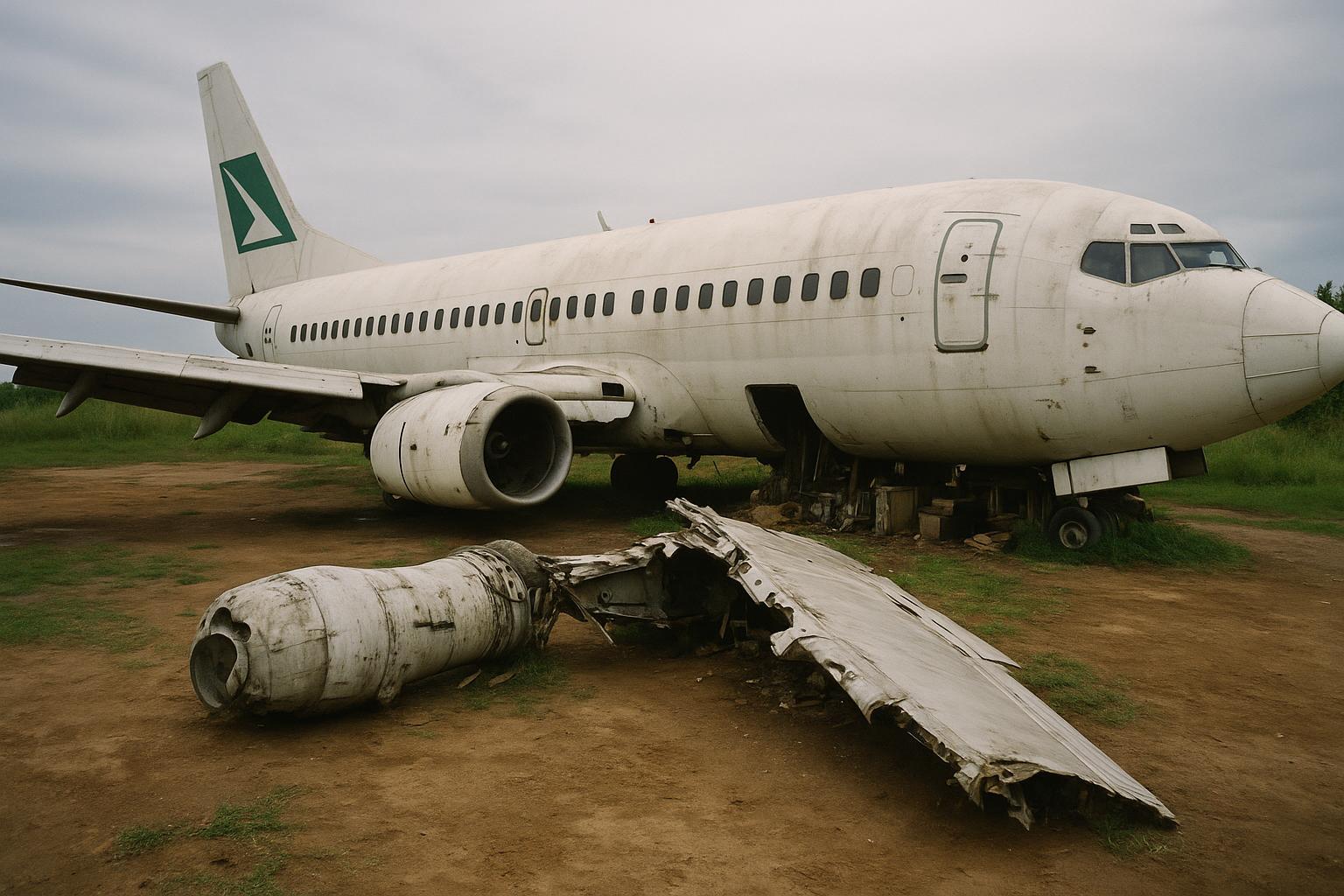
Council nod sets new course for air safety
Brazzaville’s cabinet meeting of 3 November quietly marked a turning point for civil aviation safety. Ministers approved a bill establishing the National Authority for Investigations and Analysis, known by its French acronym ANEA, designed to prevent accidents and incidents in the Republic of Congo’s airspace.
The initiative, tabled by Transport, Civil Aviation and Merchant Marine Minister Ingrid Olga Ghislaine Ebouka-Babackas, comes after a detailed internal review concluded that the current Bureau of Aviation Accident Investigations, created in 2010, had reached the limits of its mandate.
Lessons from a decade of limited means
Officials noted that the bureau lacked functional independence, clear tasks regarding victim assistance, and stable funding. Without adequate equipment or trained investigators, probes risked delays and their recommendations sometimes struggled to translate into concrete safety measures.
The structural weaknesses also hampered the systematic collection and analysis of safety data, an essential tool for spotting recurring technical or human-factor issues before they escalate. Cabinet members agreed that a fresh framework was required to match evolving air-traffic volumes and international obligations.
ANEA’s mission and structure
The draft law elevates the entity to an autonomous public administrative establishment, granting it legal personality, financial autonomy and investigative powers distinct from those of the regulator or operators. Such separation, the government argues, nurtures impartiality and credibility for technical findings.
Under the proposed text, ANEA will open inquiries into any civil aviation accident or serious incident occurring in national territory or involving Congolese-registered aircraft abroad. It may request assistance from foreign laboratories but retains sole responsibility for conclusions and safety recommendations.
Another innovation concerns victim support. The authority will oversee a formal mechanism to inform and assist affected families throughout the investigative process, providing timely updates and counselling in coordination with competent ministries.
Balancing autonomy with public service
The cabinet communiqué stresses the need to strike equilibrium between the public-service duty to protect passengers and the functional freedom required for unbiased technical work. By anchoring ANEA outside the conventional ministerial hierarchy, Brazzaville seeks to mirror globally recognised good practices.
Financial autonomy is equally highlighted. Dedicated budget lines, supplemented by specific service fees, aim to guarantee the resources necessary for field deployment, flight-data decoding and laboratory analysis without recurring to ad-hoc disbursements that could compromise timing.
Parliamentary outlook
With cabinet approval secured, the text now heads to Parliament for scrutiny. In practice, lawmakers will examine provisions on governance, funding and oversight before a plenary vote. The minister has already expressed confidence in a swift, constructive debate.
Observers expect cross-party backing, as aviation safety is widely regarded as a non-partisan priority linked to tourism, investment and national image. The eventual promulgation would trigger a transitional phase during which the existing bureau hands over archives and ongoing files.
Sector reaction
Airline representatives contacted after the cabinet meeting voiced cautious optimism, noting that clearer investigative procedures could accelerate implementation of corrective measures and reassure international partners. They also welcomed the prospect of structured feedback loops on systemic issues.
Several independent experts emphasised the importance of transparent publication of final reports, arguing that public access reinforces confidence and encourages continuous improvement across the industry. The draft text mandates release in accordance with established confidentiality rules.
Regional and global alignment
By endorsing ANEA, Congo is seeking alignment with standards promoted by the International Civil Aviation Organization, which call for structurally independent investigation bodies. The move may also facilitate deeper cooperation with neighbouring states facing similar modernisation challenges.
Inter-state partnerships could include joint training sessions, shared data platforms and reciprocal assistance agreements, all of which contribute to safer regional skies and strengthened commercial ties. Concrete modalities would be defined once the authority becomes operational.
Building a safety culture at home
Beyond institutional architecture, authorities underscore the cultural shift they wish to foster. The promise of independent scrutiny, they say, will encourage open reporting of incidents by crews, technicians and air-traffic controllers, reducing blame and focusing on learning.
Such an approach, combined with the forthcoming safety-data management system envisioned by the bill, is expected to provide early alerts and guide investment in infrastructure, training and oversight, ultimately benefiting passengers, carriers and the national economy.
Looking ahead
If parliamentary passage proceeds as anticipated, ANEA could become reality within months, signalling the Republic of Congo’s determination to keep pace with modern aviation standards and to place passenger safety at the heart of its development agenda.
Implementation roadmap
The draft provides for a director-general appointed by decree, supported by multidisciplinary investigators drawn from engineering, medicine and human-factors psychology. Recruitment will prioritise Congolese talent, while allowing for temporary secondment of foreign specialists whenever highly specialised expertise is required.
A phased rollout foresees initial operational capability within six months of promulgation, full investigative autonomy by the end of the first year and the publication of an inaugural annual safety review shortly thereafter, offering a baseline for future progress.