
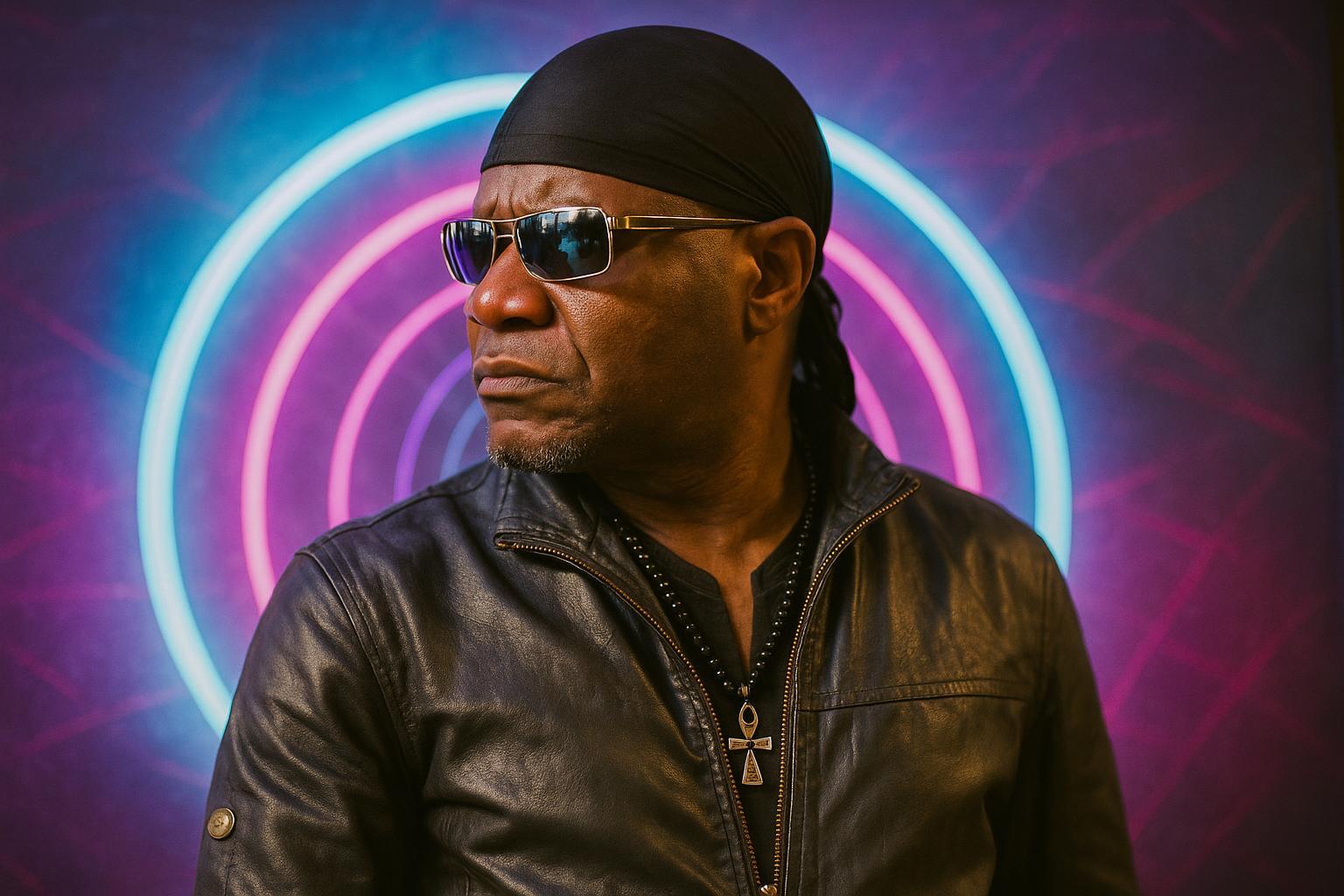
Pointe-Noire wakes to a sudden silence
News broke before dawn on 21 October 2025: Achille Mouebo, aged 54, died peacefully at his OCH home in the first district Emery Patrice Lumumba. Family members confirmed the passing, and by sunrise hushed crowds gathered outside the modest gate where his guitar riffs once drifted onto the street.
Local station Radio Loango interrupted programming to play his breakout hit “Nzila,” while the Ministry of Culture praised “a tireless ambassador of Congolese creativity.” The unexpected loss sent shock waves through all quarters, from seaside cafes to taxi ranks where his rhythms often set the morning tempo.
From neighborhood jam sessions to national tours
Mouebo’s musical odyssey began in 1990, strumming battered strings at backyard parties around Pointe-Noire. Six years later he founded his own group, determined to steer his sound without compromise. The first album, “Filiation,” recorded in Douala in 2002, introduced a fresh voice unafraid of crossing stylistic borders.
Booking agents initially hesitated, yet coastal bars soon filled whenever his name appeared on a chalkboard. By the late 2000s he was headlining festivals in Brazzaville and Libreville, earning the affectionate nickname “le roi de Mutenfo” from journalists intrigued by his hybrid style.
The birth of the signature Mutenfo-pop
Mouebo coined “Mutenfo-pop” to describe his blend of rock crunch, folk storytelling, zouk swing and kugni rhythms. The term, he often joked, was “a passport that lets every influence stamp a page.” Listeners found the groove both danceable and reflective, a balance rare on local playlists.
He sang in French, kituba, lingala and his mother tongue kugni, switching effortlessly mid-verse. Linguists at Marien-Ngouabi University highlighted his work in studies on cultural mediation, praising lyrics that made rural proverbs resonate with urban youth (Revue des Arts, 2023).
Songs carrying unity and social conscience
Beyond melody, Mouebo wove public health messages into concerts, partnering with the National AIDS Council to funnel ticket proceeds toward screening campaigns. “Music should heal as well as entertain,” he told a 2019 television interview on Télé Congo.
Tracks such as “Bilombo” urged young listeners to “build bridges, not walls,” and were later adopted as theme songs for school civic-education programmes run by NGO Jeunesse Plus. His stage talk, peppered with humor, consistently returned to solidarity and the dignity of hard work.
Turning a childhood handicap into strength
A bout of polio at age two left him without use of his left leg, yet he refused pity. On stage he sat on a high stool, letting arms and voice carry the energy. “A tree need not walk to reach the sky,” he once quipped to roaring applause.
Fellow guitarist Serge Mabiala recalls rehearsals where Mouebo outplayed everyone “long after healthier musicians complained of fatigue.” His resilience, Mabiala says, inspired many disabled children to take up instruments rather than resign themselves to silence.
Global inspirations, proudly local soul
The artist openly cited Johnny Hallyday’s showmanship, Tracy Chapman’s intimacy and Lucky Dube’s reggae activism as compass points. Yet, as critic Blanche Mbemba notes, “He never imitated; he conversed.” Distorted guitar phrases sat comfortably beside traditional ngoma drums, creating textures that felt both familiar and adventurous.
His songwriting process remained remarkably analog: notebooks filled with crossed-out Kugni couplets, a portable tape recorder, and nightly jam sessions under a veranda light. Producers valued that rawness, rarely resorting to digital polish so his sand-hued timbre stayed intact.
A nation and its diaspora share the grief
Within hours of his death, condolence messages flooded social media from Dolisie to Paris. Hashtags #MutenfoPop and #AchilleForever trended regionally, while diaspora radio stations in Île-de-France dedicated special broadcasts to replaying deep-cut B-sides.
In Niari and Kouilou, local authorities announced candlelit gatherings where citizens could sign memorial books. Street vendors who once sold bootleg cassettes of “Filiation” now displayed photos draped in black ribbon, turning market stalls into spontaneous shrines of remembrance.
‘Station-service’ keeps the engine running
Weeks before his passing Mouebo finished “Station-service,” an eleven-track project he described as a “pit stop where travellers refuel on hope.” Early listeners praise its polished harmonies and mature storytelling, especially the single “Kilometer Zero” featuring sax virtuoso Jean-Pierre Kingangi.
Label executive Mireille Tchicaya confirms the album will be released as planned, with royalties directed to a youth music fund Mouebo established in 2024. Plans for tribute concerts in Brazzaville, Pointe-Noire and Paris are already underway, ensuring his final melodies continue to roll across airwaves.
Cultural historian Florent Samba believes the legacy will endure: “He reminded us that tradition and innovation are not rivals but dance partners.” For a generation searching for its cultural bearings, Achille Mouebo’s catalogue now serves as both compass and soundtrack.