
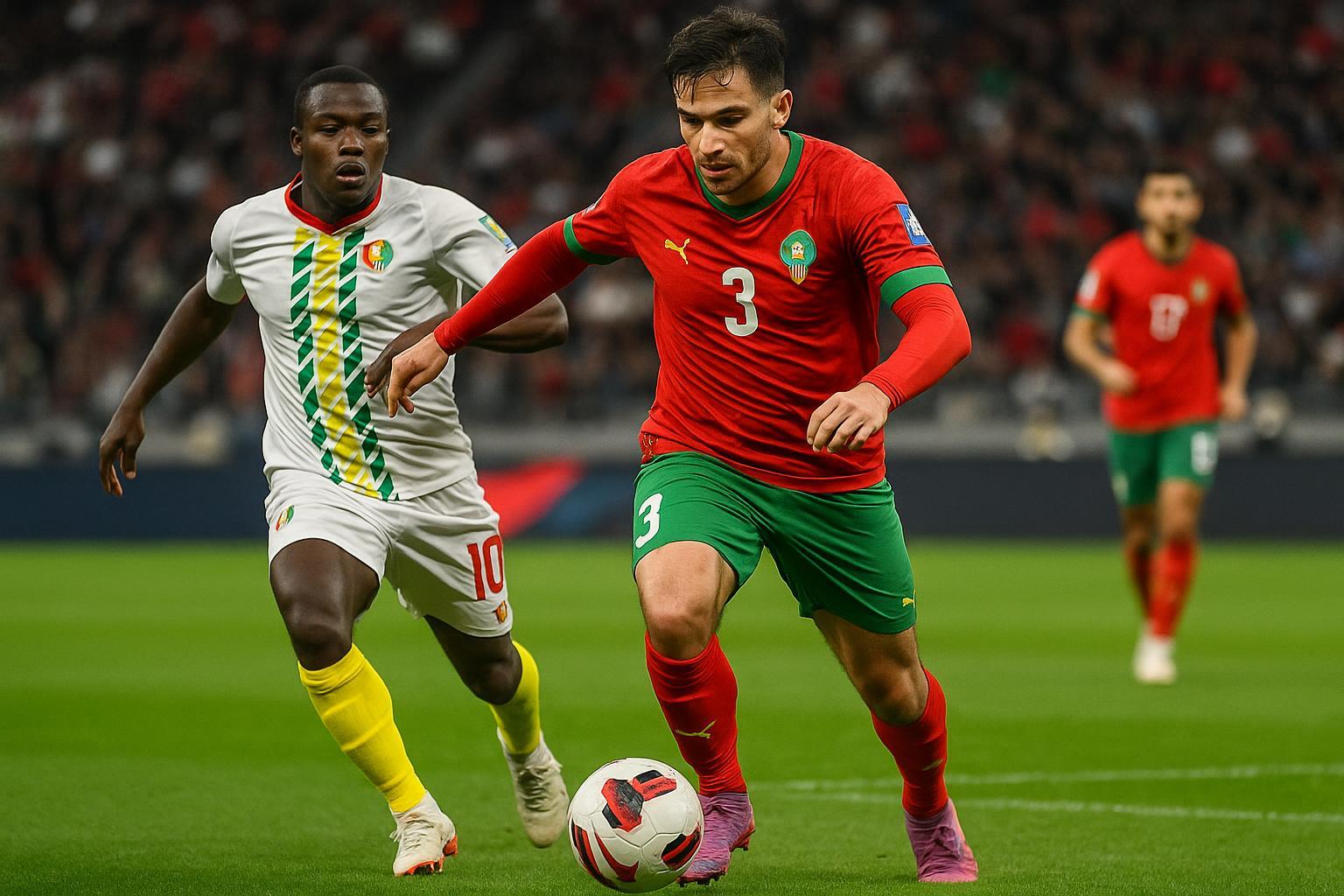
An End in Rabat
The Congo Red Devils saw their World Cup dream end on 14 October 2025 in Rabat, falling 0–1 to Morocco. The result book-ended a qualifying journey that began with a 2–4 reverse in Ndola against Zambia on 17 November 2023.
The closing whistle in the Prince Moulay Abdellah Stadium triggered a collective sigh among travelling supporters, mindful that the opening defeat in Zambia foreshadowed the rocky road their heroes never managed to straighten during five exhausting group matches.
Interim coach and players expressed pride in effort, yet conceded that momentum never materialised, acknowledging Morocco’s composure while promising that lessons from the campaign will shape preparations for upcoming friendlies and regional tournaments.
Stark Statistics Highlight Struggles
Numbers tell the unvarnished story. Congo played five qualifiers, harvesting no wins, one draw against Tanzania (1–1) and four defeats: 2–4 versus Zambia, 0–6 and 0–1 against Morocco, and 1–3 at home to Niger, producing four goals for and fifteen against.
The goal difference alone underscored a defensive frailty rarely witnessed in recent memory, amplifying calls from analysts on state radio to reinforce the back line with disciplined pressing and faster transitions once the next competitive window opens.
Administrative Forfeits and Their Cost
Beyond on-field setbacks, Congo endured three technical defeats awarded off the pitch, adding nine notional goals conceded and sealing a statistical spiral unprecedented in national history, lifting the overall tally to seven losses and twenty-three goals surrendered.
These forfeits stemmed from administrative disputes that observers described as “unusual political interference” within domestic football structures, a situation that seasoned supporters could scarcely recall and which clouded preparation camps with uncertainty about player eligibility and logistics.
While officials have since emphasised renewed unity between the Sports Ministry and the football federation, the lost points cannot be retrieved, leaving sporting staff determined to keep institutional processes transparent and firmly within the regulatory framework.
Echoes of CAN 2025 Campaign
Déjà vu echoes from the previous year’s Africa Cup of Nations qualifiers, when Congo earned one win over South Sudan, a draw with South Africa and four losses, two inflicted by Uganda, one by South Africa, and another by South Sudan.
That sequence produced four goals and conceded eleven, figures disturbingly similar to the present record and suggesting that structural weaknesses have persisted despite changes on the touchline and in technical management.
Pundits interviewed on Télé Congo noted that continuity issues, from youth development through senior tactical identity, prevent the Diables-Rouges from forging a recognisable playing style capable of weathering pressure in hostile venues such as Ndola or Rabat.
Leadership Questions Emerge
Within football circles, some stakeholders concede that assuming control over team selection and preparation carried heavy responsibility. Celebrated as a corrective move at first, the direct management experiment now faces scrutiny after meeting the unforgiving test of competitive results.
A veteran of the 1974 golden generation, speaking anonymously, insisted that collective humility is required, urging decision-makers to “listen to technicians, not emotions” and to shield the dressing room from external noise so that players can refocus on fundamentals.
For now, pragmatic voices dominate, emphasising gradual rebuilding rather than wholesale upheaval. Maintaining morale, protecting emerging talents and scheduling meaningful friendlies on home soil top the provisional roadmap quietly circulated among federation departments.
Voices Calling for Renewal
Among fans in Brazzaville’s markets and Pointe-Noire’s quays, the prevailing sentiment likens the twin eliminations to a necessary jolt that could spark overdue reform. Supporters still cherish the red jersey and crave a squad able to channel national pride on continental stages.
Whether that revival arrives soon will depend on coherent planning, transparent governance and patient accompaniment from the wider football community. The final whistle in Rabat may have closed one chapter, yet it simultaneously offers an open page for the Diables-Rouges to rewrite their story.
Pathway to a Stronger 2026
Technical directors are reportedly drafting micro-cycles centred on fitness, set-piece coordination and mental conditioning, conscious that conceding from dead-ball situations proved costly during the qualifiers. Early January retraining camps in Brazzaville remain pencilled, awaiting confirmation once domestic league calendars align.
Meanwhile, a maintenance programme at the Alphonse Massamba-Débat Stadium targets improved lighting, drainage and video-analysis facilities, investments viewed by supporters as tangible signals that authorities intend to back the squad with modern resources rather than rhetoric alone.
Psychologists attached to youth academies highlight the importance of resilience workshops after successive defeats, noting that confidence levels among rising prospects influence senior performances sooner than many realise. Their insights gain traction as federation executives prioritise holistic athlete welfare.
Ultimately, the conversation circles back to unity. Fans, players, coaches and administrators agree that constructive dialogue, not blame, will anchor any turnaround. With the continent watching, Congo’s football family now faces the collective challenge of transforming disappointment into a foundation for future applause.