
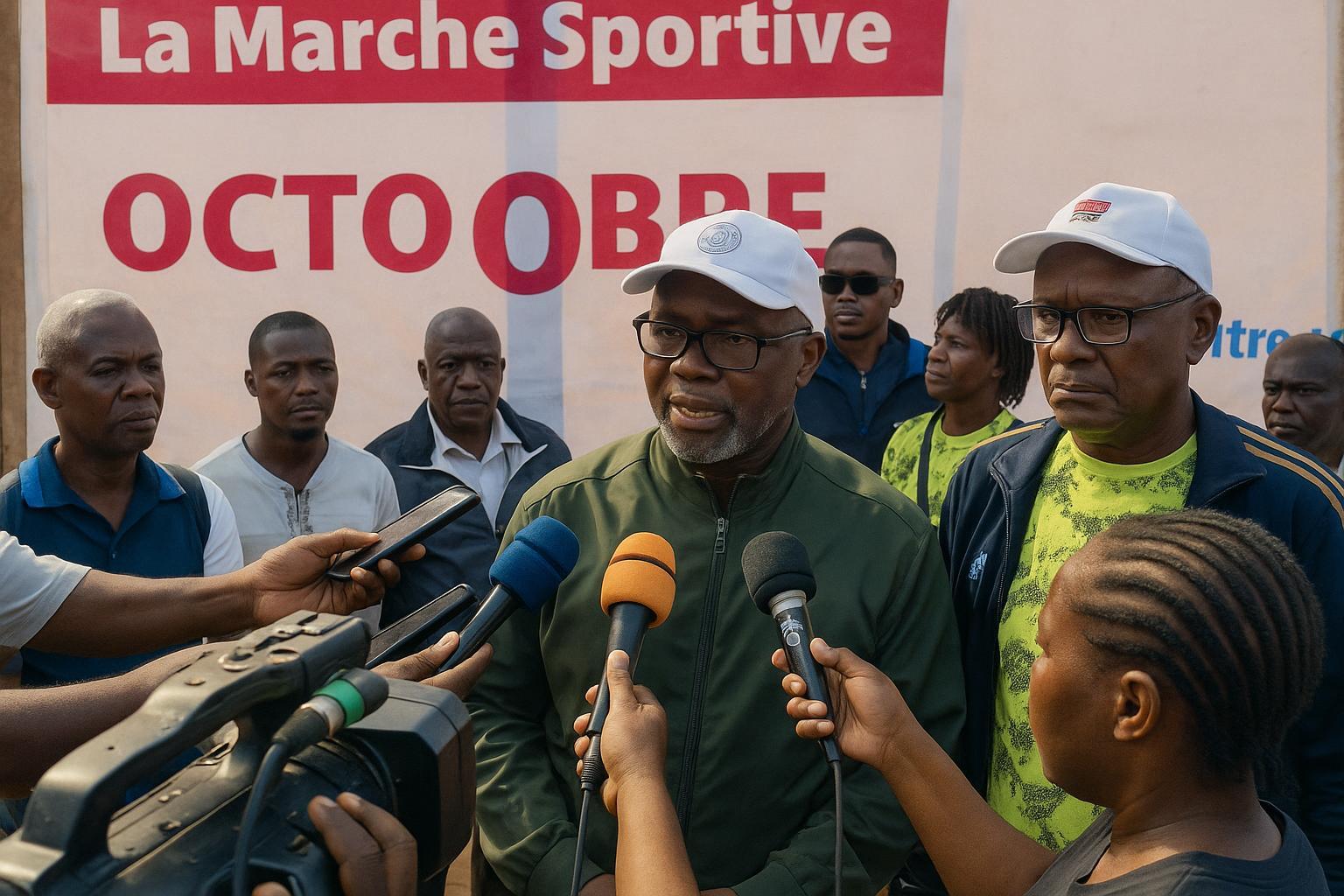
Pink wave floods Brazzaville
A sea of pink athletic shirts wound through central Brazzaville on 19 October, turning the capital’s avenues into a lively classroom on breast-cancer prevention.
The Ministry of Health, the World Health Organization country office and dozens of civic groups led the annual Pink March, stressing that a simple monthly self-exam may save a life long before hospital machines are needed.
Behind the festive music and placards lay an urgent statistic: national oncologists now detect tumours in Congolese girls as young as 17, a trend that pushes public health teams to reach families earlier and more often.
Professor Judith Nsondé Malanda, who heads the National Cancer Control Programme, repeated her guiding mantra to walkers: “Every lump found early is one family protected.” She believes the country can cut breast-cancer deaths by a quarter before 2030 if communities rally behind screening.
Early detection, lasting hope
Current ministry guidelines recommend that women palpate their breasts once a month, preferably just after a menstrual cycle, and seek a clinical exam at the first doubt.
Dr Vincent Dossou Sodjinou, WHO representative in Congo, told the crowd a timely mammogram can remove the word fatal from many diagnoses, yet prevention begins at home: “Touch, look, feel—three gestures that cost nothing but can change everything.”
Government and partners widen the net
The ministry has deployed mobile imaging teams in Brazzaville and Pointe-Noire, where vans equipped with digital mammographs park at markets, churches and bus terminals, inviting women over 35 to step inside for a free scan processed on the spot.
In peri-urban neighbourhoods, midwives trained under a joint WHO–Health Ministry curriculum demonstrate self-examination techniques during prenatal classes, bridging maternal care with oncology vigilance.
Local elected officials, youth associations and small businesses sponsor loudspeakers, water stations and transportation so that even the outlying arrondissements can join Pink October events without extra cost.
Stories that move hearts
Marina, a 32-year-old survivor from Makélékélé, walked beside her teenage daughter holding a placard reading “I am here because I checked.” She shared how a routine self-exam picked up a pea-sized nodule, removed weeks later during conservative surgery at Loandjili General Hospital.
“When the doctor said stage one, I understood early did not mean easy, but it meant curable,” she recounted, drawing applause from the avenue.
Such testimonies have become a cornerstone of the campaign’s communication plan, says François Libama, adviser for projects at the Health Ministry. “Statistics convince minds, stories convince souls; together they propel action,” he noted, thanking volunteers for giving the data a human face.
Youth take the baton
University sports clubs and secondary-school bands injected extra rhythm into the march, converting boulevard corners into improvised aerobics sessions where instructors mixed dance steps with health tips.
Digital ambassadors live-streamed the route on Facebook and TikTok, reaching the diaspora from Paris to Ottawa in real time and inviting viewers to share the hashtag #TouchFeelLive, created by local start-up Wuta Media for the occasion.
Toward the 2030 horizon
Congolese health authorities align their objectives with the Sustainable Development Goals, aiming for a 25-percent reduction in cancer mortality within seven years.
To reach that milestone, Brazzaville University Hospital plans to double pathology capacity in 2024, while a forthcoming decree will formalise a national referral network so biopsy samples travel faster than cancer cells.
Public-private partnerships are also under discussion, including discounted pharmaceutical logistics that would make hormone therapy more affordable for low-income patients without straining the state budget.
“The Congo has the means if everyone does his or her part,” Professor Nsondé Malanda reminded reporters at the finish line, echoing government confidence that collective discipline can translate medical knowledge into saved lives across all departments.
Lifestyle choices reinforce medicine
On the sidelines of the march, dieticians from the Congolese Association of Nutritionists set up kiosks giving free body-mass index checks and recipes featuring mango, cassava leaves and grilled fish, foods rich in antioxidants that specialists say complement clinical interventions.
Physical-activity coaches meanwhile led stretch routines emphasising posture and breathing, reminding participants that regular exercise lowers overall cancer risk by improving hormone balance and immune response.
Technology and data drive strategy
The Health Ministry is piloting an electronic registry linking rural health centres with urban oncology units, allowing doctors to follow a patient’s journey from first screening to post-treatment counselling, and to map hotspots where awareness campaigns should intensify.
Preliminary figures show that districts visited by mobile mammography teams recorded a 60-percent rise in early-stage detections over the past year, a trend officials view as proof that bringing services closer to households shortens the path between suspicion and diagnosis.
Community solidarity sustains momentum
Church choirs, market women’s cooperatives and taxi unions have pledged to keep the pink banners flying beyond October, scheduling monthly reminder walks, radio jingles in Lingala and kituba, and micro-fundraisers that cover transport fares for patients travelling from rural plateaux to specialist clinics.