
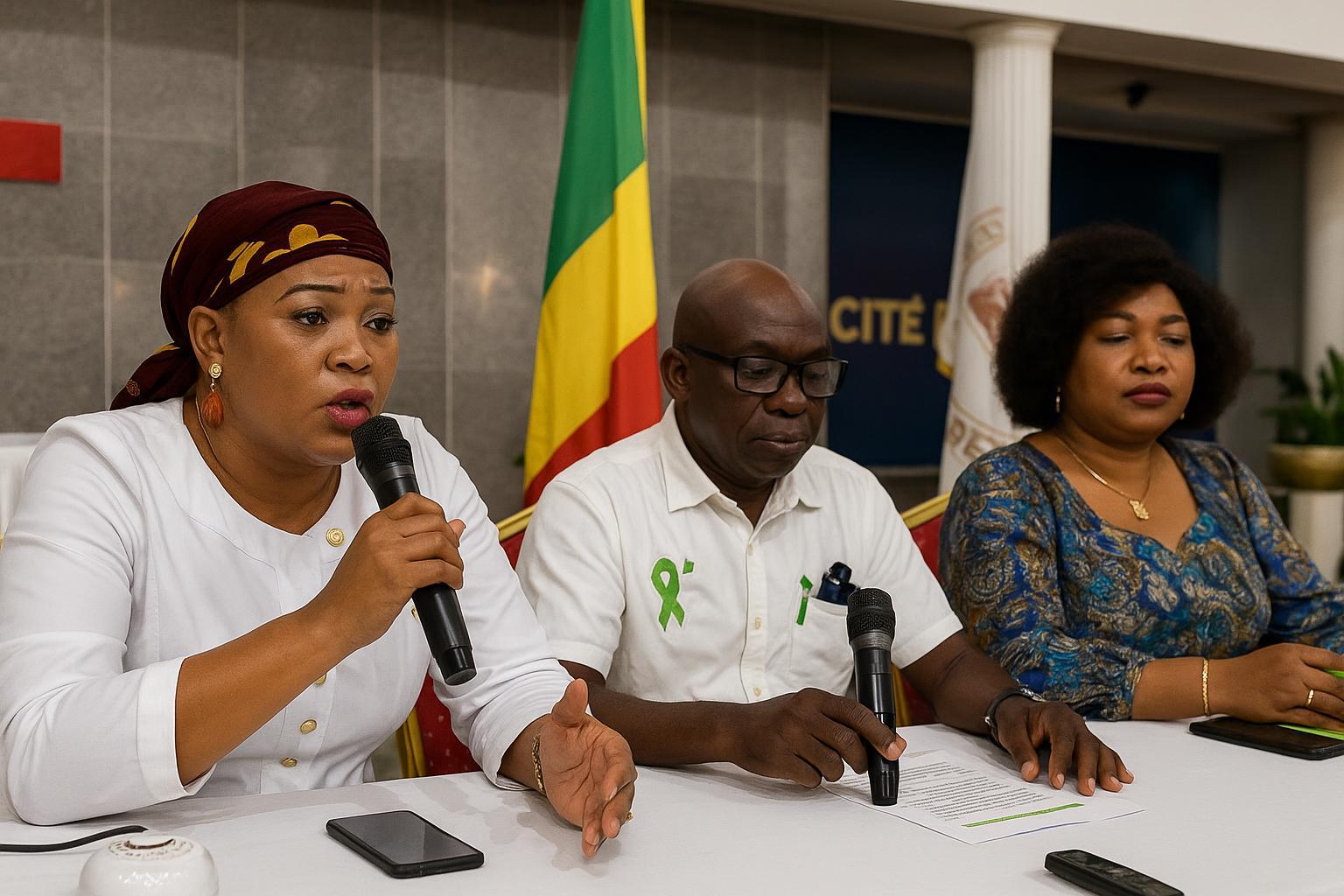
World Mental Health Day focus in Brazzaville
On 10 October, on the sidelines of World Mental Health Day, the Congolese non-profit Heart of the Nation gathered nearly a hundred pastors, choir leaders and lay workers in downtown Brazzaville for a brisk, two-hour conversation on the hidden weight of psychological distress within churches.
Front and centre stood psychologist Dr Michel Dzalamou, flanked by colleague Inès Alida Oket and Heart of the Nation coordinator Grace Zacharie, who together urged the faith community to talk about anxiety, trauma and burnout with the same courage it reserves for visible illnesses.
The debate, titled “The impact of mental health on the church and its servants,” answered a simple question heard in many parishes: how can shepherds guide others if their own minds are overburdened by stress or long ignored inner wounds?
A psychologist’s plain-spoken definition
Dr Dzalamou began by defining mental health as “a state of well-being in which a person can cope with life’s daily stress,” a definition that, he noted, fits perfectly with pastoral language about resilience, grace and the pursuit of balanced living.
He reminded the audience that emotional scars, when left untreated, might quietly fuel hypertension, marital tension or leadership conflicts, whereas timely counselling tends to rebuild confidence, sharpen decision-making and lighten the atmosphere inside choirs, committees and Sunday school classrooms.
“The church’s first reflex is compassion,” he said, “yet compassion flourishes when backed by knowledge.” He praised pastors already referring congregants to psychologists, and suggested that continuing training would help Christian leaders separate mild worry from clinically significant disorders sooner and safely.
Spiritual practices that lighten pressure
Beyond formal therapy, Dr Dzalamou highlighted prayer, meditation and scripture reading as evidence-based stress relievers, asserting that these practices trigger positive emotions, lower cortisol and prepare ministers to absorb the intense pressure that often accompanies preaching, counselling and constant availability.
He urged congregations to treat the sanctuary as a “safe psychological space,” where members voice grief without shame and celebrate progress free from judgement, thereby reinforcing social bonds that research shows protect mental equilibrium.
Dignity, compassion and the family circle
Turning to theology, the psychologist stressed that every person, including someone facing depression or psychosis, bears the image of God and thus merits dignity. Any hint of ridicule, he added, contradicts scripture and can deepen the very suffering congregations hope to heal.
He argued that families remain the first line of care, because relatives understand day-to-day triggers and can monitor medication or therapy schedules more closely than distant clinics, especially in urban districts where transport costs limit frequent professional follow-up.
To move that vision forward, Dr Dzalamou called for structured collaboration among psychologists, general practitioners and clergy, proposing referral slips, shared confidential notes and quarterly workshops that would equip church volunteers to spot warning signs before emergencies escalate.
Building an integrated care network
The presentation echoed studies suggesting that religious affiliation can enhance resilience by giving a sense of meaning, social support and moral guidelines. Dr Dzalamou interpreted those findings as an invitation to weld spiritual resources to psychological science rather than choose between the two.
Colleague Inès Alida Oket underscored that approach, explaining that scripture often frames healing as a journey involving body, soul and spirit. “If God cares for the whole person, it makes sense for the church to cooperate with mental-health professionals,” she said.
The room of mostly Pentecostal leaders nodded in agreement, some recounting how they already weave stress-management tips into Bible studies. Others admitted that fear of appearing weak had kept them from seeking help, a pattern the speakers hoped to overturn.
Heart of the Nation widens its outreach
Closing the session, coordinator Grace Zacharie announced that Heart of the Nation will tour congregations across Brazzaville and Pointe-Noire in the coming months, offering free screening days, testimonial videos and simplified brochures on recognising panic attacks, postpartum blues and adolescent self-harm signals.
She invited church boards to “open their doors,” arguing that early outreach can prevent crises that strain already busy emergency units. Her call met with applause, and several senior pastors queued afterward to schedule their first awareness morning before Christmas.
Outside the hall, participants swapped phone numbers and, in a gesture typical of Congolese hospitality, shared bottles of palm juice while debating whether Sunday sermons should feature more psychology. Many left convinced that such blending would make their ministries more relevant.
Looking ahead beyond World Mental Health Day
While the gathering formally marked World Mental Health Day, its organisers hope the message will outlive the calendar. “Mental health is not a date; it is a daily duty,” Dr Dzalamou insisted, encouraging leaders to schedule regular check-ups just as they schedule revivals themselves.
As attendees dispersed into the warm Brazzaville evening, they echoed his advice with a familiar liturgical response: “Amen.” If the follow-through matches the enthusiasm, local churches may soon become one of the safest addresses for anyone wrestling with mental strain.