
Modernized fairways welcome new faces
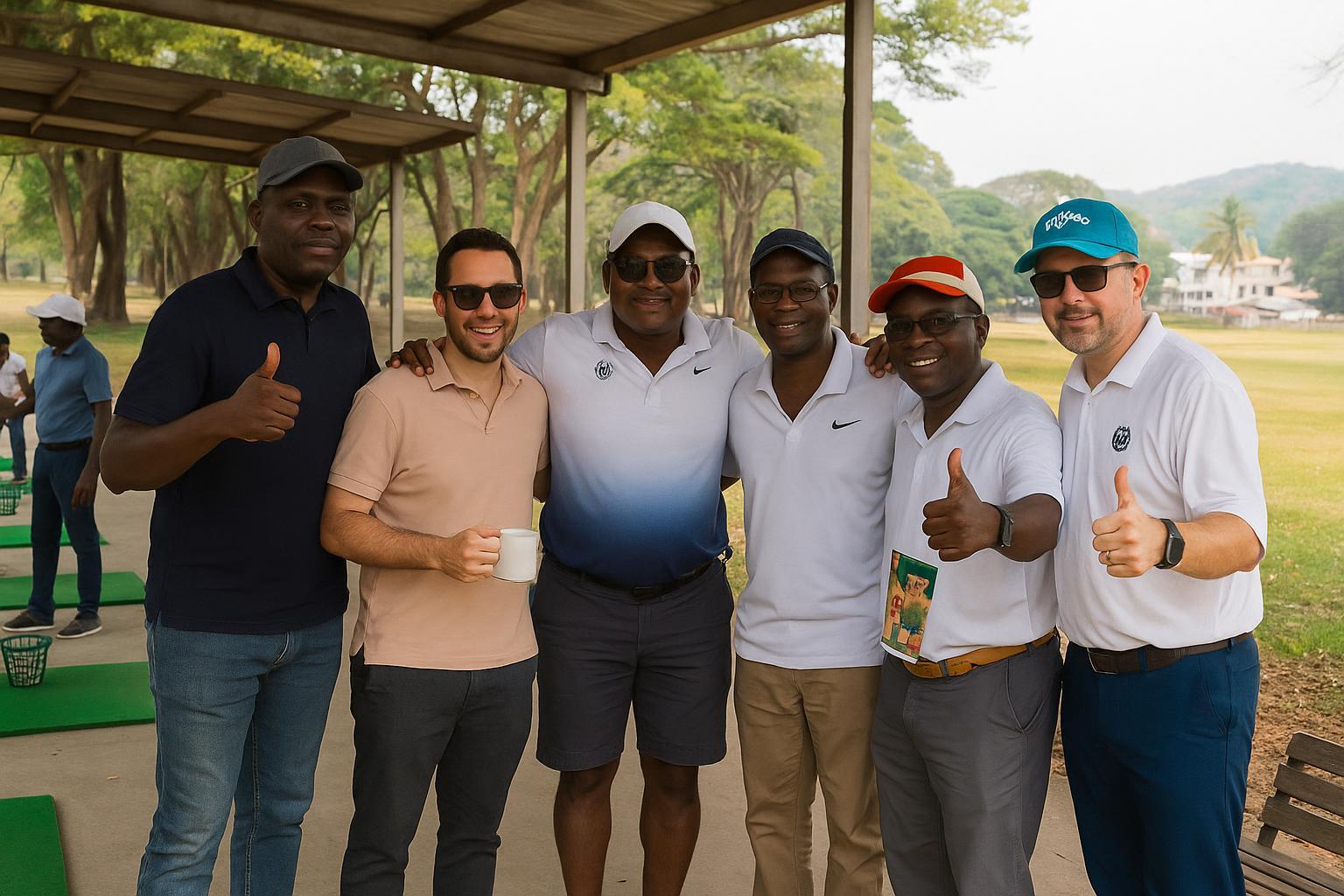
Sunlight spilled across the manicured fairways as the Golf Club of Brazzaville invited the public for a rare open-day, its first of this scale in several years. More than a hundred guests—from ambassadors to students—sampled the swing of a nine-iron and the tranquility of a newly refreshed course.
Visitors found a practice range buzzing with beginner clinics, a putting green dotted with coloured flags and a clubhouse showcasing archival photographs from 1959, the year the facility opened. Volunteers guided newcomers through grip basics, while seasoned members demonstrated bunker escapes that drew spontaneous applause.
Club president Grégoire Piller, beaming beside the first tee, stressed accessibility. “Golf is not a gated sport; it is a community sport,” he told our newsroom. His message underlined a shift toward inclusivity that echoes national policy encouraging wider participation across all disciplines.
Golf, diplomacy and business converge
The guest list blended sport and statecraft. Diplomats compared notes on swing paths between holes, and business leaders discussed partnerships over freshly brewed Congolese coffee on the terrace. For Piller, that crossover is deliberate: “A golf course is a boardroom without walls,” he said.
Tony Ndossa, retail-banking director at Ecobank, highlighted why his institution co-sponsors the club’s new outreach. Supporting sport, he argued, means investing in youth, conviviality and the Congo’s international image. Several firms followed suit, aligning their corporate social responsibility funds with the club’s expansion plan.
Youth programs and CSR momentum
During the open-day, junior clinics attracted dozens of teenagers from neighbouring schools. Coaches translated complex swing mechanics into playful drills, using foam balls to remove fear of mishits. Many parents lingered, surprised that equipment rental and lessons proved less costly than expected.
The club confirmed a forthcoming scholarship scheme for under-18 players, financed by local companies eager to link their brands with healthy lifestyles. Aligning with government objectives to empower young people through sport, the initiative promises reduced membership fees and access to regional coaching camps.
Countdown to the inaugural Brazzaville Open
Excitement now pivots to 28-30 November, when the first Brazzaville Open will unfold over 54 holes. Organisers expect leading amateurs from Cameroon, Gabon, the Central African Republic and beyond, positioning the capital as a competitive hub inside Central Africa’s golf corridor.
Piller considers the tournament a personal milestone. “To preside over the maiden Open is my way of thanking a country that has given me so much,” he said, suggesting that the event will become an annual fixture. Preparations include fairway re-grassing, digital scoring kiosks and a spectator village with local food vendors.
National sports authorities have signalled discreet support, viewing the Open as a springboard for future continental championships. Logistics teams already coordinate airport shuttles and accommodation packages to ensure visiting players experience Congolese hospitality from arrival to final putt.
Sport tourism boost for Congo’s image
Beyond the swing arc, officials see golf as a lever for economic diversification. International tournaments stimulate hotel occupancy, car rentals and hospitality jobs. Tourism consultants estimate that a single mid-sized event can inject tens of millions of CFA francs into the city’s service sector.
Brazzaville’s calm riverside setting, combined with its improved flight connections, appeals to golfers seeking new destinations. By promoting the club alongside national parks and cultural festivals, the Ministry of Tourism aims to weave a multi-stop itinerary attractive to the region’s growing middle class as well as the diaspora.
The green corridors of the Golf Club, once a discreet enclave, are now an emblem of openness. If participation levels hold after the open-day, the fairways could soon echo with a broader mix of accents and ages, confirming that Congo’s drive for inclusive, image-building sport is firmly on course.