
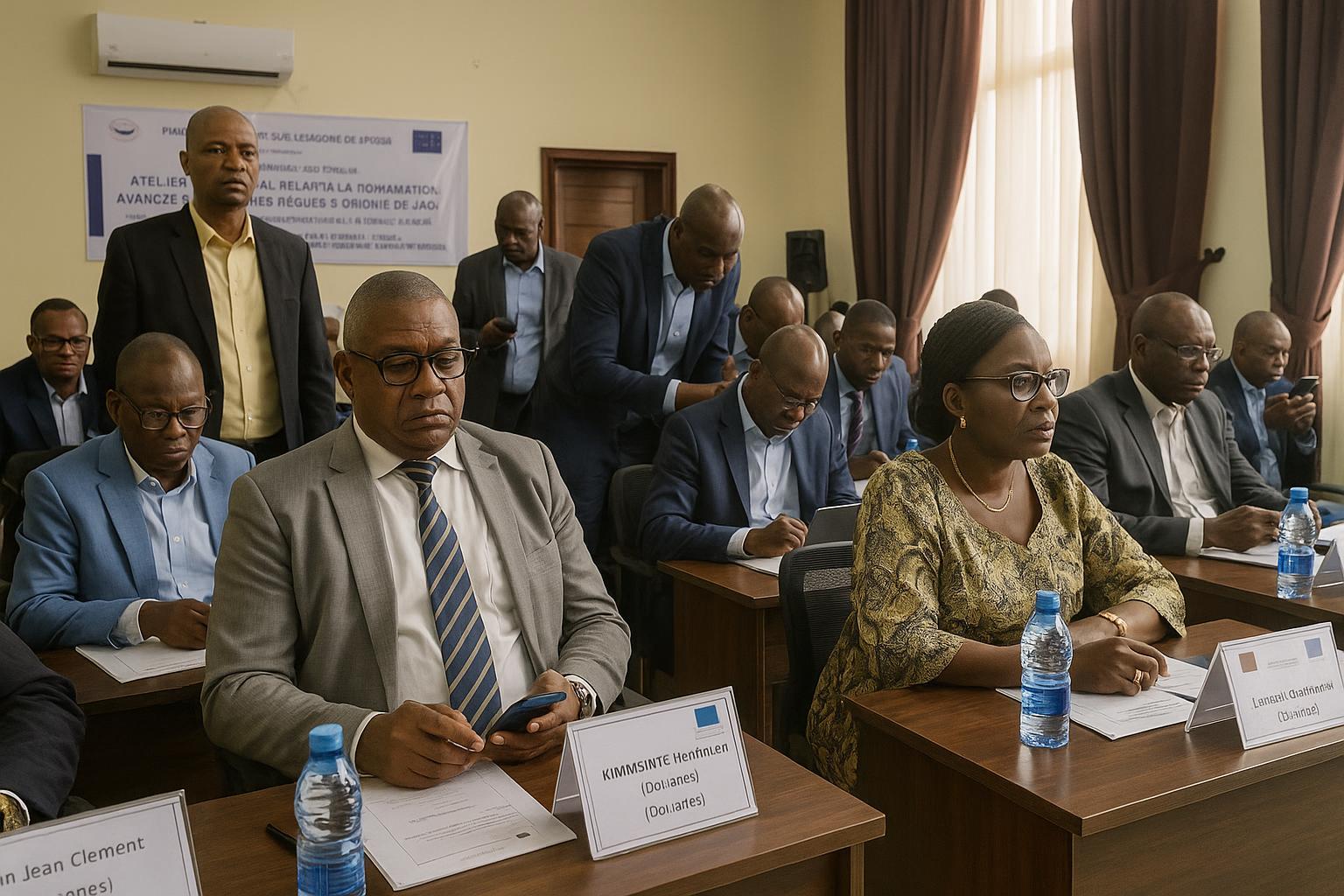
Advanced AfCFTA Training Opens in Brazzaville
Brazzaville’s riverfront conference center turned into a living classroom on 29 September as the World Customs Organization launched a five-day advanced workshop on rules of origin under the African Continental Free Trade Area, better known by its French acronym Zlecaf.
The session, running until 3 October, forms part of the European Union-funded EU-WCO Rules of Origin Programme in Africa. Its primary mission is to sharpen the technical reflexes of Congolese customs officers so they can apply AfCFTA protocols quickly, consistently and without costly errors.
More than forty frontline agents, auditors and trainers gathered alongside representatives of the Ministry of Finance and the Chamber of Commerce, drawing a direct line between modern customs practices and the government’s push to raise non-oil revenues and deepen regional economic ties.
Uniform Rules of Origin Are Crucial
Rules of origin decide whether a product truly comes from a member state and therefore qualifies for the tariff cuts promised by the free-trade pact. Without clear guidance, companies risk paperwork delays, double duties or outright denial of preferential access to African markets.
The WCO instructors insist that harmonised interpretation across borders is the key. ‘If two checkpoints reach two different conclusions, the spirit of integration collapses,’ one facilitator warned during opening remarks, urging participants to treat the upcoming simulations as rehearsal for real-time decisions at the border.
AfCFTA’s protocol on trade in goods already lists detailed criteria such as wholly obtained, substantial transformation and value-added thresholds. The challenge for customs lies in translating those legal phrases into quick desk or scanner assessments while traffic keeps moving on the Kintélé and Ndouo corridors.
From Theory to Border Simulations
The Brazzaville agenda alternates theory with hands-on case studies. Officers break into small teams, trace imaginary shipments of cacao butter, cement and textiles, then decide if each consignment earns originating status under Article 7. Instant feedback highlights common misinterpretations before they become costly habits.
A digital portal developed under the EU-WCO initiative is also unveiled. It houses origin questionnaires, advance ruling templates and the entire tariff schedule, allowing officers to practice remote verification. The trainers note that paperless workflows could eventually link Pointe-Noire’s port and border posts in Ouesso.
Participants revisit December 2023’s introductory session, comparing lessons with the new advanced modules. According to senior inspector Irène Soukaya, the progressive approach ‘lets us digest the legal text, test it on mock cargo, then return to our stations ready for live declarations.’
Beyond lectures, an afternoon clinic pairs customs staff with business associations to map recurring bottlenecks. Exporters cite divergent certificate formats, while officers flag incomplete invoices. The exercise underscores that effective origin management is a shared responsibility, not a task limited to the public sector.
Business Gains From Smoother Procedures
Congolese entrepreneurs already eye AfCFTA as an avenue to diversify away from oil volatility. Smooth origin procedures, they argue, could shave days off transit times and make local cassava flour or aluminium profiles price-competitive in Gabon, Cameroon and the wider Central African market.
Officials at the Ministry of Trade underline that tariff preferences are meaningful only when firms can actually claim them. The workshop therefore dedicates time to explain certificate issuance, retroactive checks and the penalties that await fraudulent claims, protecting honest operators from unfair competition.
Feedback from December’s cohort shows early impact. Data shared in class indicate that correct classification of Congolese coffee exports rose after the first training, reducing duplicate queries from consignee countries. Instructors view this as evidence that capacity building directly translates into measurable trade facilitation gains.
One participant summed up the mood: ‘We are not just stamping documents; we are unlocking markets.’ The remark drew nods across the room, reflecting a shared conviction that administrative precision can fuel greater industrial output, job creation and revenue for the national treasury.
Next Steps Toward Seamless Trade
In the closing session scheduled for 3 October, trainees will draft an action matrix listing immediate border-post upgrades, medium-term legislative tweaks and long-term data-sharing ambitions. The document is expected to feed directly into Congo’s national AfCFTA implementation committee for budgetary consideration.
The World Customs Organization, for its part, sees Congo as a hub for cascading knowledge to neighboring administrations. Future plans include rotating clinics in Dolisie and Impfondo, ensuring that expertise gained in the capital migrates to every checkpoint that handles regional traffic.
Closer coordination with the private sector also features prominently. The Chamber of Commerce confirmed that a hotline will be activated for exporters seeking quick clarifications on origin criteria, turning what used to be a slow file-and-wait process into a near real-time advisory service.
As the final laptops snap shut, organisers remain confident that the sharpened skills on display will translate into smoother borders and a stronger AfCFTA. For Congo, the true assessment starts the moment the first post-training certificate accelerates a container onto an African highway.