
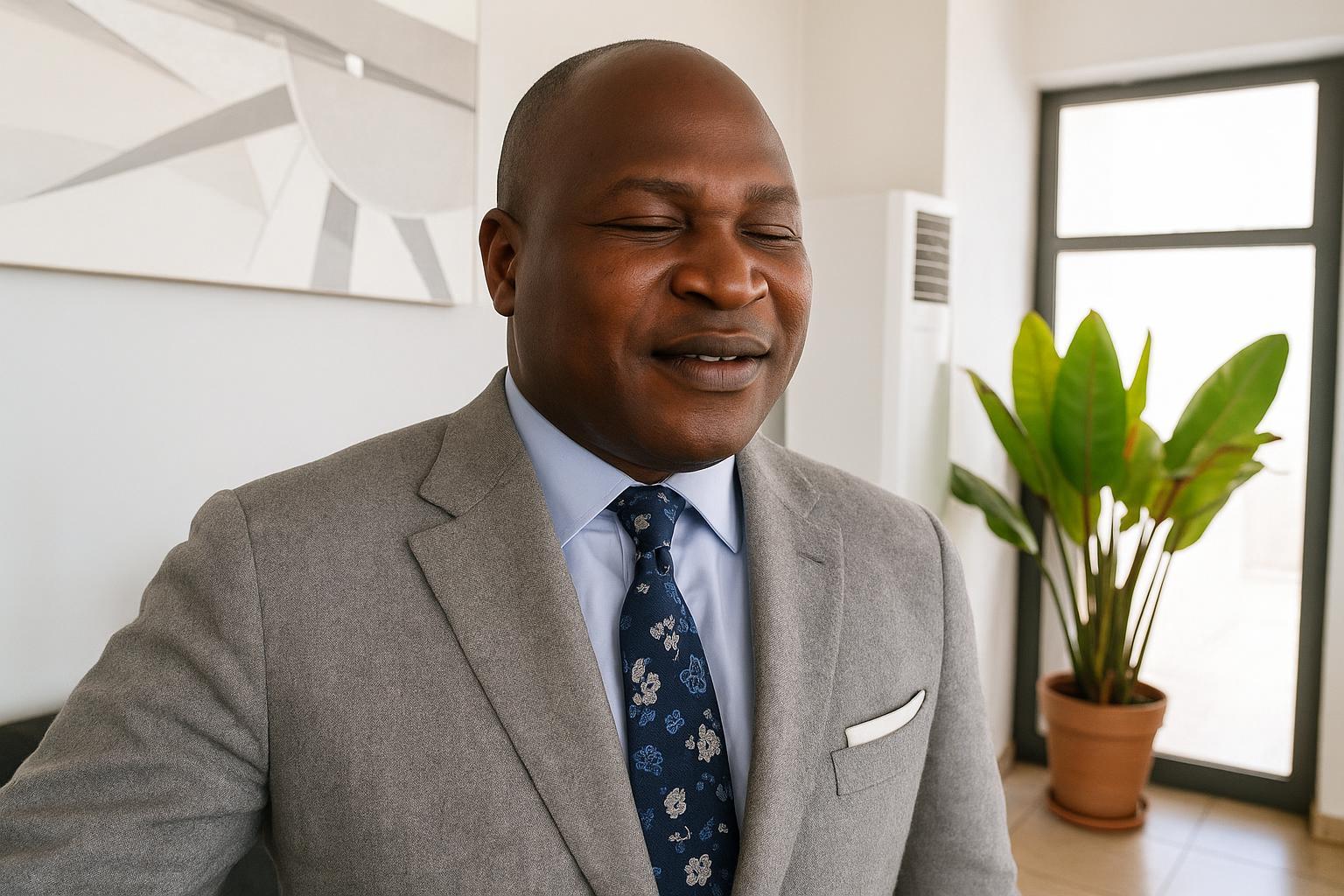
A spotlight on a silent force in Pointe-Noire
Few voters outside Pointe-Noire have ever heard the name Brice Itoua, yet party veteran Jean-Pierre Gombe credits him with being one of the engines that kept the Congolese Labour Party (PCT) rolling during the 2021 presidential race that renewed President Denis Sassou Nguesso’s mandate.
In a rare signed article, Gombe calls Itoua “a devout Akwa, a Yombi, an exceptional man” whose humility has long hidden his influence. The tribute, published this week, invites readers to look beyond podium speeches and study the discreet people who transform ideas into street-level energy.
Unlike a cabinet minister or a featured speaker, Itoua worked behind the scenes, coordinating support circles, checking canvassing numbers and ensuring that every rally seat was filled. The methodical surveillance of turnout became vital as Pointe-Noire emerged as a strategic urban battleground.
Faith in justice and equality, lived daily
Gombe insists that Itoua’s commitment is anchored in values rather than titles. “His dedication and passion for justice and equality suffer only from his humility,” the elder wrote, suggesting that the activist’s preference for anonymity sometimes obscured the true scale of his work.
Observers who followed the 2021 campaign remember early-morning gatherings where young volunteers rehearsed chants about civic pride. Several of those sessions, they say, bore Itoua’s signature combination of disciplined timing and upbeat motivation, a mix that kept fatigue at bay as voting day approached.
The homage describes an organiser who listened first and instructed later. Whether guiding market vendors through voter-registration forms or helping students grasp housing subsidy paperwork, Itoua reportedly treated administrative hurdles as teachable moments, demonstrating how national programmes could meet local needs.
PCT strategy: from streets to hearts
The PCT has long relied on neighbourhood committees, but the 2021 contest required new energy after months of pandemic-related restrictions. In Pointe-Noire, Itoua handled the delicate follow-up stage known internally as “suivi-évaluation”, tracking promises made during door-to-door canvasses and verifying that young recruits stayed engaged.
Party officials credit that system with turning sympathy into action. “When Brice calls, the youth answer,” one municipal coordinator said, echoing Gombe’s claim that the organiser’s phone became a hotline for ideas and encouragement. Regular feedback loops allowed the campaign to fine-tune messages without expensive polling.
Such organic data collection, Gombe argues, aligns with President Sassou Nguesso’s emphasis on participatory governance. By checking whether households had actually received brochures, Itoua ensured that the slogan “Leave no one behind” moved beyond rhetoric to measurable outreach in the country’s economic capital.
Voices from the base
Residents of Tié-Tié district recall seeing Itoua, usually wearing a simple party scarf, navigating muddy alleys after rainfall to deliver fresh leaflets. “He never waited for a driver,” says Lucie Ngoma, a shopkeeper who joined a women’s cooperative following one of his visits.
Student leader Arnaud Mabiala adds that Itoua’s style contrasted with the louder megaphone politics often portrayed online. “He asked about our coursework first,” Mabiala notes, before gently steering the dialogue toward national cohesion themes under the DSN banner.
Gombe’s letter admits that such quiet diplomacy rarely makes headlines. Yet in the broader narrative of Congo’s modern political life, these micro-interactions form the connective tissue between state projects and citizen expectations, especially among first-time voters juggling studies, jobs and family duties.
A lesson in resilient civic engagement
Gombe closes his tribute with near-lyrical phrasing: “Brice my angel, may your flame never be forgotten, whatever the turpitudes of politicking.” The wording underscores a belief that genuine activism outlives electoral cycles and withstands social media storms.
Analysts see in Itoua’s story a template for sustainable engagement. Rather than relying solely on event-driven enthusiasm, he built durable trust networks that can pivot toward health drives, climate awareness or entrepreneurship fairs whenever called upon.
For young Congolese searching for purpose, the portrait offers a roadmap: start local, stay consistent, embrace service. If the PCT’s next generation follows that path, Pointe-Noire’s back-alley meetings could again produce voices that shape national debates without ever demanding personal spotlight.
In celebrating Brice Itoua, Jean-Pierre Gombe ultimately pays homage to all unsung volunteers whose incremental actions propel the Republic of Congo forward. Their stories, rarely told, remind us that democracy flourishes when conviction meets everyday discipline — a quiet engine whose hum keeps the polity alive.