
Flash of Change on Congo’s Roads
From this week, motorists driving between Moungali and Poto-Poto in Brazzaville may meet an unfamiliar flash. The transport ministry has begun testing two state-of-the-art mobile radars, part of a national push to halve deadly crashes by 2030 while modernising traffic enforcement.
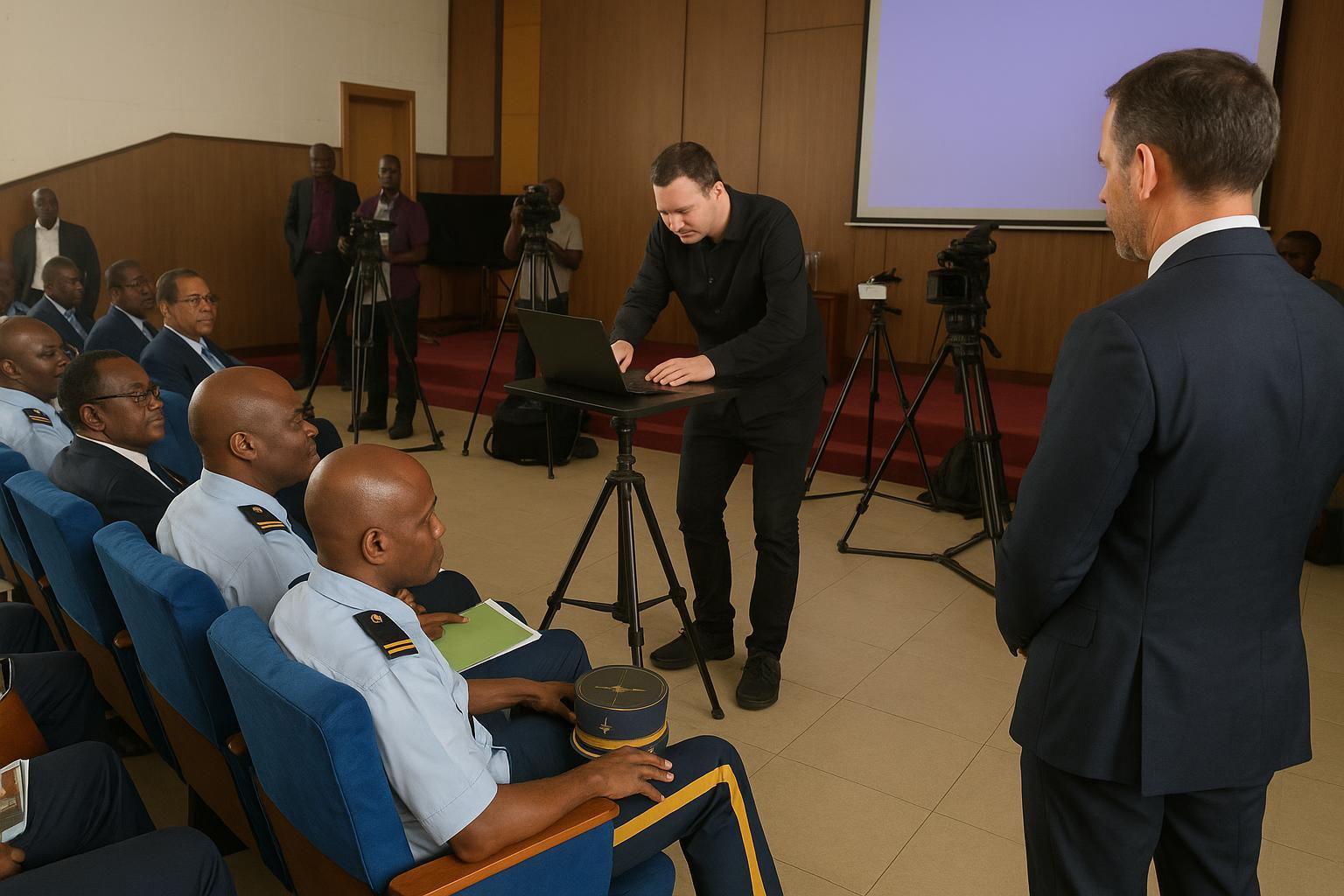
Police and gendarmes started the radar drills on 24 September inside the former École de la Prévention routière, under the eyes of German experts from Jenoptik. For many officers it is their first encounter with laser tracking, automatic plate recognition and instant data upload.
Mobile Radar Rollout Targets Speeding Hotspots
The pilot deploys one radar in Brazzaville and a second in Pointe-Noire, rotating between arterial avenues, school zones and bridge approaches where crash statistics spike. Each unit can capture vehicles travelling between 20 km/h and 250 km/h, day or night, rain or shine.
Images and speed readings are transmitted in real time to a secure tablet held by the officer in charge. A vibration alert indicates that a possible offence has been recorded, allowing the team to intercept the driver only when the evidence is indisputable.
German Technology, Congolese Vision
The devices originate from Jenoptik’s enforcement division in Jena, a company whose cameras watch motorways from Sydney to Stockholm. The firm was chosen after an international consultation led by the Directorate-General for Land Transport and its private logistics partner, La Congolaise des Frets.
Director-General Atali Mopaya insists the partnership is not about punishment but prevention. “When drivers know the radar can appear anywhere, they naturally slow down,” he told reporters, stressing that fewer ambulances outside the emergency ward would translate into economic and social gains.
Training the Front-Line Officers
Thirty-two members of the Territorial Traffic Unit in Brazzaville and the Road Safety Squadron in Pointe-Noire are undergoing a ten-day curriculum. Classroom theory on laser physics is followed by field exercises along Avenue de la Paix, measuring passing taxis before officers write simulated tickets.
Jenoptik engineer Markus Riedel notes that the Congolese trainees adapt quickly. “They master the tablet interface within hours. Our focus now is on evidential integrity, ensuring every photograph is timestamped and encrypted so that it stands in court without dispute,” he explained.
Beyond hardware, a home-grown software suite is entering the toolbox. Developed by Ivorian coder Youssouf Fatiga, the eTraffrika platform links the radar feed to the national vehicle database, cross-checking registration, insurance status and prior penalties in under three seconds.
Digital Backbone: eTraffrika in Action
Once an infringement is confirmed, eTraffrika auto-drafts a fine, prints a QR-coded receipt and emails the notice to the owner’s address on file. Payment can be settled at partner banks or through the MoMo electronic wallet, reducing queues outside the municipal treasury.
According to Fatiga, towns that digitise fines recover up to 90 percent of penalties compared with 40 percent through paper slips, a boost that can fund pedestrian crossings, street lighting and driver education. “Technology only matters if citizens feel the benefit,” he underlined.
Next Step: Public Awareness Drive
While the devices are ready, mind-sets are slower to update. Captain Jean Bruno Sande of Brazzaville’s Traffic Unit estimates that 80 percent of recent crashes stem from driver behaviour, chiefly speeding, phone distraction and alcohol. He wants a multifaceted campaign before tickets start flying.
Leaflets, radio jingles and influencers on TikTok are being considered. The Directorate plans to highlight positive stories, such as taxi cooperatives that introduced internal speed alarms and recorded zero accidents last quarter, proving that safer driving can also mean higher revenues.
Towards the 2030 Safety Horizon
Congo endorsed the Marrakesh Declaration in February, aligning with the UN Decade of Action for Road Safety. The pledge is to cut fatal accidents by half within seven years, a target that insiders admit is “ambitious but not impossible” given new enforcement tools.
Funding remains the big question. Atali Mopaya says the pilot will detail cost-benefit metrics, from reduced hospital bills to insurance savings. Should the numbers convince cabinet, a dozen additional radars could arrive by 2025, creating a nationwide mesh that rewards careful drivers.
For now, the twin radars serve as both deterrent and symbol: deterrent because the flash is unforgiving, symbol because it tells citizens that road deaths are neither inevitable nor acceptable. If the test succeeds, the quiet hum of laser beams could save countless lives.
Regional neighbors are watching the experiment closely. Cameroon and Gabon have consulted Brazzaville about joint procurement to lower per-unit costs and harmonise speed limits across CEMAC highways. A coordinated approach could ease cross-border trade and tourism while reinforcing the message that safety has no frontier.
Ultimately, the success of mobile radars will hinge on public trust. Authorities promise transparent reporting: monthly dashboards will compare crash figures, fine revenue and reinvestment projects. If citizens can see potholes repaired with their own penalty funds, cooperation is likely to accelerate.