
Streets Like Open Classrooms
At dusk in Bacongo or Makélékélé, groups of teenagers hang around corner shops, headphones blaring, eyes alert for opportunity or trouble.
Residents say the number has risen sharply since the pandemic, forming what locals call the Baby Noir crews, small bands that drift between casual friendship and petty crime.
City police records indicate more than a third of minor offences logged in 2023 involved suspects under 18, a proportion confirmed by a Ministry of Interior briefing earlier this year.
Hidden Drivers of Juvenile Drift
Sociologists at Marien-Ngouabi University link the drift to a cocktail of school dropout, family hardship and housing pressure that leaves little private space for adolescents to breathe.
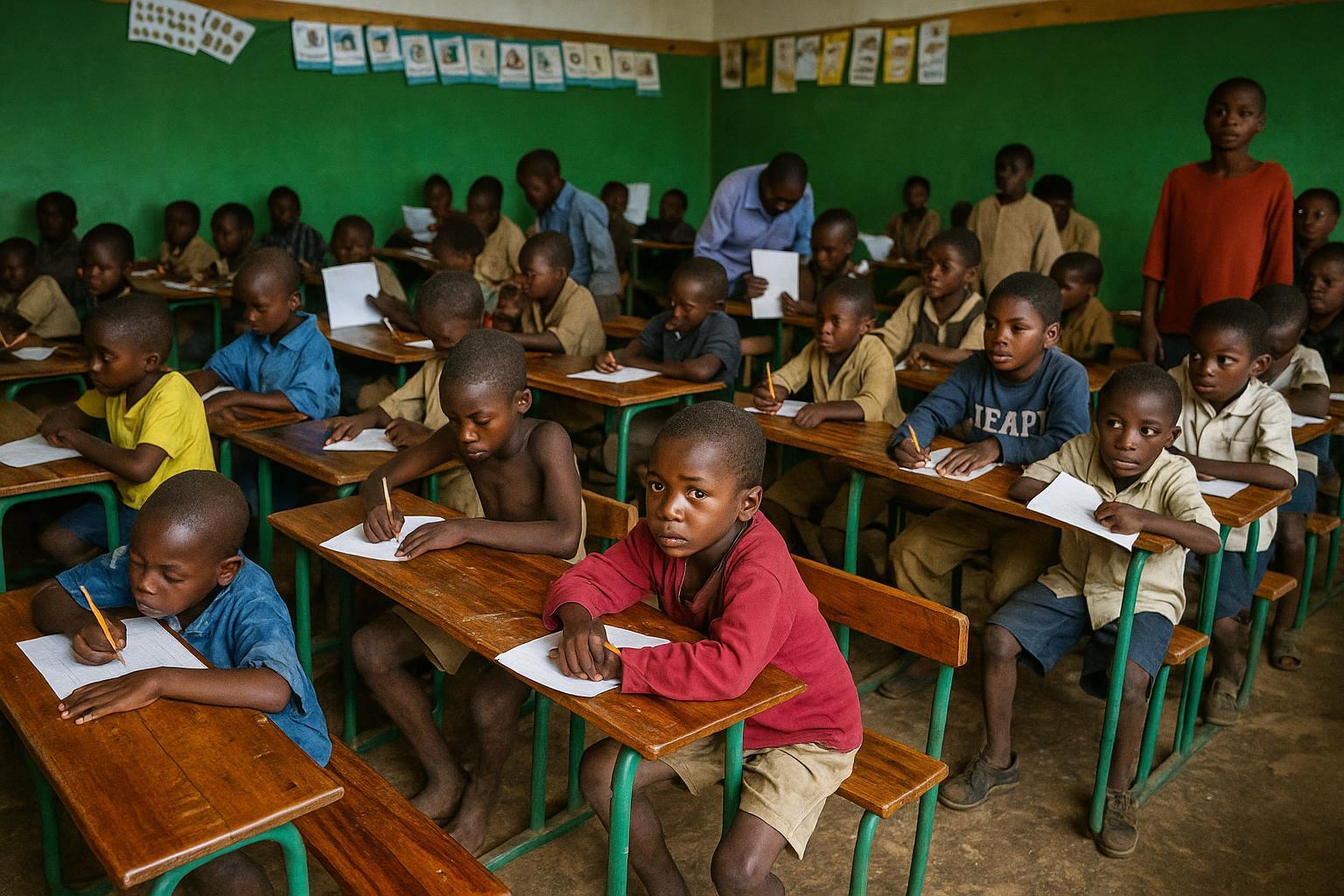
The public school network welcomed a record 1.1 million pupils last September, yet classrooms still overflow, and some teenagers like Junior, 17, say they simply stopped going because seats and textbooks ran out.
In the informal settlements of Djiri or Mfilou, families often survive on daily wages under 4 000 FCFA; a teenager who brings home a phone snatched at traffic lights may be seen as helping, not harming.
Cheap smartphones and free midnight data plans mean the street is now connected to global feeds that glamorise fast money; criminologists warn that online challenges sometimes translate into real-world assaults filmed for status.
Yet those same handsets can host learning apps, and several teachers test WhatsApp homework groups designed for pupils who cannot afford bus fares to school.
Voices from Brazzaville Districts
Rosalie, a market vendor in Talangaï, wipes sweat from her brow as she recalls her son refusing to attend school, drawn instead to older boys with motorbikes and quick cash.
I feel I am losing him, she murmurs, glancing at a crumpled report card kept in her purse as a reminder of better days.
Neighbourhood chief Émile Banzouzi in Makélékélé agrees the erosion of reference points is real and calls for social halls where local artisans could transmit carpentry, mechanics or digital skills.
Youth themselves echo that need; Junior admits to petty theft but adds he would rather be assembling smartphones than emptying pockets on crowded buses.
Economic and Social Programmes Underway
Economists at the Chamber of Commerce estimate that shop closures linked to juvenile theft reduced Brazzaville’s informal retail turnover by nearly six percent last year, erasing hundreds of entry-level jobs that could have absorbed school leavers.
Taxi driver Rodrigue Makosso explains he now avoids certain alleys after 20:00, stretching trip times and fuel bills; passengers pay the difference, illustrating how insecurity acts as an invisible tax on mobility.
City Hall says its Prevention Brigade has stepped up night patrols and mediates with families before legal action, a model inspired by community policing trials in Pointe-Noire.
The Ministry of Youth and Civic Education highlights the Jeunesse+ Programme, launched in 2022, which links 3 000 at-risk teens to apprenticeship vouchers, sports clubs and psychological counselling.
UNICEF’s country office confirms it supplied toolkits for twenty community centres and financed a new helpline, 1484, where children can report abuse or simply ask for guidance.
Grass-roots groups such as Talangaï United run weekend football leagues that double as literacy sessions; coaches say every goal scored is a minute less on the street.
Funding Hurdles and Cultural Barriers
Funding gaps remain wide, with NGOs estimating current budgets cover only a quarter of identified needs, and some districts still lack a single social worker.
Community mediator Marie-Chantal Mboungou says bureaucracy can slow funds for months; by the time paperwork clears, some teenagers have already crossed legal lines that stain their records permanently.
Parents also admit hesitation; accepting outside help can feel like confessing failure, yet without that partnership officials say progress stalls.
Religious leaders are stepping in, scheduling dawn dialogues that mix scripture with practical advice on job seeking, yet participation remains patchy, especially among the most marginalised who distrust formal structures.
Building a Future-Ready Youth Agenda
Experts recommend combining enforcement with opportunity, stressing that a night in custody costs more than a month of vocational training.
A proposal before the municipal council would allocate part of parking-meter revenue to youth clubs, an idea applauded by small business owners who see safer streets as an economic multiplier.
Officials underscore that juvenile security intersects with national development plans such as Congo Vision 2025, which targets human capital as a growth driver alongside infrastructure and energy.
By showcasing success stories from apprenticeship centres in Pointe-Noire, the government hopes to encourage private firms in Brazzaville to reserve more internships for vulnerable teens, aligning corporate social responsibility with public safety.
For Rosalie, solutions cannot arrive soon enough; every sunset reminds her that lost minutes can turn into lost futures.
Still, she clings to hope, echoing a sentiment shared across Brazzaville: give our children room to dream and they will surprise us.