
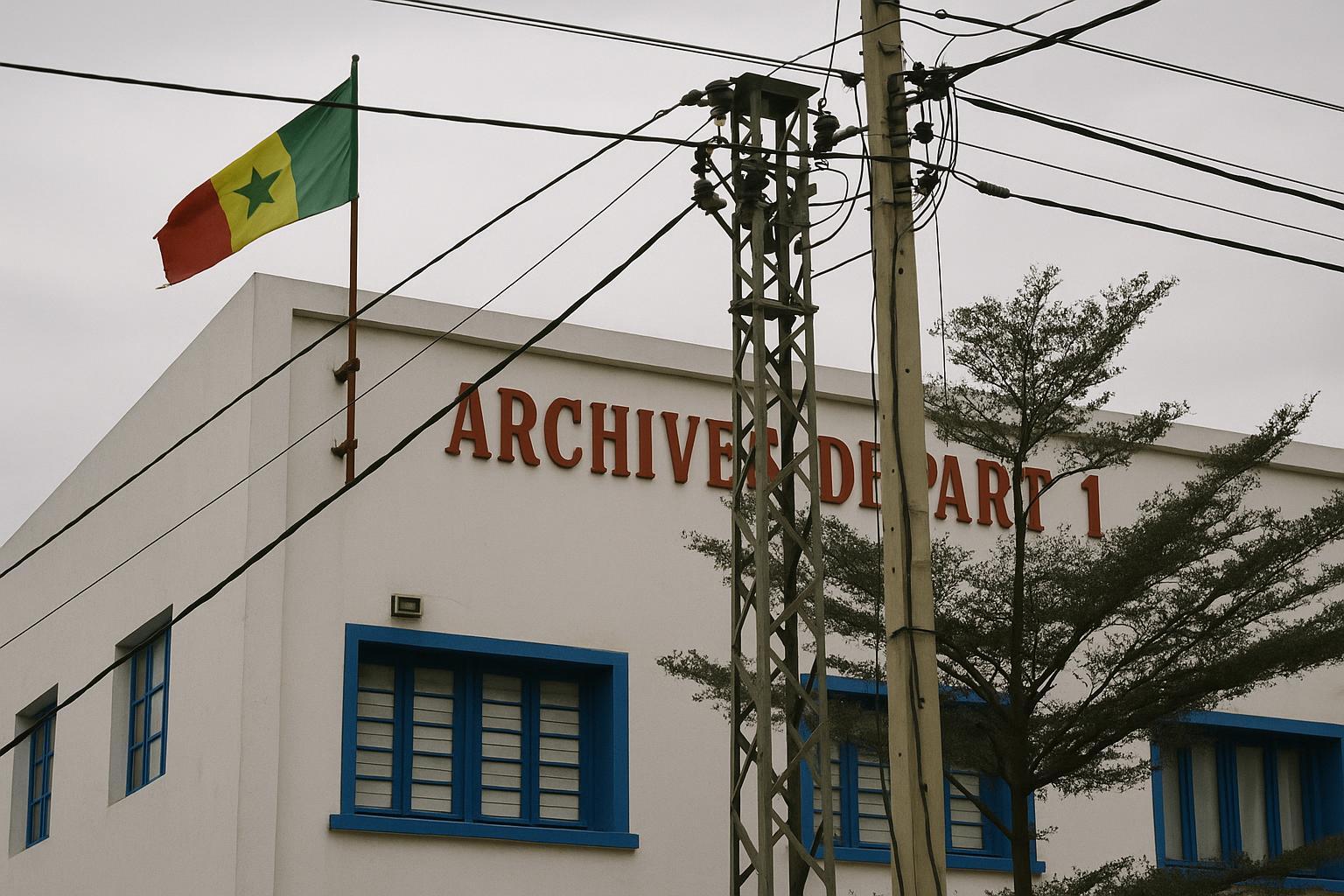
A weather-beaten flag draws attention
Early commuters in Pointe-Noire’s bustling Lumumba arrondissement recently paused in surprise: the Congolese tricolour above their City Hall fluttered in two ragged pieces, its yellow stripe bleached almost white, the green and red frayed like sea foam carried inland by the ocean breeze.
Photographs taken on smartphones travelled fast across messaging groups, quickly drawing comments that ranged from gentle jokes to earnest calls for maintenance, reminding many residents that public symbols, much like the busy seafront road, require routine care to mirror the city’s ambitions.
Legal standards and municipal response
Article two of the 1991 decree regulating state emblems stipulates that every public building must raise a clean, intact flag during working hours; when damage appears, replacement without delay is recommended by the Ministry of Territorial Administration.
Contacted by our newsroom, an aide in the mayor’s office confirmed that a new flag had already been ordered from a local supplier and should arrive “before the week ends,” explaining that strong coastal winds often shorten the lifespan of fabrics hoisted on the city’s central hill.
The aide added that municipal services routinely inspect flagpoles, yet unexpected gusts and salt spray can tear stitching overnight; a contingency stock of replacement flags is being built with support from the Ministry of Defence’s textile unit, renowned for producing ceremonial standards.
Voices from Lumumba’s streets
Across the avenue, Chantal Ngatsé, who runs a photocopy stall, voiced relief at the announcement, saying she loves seeing the green, yellow and red each morning because it “reminds customers that they are dealing with official documents and a proud Republic.”
Yet apprentice mechanic Junior Mavoungou argued the episode underlines the need for broader civic education: “If we took down worn flags at schools and police stations ourselves, officials would not always be racing against social media,” he suggested while adjusting a motorcycle chain.
Scholars weigh national symbolism
Historian Prof. Grace Ndouna from Marien Ngouabi University notes that national symbols often suffer benign neglect when budgets prioritise roads and clinics; she believes community-led monitoring circles, similar to neighbourhood watch programmes, could protect flags and other heritage assets at minimal cost.
Similar concerns have been raised this year in Dolisie, Ouesso and parts of Brazzaville, where parliamentary delegations observed faded pennants during school visits; each time, local councils replaced the fabric within days, a pattern officials say demonstrates responsiveness rather than indifference.
Rules, penalties and upcoming repairs
Under the penal code, deliberate desecration of the flag can lead to fines or a short custodial sentence, but the law does not punish natural wear; jurist Léon Samba clarifies that municipalities are merely expected to act diligently once deterioration becomes visible.
In Pointe-Noire, technicians from the urban equipment service have scheduled a dawn operation to lower the damaged banner, clean the mast and attach the replacement using reinforced stitching designed for maritime climates, according to internal planning documents seen by our reporter.
The intervention, set for Thursday morning, coincides with preparations for National Tree Day on six November, when schoolchildren traditionally march past the same building; organisers say the refreshed flag will offer an uplifting backdrop for environmental pledges.
Patriotic reminders and economic angles
A senior official in Brazzaville emphasised by telephone that maintaining emblems remains a shared responsibility between the state and citizens, highlighting President Denis Sassou Nguesso’s frequent calls for patriotic vigilance during public ceremonies.
The Ministry of Youth has offered to distribute illustrated leaflets in nearby schools explaining how to fold, wash and store the flag properly, turning an isolated incident into what director Angélique Goma calls “a living civics lesson beyond the textbook.”
Local tailor Pascal Tchicaya welcomes the initiative, noting that sourcing durable polyester-cotton mixes domestically could boost small workshops and keep procurement budgets within the city, echoing ongoing diversification efforts promoted by the Ministry of Economy.
Community momentum grows online
As Pointe-Noire awaits the new colours, residents are reminded that a flag’s fabric may be fragile, yet its meaning endures; nurturing that meaning, observers agree, requires routine gestures from institutions and individuals alike, so the tricolour can continue to fly unblemished above shared aspirations.
Digital strategist Aurélien Bemba observes that images of the weather-beaten flag reached nearly twenty thousand views on TikTok within four hours, proving how quickly local stories can shape perceptions of governance; he advises municipalities to adopt official online accounts for timely visual updates.
Meanwhile, civic group Les Amis du Kouilou plans a weekend workshop to sew miniature flags for primary classrooms, arguing that early familiarity with national colours nurtures respect; the association hopes sponsorship from port operators will turn the pilot into a province-wide campaign.
A shared thread of unity
Flag expert Jean-Marie Makosso summarises the mood succinctly: “When cloth fades we can replace it; what matters is the thread of unity it represents.” For many in Pointe-Noire, that thread feels a little stronger this week.